Oil On Panel.

§ 1Catalogue data


§ 2Abstract
藏品详情
The Madonna della Seggiola by Raphael showcases harmonious composition and warm colors—a masterpiece of High Renaissance art housed in the Palazzo Pitti, Florence.
 展开全文
展开全文
§ 3Commentary
The Madonna della Seggiola: A Symphony of Grace and Symbolism
The Madonna della Seggiola – “Madonna of the Chair” – stands as one of Raphael’s most enduring masterpieces, a testament to his unparalleled ability to synthesize humanist ideals with artistic virtuosity. Completed around 1513-1514 during his Roman zenith, this oil on poplar panel transcends mere representation; it embodies a profound meditation on motherhood, faith, and the harmonious balance between divine grace and human beauty—a balance that continues to captivate viewers centuries later.
- Subject Matter: The painting depicts Mary embracing Jesus Christ in repose upon a chair, accompanied by Saint John the Baptist who gazes upwards with serene devotion. This composition deliberately eschews the dramatic narratives favored by Michelangelo and Bernini, opting instead for a quiet intimacy that reflects Raphael’s humanist sensibilities.
- Style & Technique: Raphael's style is characterized by its remarkable clarity of form and effortless elegance—a hallmark of High Renaissance art. The artist employs subtle modeling to imbue the figures with palpable warmth and vitality, while utilizing delicate brushstrokes to achieve a velvety surface texture that enhances the painting’s luminous quality.
- Color Palette: Raphael skillfully orchestrates a harmonious color scheme dominated by warm hues – reds, golds, and ochres – which evoke feelings of comfort, serenity, and spiritual illumination. The drapery is rendered in rich shades of crimson and gold, creating a visual feast for the eye and reinforcing the painting’s opulent aesthetic.
- Historical Context: Created during Raphael's tenure at the Vatican under Pope Julius II and Leo X, the Madonna della Seggiola reflects the humanist revival that swept across Europe during the Renaissance—a movement championed by thinkers like Pico della Mirandola who celebrated human potential as limitless. It aligns perfectly with the papal patronage of art and scholarship that fueled artistic innovation during this transformative period.
- Symbolism: The chair itself serves as a potent symbol of stability, dignity, and maternal care—reflecting Raphael’s belief in the importance of virtuous contemplation. Furthermore, the positioning of Mary and Christ—facing each other in profile—creates a dynamic interplay of lines that contributes to the painting's visual harmony and reinforces its spiritual significance.
The Madonna della Seggiola’s influence extends far beyond its artistic merits; it has inspired countless artists throughout history, cementing Raphael’s place as one of the most revered figures in Western art. Its enduring appeal lies not only in its exquisite beauty but also in its profound contemplation of human experience—a timeless masterpiece that continues to resonate with audiences worldwide.
- Notable Reproduction: A high-quality reproduction captures the painting’s luminous quality and subtle nuances of color, allowing viewers to appreciate Raphael's masterful technique from afar.
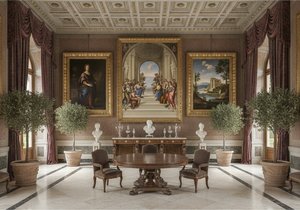
- Interior Design Inspiration: The Madonna della Seggiola’s serene palette and balanced composition offer valuable insights for interior designers seeking to create spaces that evoke feelings of tranquility and sophistication.
Its presence in the Palazzo Pitti—a testament to Florentine artistic heritage—further underscores its importance as a cultural icon. Viewing this painting is an experience akin to stepping back into the heart of the Renaissance, encountering the sublime beauty of Raphael’s vision.
常见问题与解答
建议将“Madonna della Sedia”打印成多大的尺寸?
建议将“Madonna della Sedia”打印为 Large 尺寸。其他尺寸亦可按相同比例进行制作。
"Madonna della Sedia" 属于 拉斐尔 艺术生涯中的哪个时期?
“Madonna della Sedia”创作于拉斐尔艺术生涯的Mature Period时期。这一时期标志着该作品与艺术家艺术风格演进的紧密关联。
拉斐尔 的《Madonna della Sedia》 在艺术史上的地位如何?
拉斐尔 的《Madonna della Sedia》 属于 Renaissance 时期的 High Renaissance 流派。两者共同确立了该作品在艺术史上的地位。


 切换至版画销售渠道


 对于任何边长超过 105 厘米(约 41 英寸)的艺术品或复制品,画框将以拆解后的组件形式发货。此方法可确保安全送达并防止运输过程中的损坏。




![梵蒂冈宫殿:博尔戈之火(细节)[01]](/media/artworks/images-thumb/76/f6/76f6220ba33c4e1d9790e47ace4c7148.jpg)