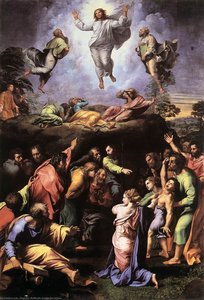
布面油画.

§ 1目录数据


§ 2摘要
藏品详情
Discover Raphael’s ‘The Three Graces,’ a Renaissance masterpiece! Admire its classical beauty, innovative nude art & harmonious composition in Chantilly's Musée Condé.
 展开全文
§ 3赏析
A Renaissance Ode to Beauty: Exploring Raphael’s *The Three Graces*
Raphael’s *The Three Graces*, housed in the prestigious Musée Condé in Chantilly, France, is a captivating embodiment of High Renaissance ideals. This oil painting isn't merely a depiction of mythological figures; it’s a celebration of idealized beauty, grace, and harmonious form that continues to resonate with viewers centuries later.Subject & Mythological Roots
The artwork portrays the three Graces – Chastity (represented by the veiled figure on the left), Beauty, and Voluptas (or mature joy, embodied by the figure on the right). These figures originate from Greek mythology, daughters of Zeus and Euronyme, known for bestowing charm, beauty, creativity, and fertility. Raphael’s interpretation subtly hints at different stages of feminine development, adding layers of meaning to their serene presence. Each Grace delicately holds a red sphere – symbols often interpreted as representing the apple of discord or celestial bodies, hinting at themes of love, desire, and abundance.Artistic Style & Technique
*The Three Graces* exemplifies Raphael’s mastery of *sfumato*, a technique pioneered by Leonardo da Vinci involving subtle gradations of light and shadow to create soft, almost ethereal forms. The composition is remarkably balanced and symmetrical, arranged in a gentle triangular formation that draws the eye across the figures. This deliberate arrangement reflects Renaissance principles of harmony and proportion. Raphael’s innovative approach lies in his depiction of the nude female form from both front and back views – a groundbreaking move for its time demonstrating his profound understanding of human anatomy and sculptural form. The delicate glazing technique imparts a luminous quality to the skin tones, enhancing their radiant beauty.Historical Context & Influences
Created sometime after Raphael’s arrival in Urbino around 1500, *The Three Graces* reflects the burgeoning interest in classical mythology during the Italian Renaissance. While firmly rooted in Renaissance aesthetics, art historian Julia Cartwright suggests a notable influence from the Ferrarese school of painting, particularly its emphasis on elegant poses and refined color palettes. The work emerged during a period where artists were actively rediscovering and reinterpreting ancient Greek and Roman artistic traditions.Interpretations & Debates
The artwork has sparked scholarly debate over its original context. Professor Erwin Panofsky proposed that it was intended as part of a diptych alongside *Vision of a Knight*, representing the Hesperides with golden apples. However, this theory remains contested by other art historians like Roger Jones and Nicholas Penny, who point to discrepancies in scale between the two works. Regardless of its original pairing, *The Three Graces* stands powerfully on its own as a testament to Raphael’s artistic genius.Symbolism & Emotional Impact
Beyond their mythological identities, the Graces represent abstract virtues – purity, beauty, and joy. Their intertwined forms suggest harmony, connection, and the interconnectedness of these qualities. The painting evokes a sense of serenity, grace, and idealized beauty—qualities highly valued during the Renaissance. It’s an artwork that invites contemplation on themes of love, desire, and the enduring power of aesthetic perfection.For Collectors & Interior Designers
- A Timeless Aesthetic: *The Three Graces* offers a classic Renaissance motif suitable for a variety of interior styles, from traditional to contemporary.
- Color Palette Versatility: The warm yellows, golds, and subtle reds complement many color schemes, adding a touch of sophistication and elegance.
- Focal Point Potential: Its balanced composition and captivating subject matter make it an ideal focal point for living rooms, bedrooms, or studies.
- A Statement Piece: A high-quality reproduction of this masterpiece elevates any space with a sense of artistic refinement and historical significance.
常见问题与解答
哪里可以买到 拉斐尔·圣齐奥 的《The Three Graces》 的版画?
您可以在拉斐尔·圣齐奥 的《The Three Graces》的艺术版画页面直接订购其版画:采用棉质帆布或档案级画布纸制作的艺术版画。
拉斐尔·圣齐奥 的《The Three Graces》 的主导色调是什么?
“The Three Graces”呈现出赭石至深褐色色调。
我可以在不同的光线下查看拉斐尔·圣齐奥 的《The Three Graces》吗?
您可以在作品的 X射线透视 页面上逐层探索 “The Three Graces”;该交互式查看器的设计灵感源自修复师使用的光源台,通过十一层光学读数呈现图像细节。



 切换至版画销售渠道


 对于任何边长超过 105 厘米(约 41 英寸)的艺术品或复制品,画框将以拆解后的组件形式发货。此方法可确保安全送达并防止运输过程中的损坏。