


 效果预览
效果预览
 分享
分享 分享
分享
 详情
详情 指南
指南

 下载
下载
 相似作品
相似作品 X射线
X射线 幻灯片播放
幻灯片播放 统计数据
统计数据Three Poems from the Later Collection of Japanese Poems (Gosen wakashū)
 Heian Period
 1101
1101 17.0 x 15.0 cm
 展开详情
展开详情
手工油画复制品
由我们的艺术家按需定制,为您提供您所选尺寸及画框的布面手工油画。 ( 切换至版画销售渠道 切换至数字图像销售渠道)




































从与原作比例一致的预设尺寸中进行选择。

您可以输入自定义尺寸,以适配特定的画框或空间。如果所选尺寸与原图比例不符,我们将通过裁剪作品或添加手绘元素来扩展画面。数字样稿将在制作开始前发送给您确认。
请注意,屏幕预览无法准确反映实际的裁剪或扩展效果,只有样稿才能真实呈现最终的构图。
虽然我们提供定制尺寸服务,但为了保留原作比例,建议您从预设列表中选择尺寸。
下单后,AllPaintingsStore.com 团队将通过电子邮件联系客户获取具体要求,并提供效果预览图。


 玻璃选项仅适用于110厘米以下的尺寸。

Three Poems from the Later Collection of Japanese Poems (Gosen wakashū)
复制材质
复制品尺寸
-


最终总价
$ 258
相似艺术品


艺术家简介
The Wandering Soul: The Life and Legacy of Saigyō Hōshi
In the quiet, mist-covered landscapes of twelfth-century Japan, there lived a man whose spirit was as untethered as the wind. Saigyō Hōshi, born in Kyoto in 1118, was far more than a mere monk; he was a wandering poet whose verses captured the very heartbeat of the Japanese wilderness. Living during the twilight of the Heian period, Saigyō navigated a world caught between the rigid structures of imperial court life and the profound, solitary simplicity of Buddhist asceticism. His journey from a young man of noble connections to a wandering monk is a testament to a soul seeking truth through the transient beauty of the natural world.
The essence of Saigyō’s work lies in his mastery of waka, a classical form of Japanese poetry characterized by its delicate emotional resonance and rhythmic elegance. His life was defined by a profound sense of impermanence—the Buddhist concept of mujo. Through his eyes, we see the cherry blossoms not just as flowers, but as symbols of the fleeting nature of existence; we hear the mountain streams not merely as water, but as the relentless passage of time. His poetry does not merely describe nature; it inhabits it, blending the observer with the observed until the boundary between the human heart and the landscape dissolves.
A Tapestry of Nature and Spirit
Saigyō’s artistic development was deeply intertwined with his physical travels across the Japanese archipelago. As he wandered through remote mountains, ancient shrines, and moonlit groves, each landscape became a stanza in his lifelong epic. His style is marked by an extraordinary ability to evoke vivid imagery through minimalist language. He possessed a unique talent for finding the infinite within the infinitesimal, using natural elements like dew, moonlight, and autumn leaves to mirror the complexities of human longing and spiritual devotion.
While Saigyō lived centuries before the rise of the ukiyo-e movement, his poetic sensibilities laid the aesthetic groundwork for much of what would later define Japanese visual art. The way he framed a single branch against a pale sky or captured the melancholy of a fading twilight prefigured the compositions of masters like Ando Hiroshige and Katsushika Hokusai. His influence even reached into the brushstrokes of the Kanō school, as his themes of natural solitude and seasonal transition became foundational motifs in Japanese painting. To read Saigyō is to witness the birth of a uniquely Japanese aesthetic—one that finds profound meaning in the ephemeral.
Enduring Influence on the Japanese Soul
The historical significance of Saigyō Hōshi cannot be overstated. He stands as a pillar of the Japanese literary tradition, a figure whose influence bridged the gap between the aristocratic elegance of the Heian era and the rugged, spiritual depth of the medieval period. His poems were not merely personal reflections but became part of a collective cultural consciousness, shaping how generations of Japanese people perceived their relationship with the earth.
His achievements are best understood through the lasting impact of his voice:
- Literary Mastery: He elevated the waka form to new heights of emotional complexity and spiritual depth.
- Cultural Iconography: He established the archetype of the "poet-monk," a figure of profound cultural importance in Japanese history.
- Aesthetic Foundation: His focus on nature, solitude, and the beauty of decay provided a blueprint for centuries of subsequent Japanese art, from calligraphy to landscape painting.
Today, Saigyō Hōshi remains a beacon for anyone seeking beauty in the transient. His life reminds us that even in a world of constant change, there is a profound, enduring grace to be found in the simple act of witnessing the world with an open and compassionate heart.

saigyō hōshi
1118 - 1190 , Japan
艺术家简介
- Artistic Movement Or Style: Ukiyo-e influenced / Zen Buddhism
- Artists Who Influenced This Artist:
- Andō Hiroshige
- Katsushika Hokusai
- Ton’a
- Date Of Birth: 1118
- Full Name: Satō Norikiyo / Saigyō Hōshi
- Nationality: Japanese
- Notable Artworks:
- Three Poems from the Later Collection of Japanese Poems
- Poem By Saigyô Hōshi
- Ippongyō waka kaishi
- Place Of Birth: Kyoto, Japan
相关文章
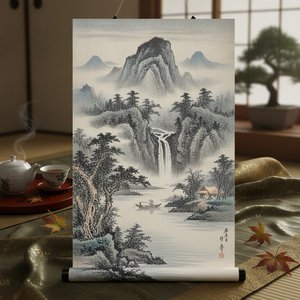
Serenity on Canvas: A Guide to the Timeless Beauty of Japanese Landscape Painting
Discover the serene beauty of Japanese landscape painting. From Hokusai's iconic woodblock prints to meditative sumi-e ink washes, explore a visual journey through the 'floating world' and learn how to bring this timeless Zen aesthetic into your modern home decor.

Zen on Canvas: The Timeless Artistry and Spiritual Depth of Japanese Landscape Painting
Explore the profound beauty of Japanese landscape painting. From Hokusai's iconic vistas to Zen-inspired compositions, discover the spiritual depth and historical mastery of Ukiyo-e art in this expert cultural retrospective.

Beyond the Great Wave: The High-Impact Visual Revolution of Japanese Landscape Art
Go beyond Hokusai's Great Wave. Explore the high-impact, graphic world of Japanese Ukiyo-e landscapes and urban prints. Discover how these bold, vibrant woodblock masterpieces continue to shape modern pop culture and contemporary design aesthetics.

Timeless Elegance: Capturing the Spirit of Japanese Culture Through the Lens of Ukiyo-e Fine Art
Explore the profound beauty of Japanese Ukiyo-e art. Discover the legacy of Hokusai and the Utagawa school through an expert exploration of Edo-period aesthetics, seasonal motifs, and the enduring global influence of Japan's 'Floating World' on fine art history.

The Elegance of Line: Discovering the Timeless Beauty of Calligraphy Artworks
Explore the profound beauty of calligraphy art. From the fluid running script of Chinese masters to historical ink masterpieces, discover how the elegance of line transforms spaces with timeless grace and scholarly sophistication.

