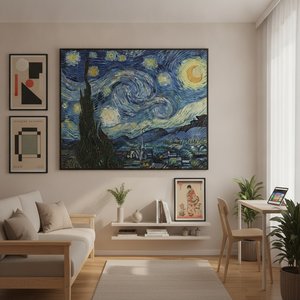
Oil On Canvas.

§ 1目录数据

§ 2摘要
藏品详情
Botticelli’s Primavera captures serene beauty with two women amidst lush trees and a delicate bird – a quintessential example of the Early Renaissance style. Admire this iconic painting and bring its timeless grace into your home.
 展开全文
展开全文
§ 3赏析
Sandro Botticelli’s *Primavera*: A Symphony of Myth and Renaissance Ideal
Sandro Botticelli's *Primavera*, painted circa 1482, stands as one of the most captivating and enigmatic works of the Early Renaissance. This exquisite depiction, seemingly a simple scene of three women – Venus, Flora, and possibly Zephyrus – accompanied by a magnificent array of mythical figures, is far more than just a pastoral idyll. It’s a complex tapestry woven with allegorical meaning, reflecting the intellectual currents of Florence at the height of Medici patronage and Botticelli's own masterful command of line and color.
- Subject Matter: The painting portrays a gathering of mythological figures within a lush, idealized garden. While interpretations vary, it’s widely believed to be an allegory for the arrival of Spring, representing rebirth, fertility, and the triumph of love over death.
- Style & Technique: Botticelli's signature style is immediately apparent – elongated figures with graceful poses, delicate lines defining every contour, and a luminous palette dominated by pale blues, greens, and pinks. He employs tempera on panel, a technique that lends the painting a remarkable clarity of detail and a subtle sheen. The meticulous rendering of drapery and foliage demonstrates his profound understanding of perspective and naturalism, though filtered through a distinctly Renaissance idealization.
- Historical Context: *Primavera* was commissioned likely by Lorenzo di Pierfrancesco de' Medici, brother to the future Pope Leo X, for his wedding festivities. This commission reflects the growing importance of secular art within Florentine society and the patronage of wealthy families like the Medici who sought to associate themselves with classical mythology and humanist ideals.
Decoding the Symbolism: A Garden of Allegory
The symbolism embedded within *Primavera* is layered and open to interpretation, a hallmark of Renaissance art’s engagement with classical philosophy and Neoplatonic thought. Venus, the goddess of love, stands at the center, her gaze directed towards Zephyrus, the west wind, often interpreted as representing desire and passion. Flora, personifying springtime, scatters flowers – symbols of fertility and renewal – while the three maidens represent chastity, beauty, and virtue. The presence of Mercury, with his caduceus (a staff entwined with serpents), suggests intellectual or divine communication. The overall composition evokes a sense of harmonious balance and spiritual elevation, reflecting the Renaissance fascination with achieving perfect proportions and representing ideal forms.
- Venus: Represents love, beauty, and desire.
- Flora: Symbolizes fertility, growth, and the renewal of nature.
- Zephyrus: Often associated with the west wind, signifying passion and movement.
- Mercury: Represents intellect, communication, and divine influence.
Emotional Impact & Artistic Legacy
*Primavera* continues to resonate with viewers centuries after its creation. Its serene beauty, coupled with its profound symbolism, evokes a sense of wonder and contemplation. Botticelli’s ability to capture the ethereal quality of light and form, combined with his masterful use of color, creates an image that is both visually stunning and emotionally evocative. The painting's influence can be seen in countless subsequent works of art, solidifying Botticelli’s place as one of the most important figures in Renaissance art history. A hand-painted reproduction offers a unique opportunity to experience this iconic masterpiece firsthand, bringing its timeless beauty into your home or studio.
Reproductions Available常见问题与解答
波蒂切利 的《Primavera -》 的技法与风格具有哪些特征?
“Primavera -”采用 Oil On Canvas 创作,呈现出 Early Renaissance 风格。
哪种空间能与 波蒂切利 的《Primavera -》 的色彩相得益彰?
波蒂切利 的《Primavera -》 的 Neutrals 色调与其推荐的布置空间——Living Room 完美契合。
波蒂切利 的《Primavera -》 适合悬挂在哪个房间?
波蒂切利 的《Primavera -》 推荐陈列于 Living Room。此建议是基于作品的主题、色彩与意境而定。


 切换至版画销售渠道


 对于任何边长超过 105 厘米(约 41 英寸)的艺术品或复制品,画框将以拆解后的组件形式发货。此方法可确保安全送达并防止运输过程中的损坏。