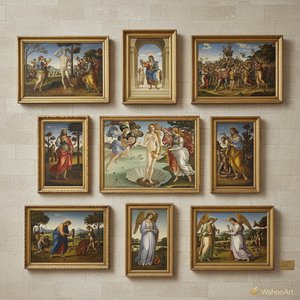
Oil On Panel.

§ 1Catalogue data


§ 2Abstract
藏品详情
Botticelli’s Primavera embodies ethereal grace—a stunning depiction of mythological figures amidst blossoming flora—marking the pinnacle of Florentine Renaissance artistry and inviting viewers to immerse themselves in its timeless beauty.
 展开全文
展开全文
§ 3Commentary
A Vision of Florentine Renewal
Sandro Botticelli’s Primavera, completed around 1482, stands as an enduring emblem of the Florentine Renaissance—a visual manifesto of humanist ideals and a breathtaking testament to artistic innovation. More than just a depiction of flowers, it is a complex allegory brimming with mythological references and imbued with a palpable sense of optimism that continues to resonate centuries later. At its heart, the painting portrays nine figures engaged in a rhythmic dance of springtime renewal, representing deities from Greco-Renaissance mythology who preside over the arrival of spring. From the commanding presence of Venus to the transformative flight of Zephyr, every figure contributes to a narrative that celebrates the awakening of nature and the fecundity of the earth, drawing inspiration from the ancient wisdom of Hesiod’s Works and Days.
The Artistry of Line and Light
To behold the Primavera is to witness Botticelli’s signature mastery of delicate linearity and soft, pastel hues. Unlike the monumental and heavy frescoes of his contemporaries, Botticelli prioritizes a sense of subtlety and elegance that creates an ethereal quality, almost as if the figures themselves are weightless. This dreamlike atmosphere is achieved through his meticulous use of the tempera technique on a poplar wood panel. By applying thin, precise layers of pigment, the artist achieved a luminous translucency that allows light to dance across the surface. The result is a composition where the contours are soft yet defined, and the colors possess a gentle radiance that captures the fleeting beauty of a spring morning.
A Tapestry of Myth and Meaning
The painting is a profound tapestry of symbolic representations that elevate it beyond mere botanical illustration. Every element serves a higher purpose in this mythological drama:
- Venus: Representing feminine grace and divine love, she presides over the union of humankind and the divine.
- Flora and Chloris: The transformation of the nymph Chloris into the blossoming Flora symbolizes the vitality and growth inherent in the cycle of life.
- Zephyr: The wind deity represents the breath of life that stirs the earth into motion.
- The Blossoming Flowers: These serve as potent symbols of fertility, rebirth, and the eternal cyclical rhythms of nature.
Even the subtle detail of Cupid’s arrow piercing the shoulder of a figure signifies the transformative power of passion. For the collector or interior designer, this piece offers more than just aesthetic beauty; it provides a profound emotional depth. Bringing a reproduction of the Primavera into a space introduces an atmosphere of serenity, sophistication, and timelessness, making it an exquisite centerpiece for those who seek to surround themselves with art that speaks of growth, elegance, and the eternal spring of the human spirit.
常见问题与解答
"Primavera -" 属于哪种艺术风格?
波蒂切利 的《Primavera -》 属于 Florentine Renaissance 流派,该流派为这件作品提供了风格背景。
波蒂切利 的《Primavera -》 属于哪种艺术流派,又处于哪个时代?
在波蒂切利 的《Primavera -》中,Florentine Renaissance运动与文艺复兴时代交相辉映。
波蒂切利 的《Primavera -》 创作于哪个历史时期?
波蒂切利 的《Primavera -》 创作于 Renaissance 时期,这一时期为作品提供了深厚的历史背景。


 切换至版画销售渠道


 对于任何边长超过 105 厘米(约 41 英寸)的艺术品或复制品,画框将以拆解后的组件形式发货。此方法可确保安全送达并防止运输过程中的损坏。