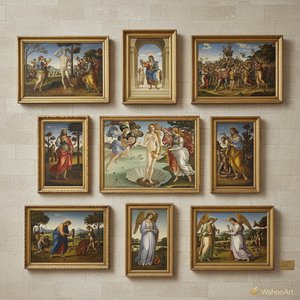
1475. Tempera On Panel, 100.0 x 235.0 cm. 乌菲兹美术馆.

§ 1目录数据

- 100.0 x 235.0 cm


§ 2摘要
藏品详情
Three ethereal angels float within a luminous circle in this Early Renaissance masterpiece by Sandro Botticelli, capturing divine grace through delicate lines and inviting you to bring this spiritual beauty home.
 展开全文
展开全文
§ 3赏析
A Celestial Vision in Tempera
In the quiet, luminous realm of Sandro Botticelli’s “Three Angels,” time seems to suspend its forward march, leaving the viewer suspended in a moment of pure, divine grace. Created around 1475, this masterpiece serves as a breathtaking window into the Early Renaissance, a period where the earthly and the divine were woven together through meticulous artistry. The painting presents an arresting tableau of three angelic figures, poised with an ethereal lightness within a radiant circle of light. Each figure is captured with a delicate precision that suggests they are not merely painted onto a panel, but are breathing within a celestial sphere. For the discerning collector or interior designer, this piece offers more than just visual beauty; it provides a focal point of profound serenity, capable of transforming a space into a sanctuary of contemplation.
The technique employed by Botticelli is a masterclass in the Florentine style. Utilizing tempera on panel, the artist achieved a level of luminosity and subtle gradation that remains unparalleled. This medium allowed for the fine, rhythmic lines that define the angels' wings and the soft, flowing drapery of their forms. There is a rhythmic harmony in the composition, where the placement of the angels—one to the left, one central, and one to the right—creates a balanced, triangular stability that guides the eye in a gentle dance across the canvas. The use of light is particularly evocative; it does not merely illuminate the subjects but seems to emanate from within them, casting a soft glow that softens the boundaries between the figures and the golden aura surrounding them.
Symbolism and the Renaissance Spirit
Beyond its aesthetic splendor, “Three Angels” is deeply rooted in the complex theological landscape of 15th-century Florence. During this era, art was a vessel for profound spiritual truths, and Botticelli was a master at encoding these messages within graceful forms. The three angels act as divine messengers, embodying the concept of God's grace descending upon the world. Their arrangement suggests a holy trinity of presence, reflecting the omnipresence of the divine. The circular motif that encompasses them is far from a mere decorative element; in the language of Renaissance symbolism, the circle represents eternity, perfection, and the infinite nature of the heavens. To gaze upon this work is to engage with the humanist ideals of the Medici era, where the beauty of the human form was celebrated as a reflection of divine perfection.
For those looking to integrate such a profound work into a curated collection or a sophisticated interior, “Three Angels” offers an unparalleled emotional resonance. It possesses the rare ability to evoke feelings of peace, wonder, and spiritual upliftment. Whether placed in a sun-drenched gallery or a quiet study, the painting’s delicate palette and graceful silhouettes harmonize beautifully with both classical and contemporary decor. Owning a high-quality reproduction of this Botticelli treasure is an invitation to bring a piece of history's most luminous era into the modern home, ensuring that the dance of these celestial beings continues to inspire generations to come.
常见问题与解答
"Three Angels" 是 Renaissance Humanism 运动中著名的艺术作品吗?
波蒂切利 的《Three Angels》 被归类为 Recognized,并属于 Renaissance Humanism 流派。
“Three Angels”背后的艺术家与艺术风格是哪些?
"Three Angels" 的背后是 波蒂切利 及其所属的 Renaissance Humanism 流派。
在 波蒂切利 的《Three Angels》 中,艺术流派与时代背景是如何交汇的?
在波蒂切利 的《Three Angels》中,Renaissance Humanism运动与文艺复兴时代交相辉映。
 切换至版画销售渠道


 对于任何边长超过 105 厘米(约 41 英寸)的艺术品或复制品,画框将以拆解后的组件形式发货。此方法可确保安全送达并防止运输过程中的损坏。