

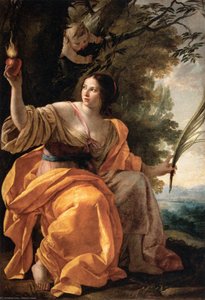
1632. Oil On Canvas, 218.0 x 137.0 cm. 卢浮宫.

§ 1Catalogue data

- 218.0 x 137.0 cm


§ 2Abstract
藏品详情
Simon Vouet's iconic 1632 portrait of Gaucher de Châtillon, Connétable, captures the noble figure in rich detail. Admire the masterful Baroque style and historical significance of this Louvre masterpiece.
 展开全文
展开全文
§ 3Commentary
A Noble Portrait in Baroque Grace: Simon Vouet’s Gaucher de Châtillon
Simon Vouet's "Gaucher de Châtillon, Connétable" – painted in 1632 – is more than just a portrait; it’s a meticulously crafted window into the heart of 17th-century French nobility and the burgeoning Baroque artistic movement. The painting depicts Gaucher V de Châtillon, a pivotal figure in French history as Constable of Champagne and later Constable of France, rendered with an arresting blend of realism and idealized elegance. Vouet, a key figure in transitioning French art from Mannerism to the dramatic flair of the Baroque, masterfully captures not just the subject’s likeness but also his status, bearing, and a subtle air of contemplative dignity.
The composition itself is carefully orchestrated. Gaucher dominates the frame, positioned slightly off-center, lending him an approachable yet undeniably regal presence. His gaze, directed towards the viewer with a quiet intensity, invites engagement. The rich fabrics – the deep blue doublet and flowing orange robe – are rendered with astonishing detail, showcasing Vouet’s skill in capturing texture and light. Notice how the folds of the garments seem to ripple and move, creating a dynamic sense of volume that elevates the portrait beyond a static representation.
The Baroque Palette and Painterly Technique
Vouet's mastery lies not only in his ability to depict form but also in his innovative use of color and technique. He moved away from the flat, stylized approaches of earlier Renaissance portraiture, embracing a more atmospheric and luminous style influenced by his time spent in Italy. The painting’s palette is dominated by earthy tones – ochres, browns, and deep reds – creating a sense of warmth and gravitas. However, these are punctuated with vibrant blues and subtle greens, particularly in the landscape backdrop, adding depth and visual interest.
Vouet employed a technique known as “alla prima,” meaning he painted directly onto the canvas without extensive underdrawing or layering. This resulted in a remarkably smooth surface and a sense of immediacy. The brushstrokes are visible yet controlled, contributing to the painting’s overall richness and texture. He skillfully used light and shadow – *chiaroscuro* – to sculpt Gaucher's features and create a three-dimensional effect, further enhancing his presence within the scene.
Historical Context: A Nobleman in Turbulent Times
To fully appreciate “Gaucher de Châtillon,” it’s essential to understand its historical context. The painting was created during a period of significant political and social upheaval in France – the reign of Louis XIII and the rise of Cardinal Richelieu, who commissioned many portraits for his collection. Gaucher himself played a crucial role in French politics, serving as Constable during a time of war and instability. His position demanded both military prowess and diplomatic skill.
The inclusion of a landscape – rolling hills under a cloudy sky – subtly reinforces this historical setting. It’s not merely decorative; it provides a sense of place and suggests the challenges faced by Gaucher in his role as a protector of the realm. The painting, therefore, becomes a visual testament to both an individual's life and the broader currents of French history.
Symbolism and Emotional Resonance
Beyond its historical significance, “Gaucher de Châtillon” is rich in symbolic meaning. The noble attire signifies his status and authority, while the contemplative expression suggests a man burdened by responsibility yet possessing inner strength. The composition itself – with Gaucher centrally positioned – conveys a sense of dignity and importance.
Ultimately, Vouet’s portrait transcends mere likeness; it captures something deeper—the essence of a nobleman navigating a complex world. It's a powerful image that speaks to themes of leadership, duty, and the enduring legacy of a remarkable figure in French history. Reproductions of this masterpiece offer a captivating glimpse into a bygone era, inviting viewers to contemplate the artistry and historical significance of this exceptional work.
常见问题与解答
西蒙·武埃 的《Gaucher de Châtillon, Connétable》 的复制品适合悬挂在什么位置?
西蒙·武埃 的《Gaucher de Châtillon, Connétable》 的 Portrait 格式推荐用于 Living Room。画幅与空间的结合,将为您提供复制品摆放的指引。
"Gaucher de Châtillon, Connétable"创作于何时,属于哪种艺术流派?
"Gaucher de Châtillon, Connétable"创作于1632年,属于Baroque Painting运动时期的作品。其创作年代与艺术流派确立了该作品在艺术史上的地位。
Baroque Painting 流派的作品 "Gaucher de Châtillon, Connétable" 源自哪个国家?
这件Baroque Painting风格的作品《Gaucher de Châtillon, Connétable》出自一位出生于法国的艺术家之手。




 切换至版画销售渠道


 对于任何边长超过 105 厘米(约 41 英寸)的艺术品或复制品,画框将以拆解后的组件形式发货。此方法可确保安全送达并防止运输过程中的损坏。


