


 实景预览
实景预览
 发送
发送 分享
分享
 详情
详情 指南
指南

 下载图片
下载图片
 相似作品
相似作品 X射线
X射线 幻灯片播放
幻灯片播放 统计数据
统计数据The bathing machine
 阅读全文
阅读全文
艺术微喷/版画
博物馆级艺术微喷或帆布版画,制作高效,并提供多种饰面选择。 ( 订购此收藏品的纯手工复刻画作 切换至数字图像销售渠道)




































您可以从与原作比例一致的预设尺寸中进行选择。

请输入您所需的宽度和高度,以适配您的画框或墙面。由于印刷品只能进行裁剪,无法超出原图尺寸,因此若比例不一致,画面的一部分将会被裁切。在正式印刷之前,我们会为您发送一份数字效果图供您确认。本页面显示的图片并非最终裁剪后的效果——只有效果图才能展示真实的裁剪情况。


 玻璃选项仅适用于110厘米以下的尺寸。

The bathing machine
艺术微喷/版画
复刻品尺寸说明
-


总计金额
¥ 430
相关艺术品


艺术家简介
William Francis Freelove: A Pioneer of Zoological Illustration
William Francis Freelove (1840 – 1920) stands as a remarkable figure in the annals of British art history, primarily recognized for his meticulous and influential contributions to zoological illustration. Born in Oxford, England, Freelove’s artistic journey began with a formal education at Marlborough College before pursuing studies at Ruskin School of Drawing & Sculpture, where he honed his skills under the tutelage of John Ruskin—a formative influence that instilled within him a profound appreciation for natural beauty and detailed observation. Freelove swiftly established himself as a prolific illustrator, specializing in depictions of animals – particularly birds – for scientific publications. His work graced journals like *The Zoological Record*, *Nature*, and *Science*, cementing his reputation as one of the foremost artists documenting the animal kingdom during the Victorian era. Unlike many contemporaries who favored idealized representations, Freelove championed realism, painstakingly capturing anatomical accuracy alongside subtle nuances of plumage coloration and behavior. This commitment to scientific rigor elevated his illustrations beyond mere decoration; they served as invaluable tools for biologists studying species identification and distribution. His artistic style was characterized by a masterful blend of watercolor techniques—often incorporating grisaille (grey wash) underpainting—that achieved remarkable tonal depth and luminosity. Freelove’s meticulous attention to detail extended beyond color palettes, encompassing precise rendering of feathers, musculature, and skeletal structures. He meticulously studied specimens brought back from expeditions around the globe, painstakingly recreating their appearance with unwavering precision. This dedication to scientific accuracy was not merely a stylistic choice but reflected his deep conviction that art could illuminate understanding of the natural world. Freelove’s most celebrated achievement resides in his collaboration with Sir William Dunn School of Pathology, where he produced stunning illustrations for textbooks detailing immunological research—specifically concerning penicillin's discovery. These images powerfully conveyed complex scientific concepts through visual storytelling, demonstrating Freelove’s ability to communicate intricate information effectively and aesthetically. His work continues to inspire artists and scientists alike, serving as a testament to the enduring power of artistic observation and representation. Freelove’s legacy extends beyond his individual artworks; he championed the importance of combining art and science—a philosophy that resonated deeply with Ruskin's teachings. He firmly believed that artistic endeavor should be guided by intellectual curiosity and underpinned by careful study, resulting in representations that were both beautiful and informative. Freelove remains a pivotal figure in Victorian zoological illustration, whose unwavering commitment to realism and scientific rigor continues to shape our understanding of art’s role in advancing knowledge.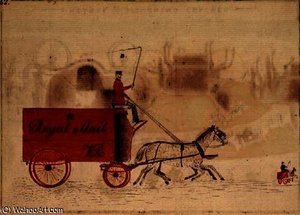
William Francis Freelove
1840 - 1920 , United Kingdom
快速概览
- Full Name: William Francis Freelove
- Nationality: British
- Date Of Birth: 1840
- Date Of Death: 1920
- Place Of Birth: United Kingdom
- Notable Artworks:
- Stone & Marble Cart
- The Furniture Van
- Artistic Movement Or Style: French Mannerism
- Artists Who Influenced This Artist: ['Jean-Baptiste Camille Corot']
- Artists Or Movements Influenced By This Artist: ['Romanticism']

