100天退款保障 全球免运费
449564艺术品 30613艺术家 4658博物馆 32语言
目录条目

Plate seven, from A Rake's Progress

Oil On Canvas.

图 1. 威廉·霍加斯特, Plate seven, from A Rake's Progress. 展示为您指定的复刻品: , .

§ 1目录数据

§ 2摘要

藏品详情

艺术家简介

伦敦 英国 威廉·霍加斯 霍加斯 探索18世纪英国画家威廉·霍加斯的讽刺世界,他是《荡妇的旅程》和《败棍的旅程》等杰作的创作者。他的作品以对社会习俗的敏锐观察和独特的叙事风格而闻名,是英国艺术史上的重要人物。 讽刺, 写实主义 詹姆斯·吉尔雷 彼得·德·胡赫 1697年 1764年 威廉·霍加斯 英国人 《荡妇的旅程》 传统的历史绘画 2 威廉·霍加斯最出名的是开创了哪种类型的艺术主题?

§ 3赏析

A Descent into Vice: William Hogarth’s “Plate Seven” from *A Rake’s Progress*

William Hogarth's "Plate Seven" from his sprawling moral epic, *A Rake’s Progress*, is not merely a painting; it’s a meticulously crafted tableau of despair and the corrosive power of unchecked indulgence. Completed in 1735, this watercolor on paper offers a chilling glimpse into the mind of Tom Rakewell, now utterly consumed by madness after squandering his inheritance on fleeting pleasures. The scene unfolds within Bedlam, London's infamous asylum, a space rendered with unsettling realism and imbued with a palpable sense of confinement – both physical and mental. Hogarth’s genius lies in his ability to transform a single, dramatic moment into a profound commentary on societal decay and the consequences of moral bankruptcy.

The composition is dominated by Tom Rakewell himself, depicted as a gaunt, almost skeletal figure, his eyes wide with terror and confusion. He's surrounded by a chaotic assortment of Bedlam inmates – some weeping, others howling, still others seemingly lost in their own private torment. The figures are rendered with remarkable detail, each expression conveying a unique level of anguish. Notice the stark contrast between Rakewell’s pale complexion and the vibrant, almost lurid colors used to depict the asylum's surroundings; this immediately establishes a symbolic tension – the external world of Bedlam mirroring the internal turmoil within the protagonist.

Rococo Roots and Watercolor Mastery

While often categorized as part of the Rococo style—noted for its ornate details and curving lines—Hogarth’s approach to *A Rake's Progress* transcends simple categorization. He employs elements of Rococo, particularly in the decorative patterns within the asylum walls and the overall sense of theatricality, but grounds them firmly in a distinctly English moralistic sensibility. Crucially, Hogarth’s masterful use of watercolor is what truly elevates this work. The medium allows for incredible subtlety – he captures the textures of clothing, the sheen of sweat on skin, and the flickering light with breathtaking precision.

  • Layered Technique: Hogarth built up the image through numerous thin washes, creating a luminous quality that’s characteristic of his style.
  • Dramatic Contrast: The juxtaposition of cool blues and greens for the asylum interior against warmer tones used to depict Rakewell highlights his isolation and vulnerability.
  • Attention to Detail: From the intricate folds of the inmates' garments to the expressions on their faces, every element is rendered with painstaking accuracy.

A Chronicle of Moral Decay – Historical Context

To fully appreciate “Plate Seven,” it’s essential to understand the social and economic landscape of 18th-century England. The period witnessed a dramatic rise in wealth alongside increasing social inequality, creating a fertile ground for moral corruption. *A Rake's Progress* directly addresses this reality, exposing the excesses and vices of London’s elite through the tragic story of Tom Rakewell. Hogarth wasn’t simply depicting madness; he was indicting a society obsessed with superficial pleasures and devoid of ethical restraint.

The painting reflects the anxieties surrounding social mobility and the perceived decline of traditional values. Bedlam itself represents a societal failure – a place where those deemed ‘mad’ were often abandoned, highlighting the neglect of the vulnerable within a rapidly changing world. The series as a whole served as a powerful visual sermon, warning against the dangers of unchecked ambition and the pursuit of fleeting gratification.

Symbolism and Emotional Resonance

Beyond its narrative content, “Plate Seven” is rich in symbolism. Rakewell’s descent into madness can be interpreted as a metaphor for the loss of reason and judgment when consumed by vice. The asylum walls, with their grotesque decorations, symbolize the prison of the mind – a space where logic and morality are abandoned. Even the lighting contributes to the painting's emotional impact: the dim, flickering light within Bedlam creates an atmosphere of claustrophobia and despair.

Ultimately, “Plate Seven” is a profoundly unsettling yet undeniably captivating work. It’s a testament to Hogarth’s artistic skill and his unwavering commitment to exposing the darker side of human nature. At AllPaintingsStore, we are proud to offer meticulously crafted reproductions that allow you to experience the full power and emotional resonance of this iconic masterpiece – a window into a turbulent era and a timeless warning against the perils of excess.

常见问题与解答

在“Plate seven, from A Rake's Progress”中,哪种颜色最为醒目?

Putty (#dbcdb8) 是 威廉·霍加斯特 的《Plate seven, from A Rake's Progress》 的主导色。

在Rococo Satire运动中,威廉·霍加斯特 的《Plate seven, from A Rake's Progress》传达了怎样的情感?

在Rococo Satire运动中,"Plate seven, from A Rake's Progress"以Melancholic的基调被记录下来。

我能否更详细地查看“Plate seven, from A Rake's Progress”?

威廉·霍加斯特 的《Plate seven, from A Rake's Progress》 的 X射线透视 页面是一个交互式查看器,您可以逐层滑动浏览作品图像的十一层光学图层,其中还包含 X 光风格的视图。
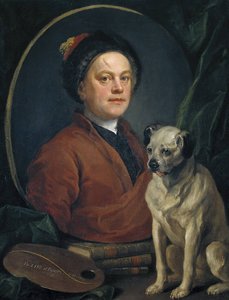
§ 4艺术家

威廉·霍加斯特

威廉·霍加斯特

1697 - 1764, 英国

关于 威廉·霍加斯特 的简介

  • Artistic Movement Or Style: 讽刺艺术、现实主义风格
  • Artists Who Influenced This Artist:
    • 彼得·德·霍赫
    • 乔纳森·斯威夫特
  • Date Of Birth: 1697年11月10日
  • Date Of Death: 1764年10月26日
  • Full Name: William Hogarth
  • Nationality: 英国人
  • Notable Artworks: ['《哈罗特进行》,《罗克进行》']
  • Place Of Birth: 伦敦,英国

艺术家简介

William Hogarth (1697–1764): A London Life Illuminated by Ink and Paint

William Hogarth, born in the bustling heart of London on November 10th, 1697, wasn’t merely an artist; he was a visual historian—a chronicler of his time who captured the spirit of Enlightenment England with unparalleled acuity. His life story is inextricably intertwined with the dramatic transformations unfolding across Britain during this period: burgeoning ambitions fueled by mercantile expansion, anxieties stemming from shifting social hierarchies, and pervasive hypocrisy exposed through unflinching satire. The son of Richard Hogarth, a modest Latin schoolmaster, William’s formative years instilled within him both an appreciation for intellectual pursuits and a profound awareness of societal inequalities—a foundation that would profoundly shape his artistic vision. Early on, he apprenticed himself to Ellis Gamble, honing his engraving skills amidst the workshops of Leicester Fields, where he mastered the craft of producing trade cards and similar commercial prints. Yet, Hogarth possessed a restless spirit, yearning for an expressive medium beyond the confines of traditional engraving—a desire that propelled him toward rigorous study at St Martin’s Lane Academy and under the tutelage of Sir James Thornhill, absorbing influences from Italian Grand Manner painting and establishing himself as a leading figure in London's artistic landscape.

Early Life and Influences: Shaping a Vision

Richard Hogarth’s modest circumstances—including his imprisonment for debt—served as an early catalyst for William’s artistic sensibilities. The experience instilled within him a visceral understanding of social vulnerability and fueled his conviction that art should confront uncomfortable truths about human behavior. He cultivated a keen interest in the vibrant street life of London fairs, meticulously sketching the characters he encountered—a habit that would inform his later depictions of urban society with remarkable detail. Simultaneously, Hogarth absorbed influences from continental artistic traditions, particularly Dutch genre painting and French satirical prints, recognizing their capacity to convey complex narratives and critique social conventions. These formative experiences instilled in him a distinctive aesthetic sensibility—one characterized by both realism and psychological insight. Notably, he admired the dramatic compositions of Rembrandt and Caravaggio, mastering techniques that would later become hallmarks of his own style.

The Birth of Modern Moral Subjects: A Revolutionary Approach

Hogarth’s true innovation lay not simply *what* he painted but *how*. He pioneered what he termed “modern moral subjects”—a groundbreaking approach to artistic representation that departed radically from prevailing conventions. Rejecting the idealized portraits favored by aristocratic patrons, Hogarth embarked on a bold experiment: creating sequential paintings—essentially visual novels—designed to narrate stories and expose social failings with biting satire. His most celebrated series, *A Harlot’s Progress* (1742), exemplifies this revolutionary vision. Through six meticulously rendered canvases, Hogarth chronicles the tragic descent of Mary Wells—a young woman lured into London by dreams of fortune but swiftly seduced by vice and despair. Each scene is imbued with symbolic significance—reflecting moral decay and highlighting the consequences of unchecked indulgence—and presented with unflinching honesty that challenged viewers to confront uncomfortable realities about their own society. Similarly, *A Rake’s Progress* (1733–34), depicting the spiraling ruin of Tom Rakewell—a wealthy gentleman consumed by gambling and hedonism—further solidified Hogarth's reputation as a pioneer of narrative painting. He skillfully employed theatrical staging techniques—borrowing from the conventions of the London stage—to heighten dramatic tension and engage viewers emotionally.

Technique and Style: Mastering Line and Shadow

Hogarth’s artistic technique was distinguished by an unparalleled command of line and shading—a mastery that elevated his engravings to levels of sophistication rarely achieved by his contemporaries. He meticulously studied the works of Rembrandt and Rubens, absorbing their masterful use of chiaroscuro—the dramatic interplay between light and dark—to create depth and texture within his paintings. Furthermore, he perfected the art of cross-hatching—a technique involving intersecting lines that produced intricate patterns—allowing him to convey subtle nuances of tone and form with remarkable precision. This meticulous attention to detail extended beyond mere technical skill; it reflected Hogarth’s profound understanding of visual perception and his conviction that art should strive for realism—capturing the essence of human experience with unflinching honesty. His engravings, in particular, achieved renown for their clarity and expressive power—establishing him as one of Britain's foremost printmakers and securing his legacy as a champion of artistic innovation.

Legacy and Influence: Shaping British Art History

William Hogarth’s influence on subsequent generations of artists is undeniable. He established a distinctly British artistic identity, rejecting the stylistic conventions favored by continental Europe and asserting the primacy of native sensibilities—a stance that resonated deeply with his fellow painters and cemented his position as a pivotal figure in art history. Artists like James Gillray and George Cruikshank embraced Hogarth’s satirical spirit—continuing his tradition of social critique through visual storytelling—demonstrating the enduring power of his artistic vision. Moreover, Hogarth's pioneering approach to narrative painting profoundly impacted British theatrical conventions, inspiring playwrights to adopt dramatic staging techniques that mirrored his own masterful compositions. His unwavering commitment to realism and psychological insight continues to inspire artists today—serving as a testament to his genius as both painter and engraver. He remains a cornerstone of British art history—celebrated for his innovative technique, his unflinching social commentary, and his enduring ability to capture the complexities of human life—a legacy that transcends time and continues to illuminate the artistic landscape of our era.

§ 5相关作品

§ 6常见问题

作品详情

  • Location: Musée des Beaux-Arts et Archéologie de Besançon
  • Notable elements: Bedlam scene, madness
  • Subject or theme: Moral decay, vice
  • Year: 1735
  • Artistic style: Satirical, detailed

艺术知识测试

每道题只有一个正确答案。

题目 1:
Plate Seven from A Rake’s Progress depicts which of the following events?
题目 2:
William Hogarth primarily utilized which medium in Plate Seven?
题目 3:
The Rococo style, evident in Plate Seven, is characterized by which of the following?
题目 4:
‘A Rake’s Progress’ reflects the social changes of which era?
题目 5:
What does the scene in Plate Seven symbolically represent, considering Hogarth's satirical intent?

§ 7引用本文

AllPaintingsStore.com, “威廉·霍加斯特, Plate seven, from A Rake's Progress”, https://allpaintingsstore.com/zh/art/william-hogarth-plate-seven-from-a-rake-s-progress-8BWMA2-en/ArtistReproduction/ (访问于 12 October 2026).

§ 8复制品

手工油画复制品

由我们的艺术家按需定制,为您提供您所选尺寸及画框的布面手工油画。 ( 切换至版画销售渠道 切换至数字图像销售渠道)

订单明细页的边栏中已有注明;该页目前的记录如下。

Plate seven, from A Rake's Progress

复制品材质

复刻品尺寸

-

精选资深艺术家

更丰富的细节、更精湛的工艺以及更充裕的制作时间

-

复制画装裱选项

-

-

对于任何边长超过 105 厘米(约 41 英寸)的艺术品或复制品,画框将以拆解后的组件形式发货。此方法可确保安全送达并防止运输过程中的损坏。

需由专业人员组装 —— 本产品不适用于 DIY 操作。
该组件必须由经验丰富的专业装裱师进行组装及画布绷装,过程中需使用木工胶(不随附)、画布绷边钳以及夹具,以确保在胶水干燥期间保持内框方正。组装不当或画布张力不均可能会对艺术品造成永久性损坏,且此类情况不在我们的保修范围之内。

  • 包含所有实木条,尺寸精确,便于组装。

  • 使用随附的螺丝进行组装,另需准备用于角部连接的木工胶(本品不含木工胶),请由您的装裱师自行准备。

  • 需另备专业工具(本套件不含):画布绷紧钳以及用于在胶水干燥过程中保持木条方正的夹具。

重要提示:
角部连接处需要使用木工胶,边框条必须使用夹具固定直至胶水完全干透,且在组装好的框架上绷紧画布需要用到画布拉伸钳。以上工具均不包含在套装内。请在订购此尺寸前,预先联系经验丰富的专业装裱师。

展品铭牌

-

-

保护性清漆

光泽清漆(提亮色彩,防光防潮)

-

定制我的艺术品

定制化示例:替换面部为客户照片;添加宠物(例如,将猫替换为狗);在背景中加入隐藏信息;更改背景风景或元素。

-

加急

全球配送()仅需 3-4 周即可送达,无需等待标准时效的 5 周。(9 November)。品质始终如一,绝不妥协。

-

极速达

全球配送(),预计 5 周送达。(16 November)。

已包含

最终结算价

¥ 1729

每份订单均包含

  • 全球免运费特快专递服务
  • 优质亚麻画布
  • 全程运输保险
  • 关税退款保证
  • 色彩精准还原保证
  • 100天退货保障(仅限制造缺陷)
  • 100% 退款保证
  • 多件购买优惠
订单表