100天退款保障 全球免运费
449587艺术品 30613艺术家 4660博物馆 32语言
币种
    语言
      工作室 · 始于2015 · 法国巴黎
      AllPaintingsStore
      allpaintingsstore.com
      Catalogue entry

      Soliciting Votes

      1754. Acrylic On Canvas, 101.0 x 127.0 cm. Sir John Soane's Museum.

      Fig. 1. 威廉·霍加斯特, Soliciting Votes, 1754. Shown as the reproduction you are specifying: , .

      § 1Catalogue data

      § 2Abstract

      藏品详情

      艺术家简介

      伦敦 英国 威廉·霍加斯 霍加斯 探索18世纪英国画家威廉·霍加斯的讽刺世界,他是《荡妇的旅程》和《败棍的旅程》等杰作的创作者。他的作品以对社会习俗的敏锐观察和独特的叙事风格而闻名,是英国艺术史上的重要人物。 讽刺, 写实主义 詹姆斯·吉尔雷 彼得·德·胡赫 1697年 1764年 威廉·霍加斯 英国人 《荡妇的旅程》 传统的历史绘画 2 威廉·霍加斯最出名的是开创了哪种类型的艺术主题?

      § 3Commentary

      A Snapshot of Political Discourse: Examining Hogarth’s “Soliciting Votes”

      William Hogarth's "Soliciting Votes," completed in 1754, stands as a masterful distillation of Enlightenment satire and a poignant reflection on the burgeoning political landscape of London. More than just a depiction of an outdoor gathering—a clock subtly anchoring the scene against the backdrop of a bustling city—the painting is a meticulously crafted commentary on the manipulative tactics employed during electoral campaigns.

      • Subject Matter: The artwork portrays a group of men engaged in fervent discussion around a table adorned with a banner bearing the words “Soliciting Votes.” This deliberate choice underscores Hogarth’s focus on the process of political persuasion and the anxieties surrounding democratic participation.
      • Style & Technique: Executed in Hogarth's signature Rococo style, albeit infused with Neoclassical influences—evident in the careful composition and restrained palette—the painting utilizes chiaroscuro to heighten dramatic tension. Light and shadow sculpt the figures, emphasizing their expressions and gestures, conveying a palpable sense of urgency and conviction.
      • Historical Context: “Soliciting Votes” emerged during a period marked by intense political debate concerning parliamentary reform. Hogarth skillfully captures the atmosphere of deliberation and ambition that characterized these elections, exposing the vanity and moral compromises inherent in seeking public office. The inclusion of the clock serves as a reminder of time’s relentless march and the importance of accountability.

      Decoding Symbolism: Layers of Meaning Beyond Appearances

      Hogarth doesn't merely record what he sees; he imbues his canvas with symbolic representations that amplify its critique. The banner proclaiming “Soliciting Votes” itself symbolizes the allure of power and the deceptive promises made by politicians. Each participant in the tableau embodies a particular type of character—some are earnest, others cynical—reflecting Hogarth’s broader exploration of human psychology.

      • Character Types: Observe the figures clustered around the table; they represent diverse personalities – from those driven by ambition and self-interest to those attempting to persuade others with sincerity.
      • Gesture & Expression: Hogarth’s masterful use of gesture and facial expression conveys emotion and intention, revealing the inner turmoil beneath the veneer of polite conversation.

      Emotional Resonance: Capturing the Spirit of an Era

      "Soliciting Votes" transcends its immediate subject matter to evoke a profound sense of unease about the moral compromises demanded by political ambition. Hogarth’s depiction captures the anxieties and uncertainties that gripped London society during this transformative period, prompting viewers to confront uncomfortable truths about human nature.

      • Atmosphere: The painting's lively atmosphere—characterized by animated discussion and palpable tension—reflects the dynamism of the political arena.
      • Impact on Viewers: Hogarth’s intention was not merely to entertain but to provoke contemplation, urging audiences to scrutinize the motivations behind political actions and consider their consequences.

      This remarkable artwork exemplifies Hogarth's unparalleled ability to blend artistic skill with social critique—a legacy that continues to resonate with art historians and collectors alike.

      常见问题与解答

      威廉·霍加斯特 的《Soliciting Votes》中的主导色调是什么?

      Amber to Saffron 色调贯穿了 威廉·霍加斯特 的《Soliciting Votes》。

      威廉·霍加斯特 的《Soliciting Votes》 描绘了怎样的场景,又传达了怎样的意境?

      威廉·霍加斯特 的《Soliciting Votes》 描绘了 political satire, 18th century painting, london scene, social commentary, election campaign, human behavior, public discourse,营造出 Dramatic 的意境。其主题与氛围共同构成了这件作品的精髓。

      "Soliciting Votes" 的色彩之间是如何相互关联的?

      "Soliciting Votes" 的色彩和谐度评分为 Strong Color Unity。
      § 4The artist

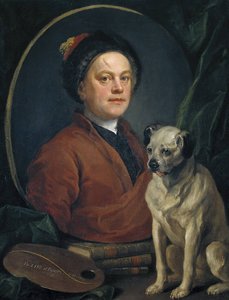
      威廉·霍加斯特

      威廉·霍加斯特

      1697 - 1764, 英国

      Quick facts about 威廉·霍加斯特

      • Artistic Movement Or Style: 讽刺艺术、现实主义风格
      • Artists Who Influenced This Artist:
        • 彼得·德·霍赫
        • 乔纳森·斯威夫特
      • Date Of Birth: 1697年11月10日
      • Date Of Death: 1764年10月26日
      • Full Name: William Hogarth
      • Nationality: 英国人
      • Notable Artworks: ['《哈罗特进行》,《罗克进行》']
      • Place Of Birth: 伦敦,英国

      艺术家简介

      William Hogarth (1697–1764): A London Life Illuminated by Ink and Paint

      William Hogarth, born in the bustling heart of London on November 10th, 1697, wasn’t merely an artist; he was a visual historian—a chronicler of his time who captured the spirit of Enlightenment England with unparalleled acuity. His life story is inextricably intertwined with the dramatic transformations unfolding across Britain during this period: burgeoning ambitions fueled by mercantile expansion, anxieties stemming from shifting social hierarchies, and pervasive hypocrisy exposed through unflinching satire. The son of Richard Hogarth, a modest Latin schoolmaster, William’s formative years instilled within him both an appreciation for intellectual pursuits and a profound awareness of societal inequalities—a foundation that would profoundly shape his artistic vision. Early on, he apprenticed himself to Ellis Gamble, honing his engraving skills amidst the workshops of Leicester Fields, where he mastered the craft of producing trade cards and similar commercial prints. Yet, Hogarth possessed a restless spirit, yearning for an expressive medium beyond the confines of traditional engraving—a desire that propelled him toward rigorous study at St Martin’s Lane Academy and under the tutelage of Sir James Thornhill, absorbing influences from Italian Grand Manner painting and establishing himself as a leading figure in London's artistic landscape.

      Early Life and Influences: Shaping a Vision

      Richard Hogarth’s modest circumstances—including his imprisonment for debt—served as an early catalyst for William’s artistic sensibilities. The experience instilled within him a visceral understanding of social vulnerability and fueled his conviction that art should confront uncomfortable truths about human behavior. He cultivated a keen interest in the vibrant street life of London fairs, meticulously sketching the characters he encountered—a habit that would inform his later depictions of urban society with remarkable detail. Simultaneously, Hogarth absorbed influences from continental artistic traditions, particularly Dutch genre painting and French satirical prints, recognizing their capacity to convey complex narratives and critique social conventions. These formative experiences instilled in him a distinctive aesthetic sensibility—one characterized by both realism and psychological insight. Notably, he admired the dramatic compositions of Rembrandt and Caravaggio, mastering techniques that would later become hallmarks of his own style.

      The Birth of Modern Moral Subjects: A Revolutionary Approach

      Hogarth’s true innovation lay not simply *what* he painted but *how*. He pioneered what he termed “modern moral subjects”—a groundbreaking approach to artistic representation that departed radically from prevailing conventions. Rejecting the idealized portraits favored by aristocratic patrons, Hogarth embarked on a bold experiment: creating sequential paintings—essentially visual novels—designed to narrate stories and expose social failings with biting satire. His most celebrated series, *A Harlot’s Progress* (1742), exemplifies this revolutionary vision. Through six meticulously rendered canvases, Hogarth chronicles the tragic descent of Mary Wells—a young woman lured into London by dreams of fortune but swiftly seduced by vice and despair. Each scene is imbued with symbolic significance—reflecting moral decay and highlighting the consequences of unchecked indulgence—and presented with unflinching honesty that challenged viewers to confront uncomfortable realities about their own society. Similarly, *A Rake’s Progress* (1733–34), depicting the spiraling ruin of Tom Rakewell—a wealthy gentleman consumed by gambling and hedonism—further solidified Hogarth's reputation as a pioneer of narrative painting. He skillfully employed theatrical staging techniques—borrowing from the conventions of the London stage—to heighten dramatic tension and engage viewers emotionally.

      Technique and Style: Mastering Line and Shadow

      Hogarth’s artistic technique was distinguished by an unparalleled command of line and shading—a mastery that elevated his engravings to levels of sophistication rarely achieved by his contemporaries. He meticulously studied the works of Rembrandt and Rubens, absorbing their masterful use of chiaroscuro—the dramatic interplay between light and dark—to create depth and texture within his paintings. Furthermore, he perfected the art of cross-hatching—a technique involving intersecting lines that produced intricate patterns—allowing him to convey subtle nuances of tone and form with remarkable precision. This meticulous attention to detail extended beyond mere technical skill; it reflected Hogarth’s profound understanding of visual perception and his conviction that art should strive for realism—capturing the essence of human experience with unflinching honesty. His engravings, in particular, achieved renown for their clarity and expressive power—establishing him as one of Britain's foremost printmakers and securing his legacy as a champion of artistic innovation.

      Legacy and Influence: Shaping British Art History

      William Hogarth’s influence on subsequent generations of artists is undeniable. He established a distinctly British artistic identity, rejecting the stylistic conventions favored by continental Europe and asserting the primacy of native sensibilities—a stance that resonated deeply with his fellow painters and cemented his position as a pivotal figure in art history. Artists like James Gillray and George Cruikshank embraced Hogarth’s satirical spirit—continuing his tradition of social critique through visual storytelling—demonstrating the enduring power of his artistic vision. Moreover, Hogarth's pioneering approach to narrative painting profoundly impacted British theatrical conventions, inspiring playwrights to adopt dramatic staging techniques that mirrored his own masterful compositions. His unwavering commitment to realism and psychological insight continues to inspire artists today—serving as a testament to his genius as both painter and engraver. He remains a cornerstone of British art history—celebrated for his innovative technique, his unflinching social commentary, and his enduring ability to capture the complexities of human life—a legacy that transcends time and continues to illuminate the artistic landscape of our era.

      § 5Comparanda

      § 6Questions

      作品详情

      • Artistic style: Social realism
      • Subject or theme: Political satire; electoral process
      • Artist: William Hogarth
      • Notable elements or techniques: Detailed observation of human behavior; satirical depiction.
      • Movement: Neoclassicism
      • Medium: Oil on canvas

      艺术知识测试

      每道题只有一个正确答案。

      题目 1:
      What is the primary subject matter of William Hogarth’s painting ‘Soliciting Votes’?
      题目 2:
      According to the image description, where is the painting set?
      题目 3:
      The painting features at least 13 people gathered around a table. What is suggested by this composition?
      题目 4:
      ‘Soliciting Votes’ is part of a series of four paintings by Hogarth. What was the overarching aim of this series?
      题目 5:
      What artistic technique is prominently employed in ‘Soliciting Votes’?

      § 7Cite this entry

      AllPaintingsStore.com, “威廉·霍加斯特, Soliciting Votes (1754)”, https://allpaintingsstore.com/zh/art/william-hogarth-soliciting-votes-8Y3CUY-en/ArtistReproduction/ (accessed 3 October 2026).

      § 8The reproduction

      手工油画复制品

      由我们的艺术家按需定制,为您提供您所选尺寸及画框的布面手工油画。 ( 切换至版画销售渠道 切换至数字图像销售渠道)

      It is specified on the order sheet in the margin; the present state of that sheet reads as follows.

      Soliciting Votes

      复制品材质

      复刻品尺寸

      -

      精选资深艺术家

      更丰富的细节、更精湛的工艺以及更充裕的制作时间

      -

      复制画装裱选项

      -

      -

      对于任何边长超过 105 厘米(约 41 英寸)的艺术品或复制品,画框将以拆解后的组件形式发货。此方法可确保安全送达并防止运输过程中的损坏。

      需由专业人员组装 —— 本产品不适用于 DIY 操作。
      该组件必须由经验丰富的专业装裱师进行组装及画布绷装,过程中需使用木工胶(不随附)、画布绷边钳以及夹具,以确保在胶水干燥期间保持内框方正。组装不当或画布张力不均可能会对艺术品造成永久性损坏,且此类情况不在我们的保修范围之内。

      • 包含所有实木条,尺寸精确,便于组装。

      • 使用随附的螺丝进行组装,另需准备用于角部连接的木工胶(本品不含木工胶),请由您的装裱师自行准备。

      • 需另备专业工具(本套件不含):画布绷紧钳以及用于在胶水干燥过程中保持木条方正的夹具。

      重要提示:
      角部连接处需要使用木工胶,边框条必须使用夹具固定直至胶水完全干透,且在组装好的框架上绷紧画布需要用到画布拉伸钳。以上工具均不包含在套装内。请在订购此尺寸前,预先联系经验丰富的专业装裱师。

      展品铭牌

      -

      -

      保护性清漆

      光泽清漆(提亮色彩,防光防潮)

      -

      定制我的艺术品

      定制化示例:替换面部为客户照片;添加宠物(例如,将猫替换为狗);在背景中加入隐藏信息;更改背景风景或元素。

      -

      加急

      全球配送()仅需 3-4 周即可送达,无需等待标准时效的 5 周。(31 October)。品质始终如一,绝不妥协。

      -

      极速达

      全球配送(),预计 5 周送达。(7 November)。

      已包含

      最终结算价

      ¥ 1732

      Included with every order

      • 全球免运费特快专递服务
      • 优质亚麻画布
      • 全程运输保险
      • 关税退款保证
      • 色彩精准还原保证
      • 100天退货保障(仅限制造缺陷)
      • 100% 退款保证
      • 多件购买优惠
      Order sheet