效果预览
效果预览
 购买印刷品
购买印刷品 分享
分享 分享
分享
 详情
详情

 下载
下载
 相似作品
相似作品 X射线
X射线 幻灯片播放
幻灯片播放The Bench


 展开详情
展开详情




P118B $10

P118H $10

P118W $10

P438Z $10

P508JH $12

P508YH $12

P805H $10

P805Z $10

P919BZ $10

P919G $10

P919XJ $10

P959ZH $10

P968JZ $12

W106C $8

W218G $10

W218JH $8

W218Y $10

W307PJ $10

W316G $10

W316PJ $8

W316Y $10

W398PJ $8

W4111J $10

W500HY $15

W500JH $15

W692G $12

W849H $8

W940BG $15

W953PJ $8




从与原作比例一致的预设尺寸中进行选择。

您可以输入自定义尺寸,以适配特定的画框或空间。如果所选尺寸与原图比例不符,我们将通过裁剪作品或添加手绘元素来扩展画面。数字样稿将在制作开始前发送给您确认。
请注意,屏幕预览无法准确反映实际的裁剪或扩展效果,只有样稿才能真实呈现最终的构图。
虽然我们提供定制尺寸服务,但为了保留原作比例,建议您从预设列表中选择尺寸。
下单后,AllPaintingsStore.com 团队将通过电子邮件联系客户获取具体要求,并提供效果预览图。


 玻璃选项仅适用于110厘米以下的尺寸。

The Bench
复制材质
复制品尺寸
-


最终总价
$ 383
作品详情
A Gathering of Characters: Decoding Hogarth’s ‘The Bench’
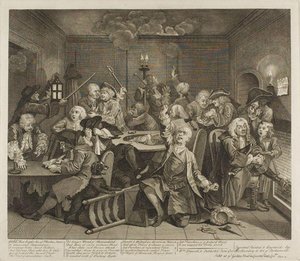
- Subject & Narrative: William Hogarth's 1758 engraving, ‘The Bench’, presents a tightly composed group of six men, each meticulously rendered in profile. While seemingly a straightforward portrait, the work is far more nuanced. It’s not merely *who* these men are, but *what* they represent that captivates. Hogarth intended this piece as an exploration of character – distinguishing it from caricature and outright parody – presenting types rather than specific individuals. The scene evokes a sense of formal observation, akin to being in attendance at a court or public gathering.
- Style & Technique: Executed with masterful precision using the engraving technique, ‘The Bench’ showcases Hogarth's skill in manipulating line and tone. He employs hatching and cross-hatching to create depth and texture, simulating fabrics and skin tones with remarkable realism. The style is rooted in 18th-century portraiture but infused with a distinctly narrative quality. Geometric shapes – circles for heads, ovals for bodies – underpin the composition, lending it a structured formality. This contrasts subtly with the individual characterizations of each figure.
Historical Context & Hogarth’s Intentions
- A Response to Criticism: ‘The Bench’ arose from Hogarth's frustration with being labeled a mere caricaturist. He sought to demonstrate his ability to portray “character” – a truthful representation of human nature – as opposed to exaggerated or satirical depictions. The work is linked to his earlier exploration of this theme in 'Characters and Caricaturas', and represents an ongoing attempt to elevate his artistic standing within the established art world.
- The Rococo & Beyond: While drawing on the portraiture conventions of the Rococo period, Hogarth transcends simple aesthetic imitation. His work possesses a social commentary absent in much aristocratic portraiture of the time. The engraving reflects an emerging interest in observing and documenting everyday life, foreshadowing later developments in Realism.
Symbolism & Emotional Resonance
- Reading the Faces: Each figure’s expression and attire are laden with symbolic meaning. Hogarth invites viewers to decipher these clues, interpreting their status, profession, or personality traits. The judges depicted (as revealed by research) aren't idealized figures of authority but rather individuals lost in thought, boredom, or even sleep – a subtle yet potent critique of the judicial system.
- A Moment of Reflection: ‘The Bench’ isn’t designed to elicit immediate laughter or shock. Instead, it fosters a more contemplative response. The somber tones and formal arrangement create an atmosphere of quiet observation, prompting viewers to consider the complexities of human character and the subtle ironies of social life.
相似艺术品




艺术家简介
William Hogarth (1697–1764): A London Life Illuminated by Ink and Paint
William Hogarth, born in the bustling heart of London on November 10th, 1697, wasn’t merely an artist; he was a visual historian—a chronicler of his time who captured the spirit of Enlightenment England with unparalleled acuity. His life story is inextricably intertwined with the dramatic transformations unfolding across Britain during this period: burgeoning ambitions fueled by mercantile expansion, anxieties stemming from shifting social hierarchies, and pervasive hypocrisy exposed through unflinching satire. The son of Richard Hogarth, a modest Latin schoolmaster, William’s formative years instilled within him both an appreciation for intellectual pursuits and a profound awareness of societal inequalities—a foundation that would profoundly shape his artistic vision. Early on, he apprenticed himself to Ellis Gamble, honing his engraving skills amidst the workshops of Leicester Fields, where he mastered the craft of producing trade cards and similar commercial prints. Yet, Hogarth possessed a restless spirit, yearning for an expressive medium beyond the confines of traditional engraving—a desire that propelled him toward rigorous study at St Martin’s Lane Academy and under the tutelage of Sir James Thornhill, absorbing influences from Italian Grand Manner painting and establishing himself as a leading figure in London's artistic landscape.Early Life and Influences: Shaping a Vision
Richard Hogarth’s modest circumstances—including his imprisonment for debt—served as an early catalyst for William’s artistic sensibilities. The experience instilled within him a visceral understanding of social vulnerability and fueled his conviction that art should confront uncomfortable truths about human behavior. He cultivated a keen interest in the vibrant street life of London fairs, meticulously sketching the characters he encountered—a habit that would inform his later depictions of urban society with remarkable detail. Simultaneously, Hogarth absorbed influences from continental artistic traditions, particularly Dutch genre painting and French satirical prints, recognizing their capacity to convey complex narratives and critique social conventions. These formative experiences instilled in him a distinctive aesthetic sensibility—one characterized by both realism and psychological insight. Notably, he admired the dramatic compositions of Rembrandt and Caravaggio, mastering techniques that would later become hallmarks of his own style.The Birth of Modern Moral Subjects: A Revolutionary Approach
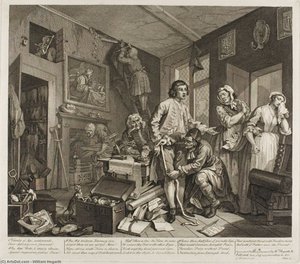
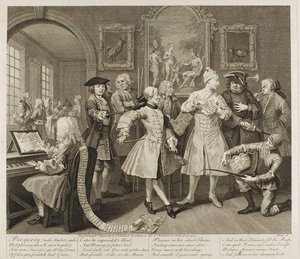
Hogarth’s true innovation lay not simply *what* he painted but *how*. He pioneered what he termed “modern moral subjects”—a groundbreaking approach to artistic representation that departed radically from prevailing conventions. Rejecting the idealized portraits favored by aristocratic patrons, Hogarth embarked on a bold experiment: creating sequential paintings—essentially visual novels—designed to narrate stories and expose social failings with biting satire. His most celebrated series, *A Harlot’s Progress* (1742), exemplifies this revolutionary vision. Through six meticulously rendered canvases, Hogarth chronicles the tragic descent of Mary Wells—a young woman lured into London by dreams of fortune but swiftly seduced by vice and despair. Each scene is imbued with symbolic significance—reflecting moral decay and highlighting the consequences of unchecked indulgence—and presented with unflinching honesty that challenged viewers to confront uncomfortable realities about their own society. Similarly, *A Rake’s Progress* (1733–34), depicting the spiraling ruin of Tom Rakewell—a wealthy gentleman consumed by gambling and hedonism—further solidified Hogarth's reputation as a pioneer of narrative painting. He skillfully employed theatrical staging techniques—borrowing from the conventions of the London stage—to heighten dramatic tension and engage viewers emotionally.Technique and Style: Mastering Line and Shadow
Hogarth’s artistic technique was distinguished by an unparalleled command of line and shading—a mastery that elevated his engravings to levels of sophistication rarely achieved by his contemporaries. He meticulously studied the works of Rembrandt and Rubens, absorbing their masterful use of chiaroscuro—the dramatic interplay between light and dark—to create depth and texture within his paintings. Furthermore, he perfected the art of cross-hatching—a technique involving intersecting lines that produced intricate patterns—allowing him to convey subtle nuances of tone and form with remarkable precision. This meticulous attention to detail extended beyond mere technical skill; it reflected Hogarth’s profound understanding of visual perception and his conviction that art should strive for realism—capturing the essence of human experience with unflinching honesty. His engravings, in particular, achieved renown for their clarity and expressive power—establishing him as one of Britain's foremost printmakers and securing his legacy as a champion of artistic innovation.Legacy and Influence: Shaping British Art History
William Hogarth’s influence on subsequent generations of artists is undeniable. He established a distinctly British artistic identity, rejecting the stylistic conventions favored by continental Europe and asserting the primacy of native sensibilities—a stance that resonated deeply with his fellow painters and cemented his position as a pivotal figure in art history. Artists like James Gillray and George Cruikshank embraced Hogarth’s satirical spirit—continuing his tradition of social critique through visual storytelling—demonstrating the enduring power of his artistic vision. Moreover, Hogarth's pioneering approach to narrative painting profoundly impacted British theatrical conventions, inspiring playwrights to adopt dramatic staging techniques that mirrored his own masterful compositions. His unwavering commitment to realism and psychological insight continues to inspire artists today—serving as a testament to his genius as both painter and engraver. He remains a cornerstone of British art history—celebrated for his innovative technique, his unflinching social commentary, and his enduring ability to capture the complexities of human life—a legacy that transcends time and continues to illuminate the artistic landscape of our era.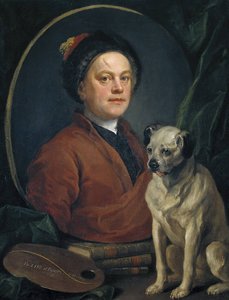
威廉·霍加斯特
1697 - 1764 , 英国
艺术家简介
- Artistic Movement Or Style: 讽刺艺术、现实主义风格
- Artists Who Influenced This Artist:
- 彼得·德·霍赫
- 乔纳森·斯威夫特
- Date Of Birth: 1697年11月10日
- Date Of Death: 1764年10月26日
- Full Name: William Hogarth
- Nationality: 英国人
- Notable Artworks: ['《哈罗特进行》,《罗克进行》']
- Place Of Birth: 伦敦,英国
相关文章

William Hogarth: Satire, Social Commentary & the Birth of Modern British Art
Explore the satirical world of William Hogarth, pioneering British painter & engraver. Discover his iconic works like *A Rake's Progress* and insightful social commentary on 18th-century London life.

Engraving's Golden Age: 10 Masterpieces That Redefined Art | AllPaintingsStore
Journey through art history with our Top 10 Legendary Engravings! Explore masterpieces by Dürer, Rembrandt & Goya. Discover the stories behind these iconic prints and find museum-quality reproductions for your home at AllPaintingsStore.com.

Reflecting Nobility & Nuance: 18th-Century Portraiture as a Window into Societal Values
Explore the world of 18th-century portraiture with AllPaintingsStore. Discover symbolism, artistic innovation & societal values reflected in masterpieces by Reynolds, Hogarth & more. Expert insights for collectors.

Chromatic Absence: Exploring the Aesthetic Power of Black & White Art
Explore the captivating world of monochrome art! Discover its rich history, influential artists like Malevich & Klein, and profound emotional impact. Expert insights for collectors & design enthusiasts.