

- 首页

- 油画复制品
- William Valentine Schevill
- Lillian D Wald
 购买版画
购买版画 分享
分享 分享
分享
 详情
详情

 下载
下载
 相似作品
相似作品 X射线
X射线 幻灯片播放
幻灯片播放Lillian D Wald
 Acrylic On Canvas
- WallArt
- German Impressionism
 1919
1919 72.0 x 72.0 cm
 国家肖像画廊
 展开详情
展开详情




P118B $10

P118H $10

P118W $10

P438Z $10

P508JH $12

P508YH $12

P805H $10

P805Z $10

P919BZ $10

P919G $10

P919XJ $10

P959ZH $10

P968JZ $12

W106C $8

W218G $10

W218JH $8

W218Y $10

W307PJ $10

W316G $10

W316PJ $8

W316Y $10

W398PJ $8

W4111J $10

W500HY $15

W500JH $15

W692G $12

W849H $8

W940BG $15

W953PJ $8




从与原作比例一致的预设尺寸中进行选择。

您可以输入自定义尺寸,以适配特定的画框或空间。如果所选尺寸与原图比例不符,我们将通过裁剪作品或添加手绘元素来扩展画面。数字样稿将在制作开始前发送给您确认。
请注意,屏幕预览无法准确反映实际的裁剪或扩展效果,只有样稿才能真实呈现最终的构图。
虽然我们提供定制尺寸服务,但为了保留原作比例,建议您从预设列表中选择尺寸。
下单后,AllPaintingsStore.com 团队将通过电子邮件联系客户获取具体要求,并提供效果预览图。


 玻璃选项仅适用于110厘米以下的尺寸。

Lillian D Wald
复制材质
复制品尺寸
-


最终总价
-
作品详情
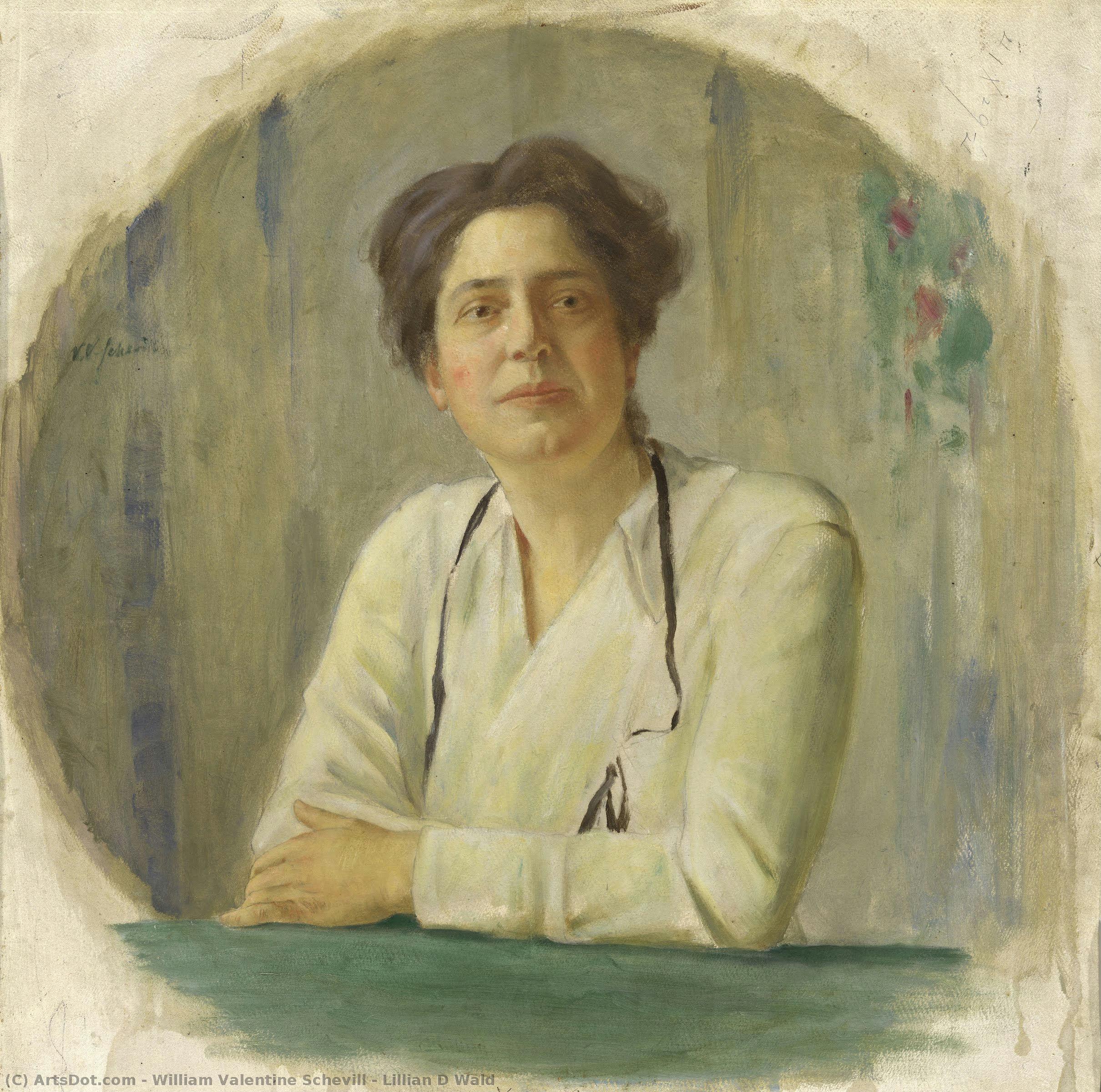
A Portrait of Compassion: Lillian D. Wald by William Valentine Schevill
William Valentine Schevill’s 1919 portrait of Lillian D. Wald is more than just a likeness; it's a poignant embodiment of social reform and the burgeoning spirit of American progressivism. The painting, rendered in a style that deftly balances German Impressionistic influence with the emerging realism of the early 20th century, captures not merely Wald’s physical appearance but also her unwavering dedication to improving public health and advocating for the underserved.
Wald herself was a transformative figure. Born into privilege within a prominent German-Jewish family in Cincinnati, Ohio, she defied societal expectations to become one of America's first registered nurses and a pioneer in public health nursing. Her work with immigrant communities in New York City during the late 19th and early 20th centuries exposed her to appalling conditions – rampant disease, overcrowding, and systemic neglect – fueling her commitment to social justice. Schevill’s portrait serves as a visual testament to this dedication; Wald's direct gaze conveys both strength and empathy, suggesting an individual deeply invested in the well-being of others.
The Language of Light and Shadow
Schevill’s technique is characterized by a masterful manipulation of light and shadow, hallmarks of his training under Frank Duveneck and further refined during his time studying at the Academy of Fine Arts Munich. The painting utilizes a muted palette—primarily greens, browns, and creams—to create a sense of quiet dignity and understated power. Notice how Schevill employs broken brushstrokes to capture the texture of Wald’s dress and the subtle nuances of her face. The diffused light, reminiscent of Impressionism, softens the features while simultaneously highlighting the intelligence and resolve in her eyes. The background is deliberately simple, allowing Wald's presence to dominate the composition and drawing the viewer’s attention directly to her compassionate expression.
Symbolic Elements and Historical Context
Beyond its technical brilliance, the painting is rich with symbolic elements reflecting the era. The stethoscope, prominently displayed around Wald’s neck, immediately identifies her profession and underscores her role as a healer. The potted plants flanking the figure – one on either side – can be interpreted as symbols of growth, care, and the nurturing environment she sought to create for those in need. The clock visible in the upper-middle section subtly references the relentless passage of time and the urgency of her work. Painted in 1919, shortly after World War I, the portrait reflects a nation grappling with profound social changes and striving towards a more equitable future – a future Wald was actively shaping.
A Legacy of Service and Artistic Merit
Lillian D. Wald’s legacy extends far beyond her pioneering nursing work; Schevill's painting immortalizes her spirit, offering a powerful visual reminder of the importance of social responsibility and compassionate action. The artwork is not merely a portrait but a historical document, capturing a pivotal moment in American history and celebrating the life of a woman who dedicated herself to serving humanity. Today, reproductions of this compelling image continue to resonate with audiences, reminding us of the enduring value of empathy, service, and artistic expression.
- Artist: William Valentine Schevill
- Year: 1919
- Size: 72 x 72 cm
- Medium: Oil on Canvas
Further Research: For more information about Lillian D. Wald and William Valentine Schevill, please refer to the links below:


艺术家简介
William Valentine Schevill (1864 – 1951): Bridging German Impressionism and American Realism
William Valentine Schevill, born in Cincinnati, Ohio, on March 2nd, 1864, was an American artist whose career spanned nearly nine decades and cemented his place as a pivotal figure between the stylistic currents of late nineteenth-century European Impressionism and the burgeoning realism of early twentieth-century America. His artistic journey began with formal training at the Cincinnati Art Academy under Frank Duveneck, fostering a foundational understanding of tonal painting and capturing fleeting moments of light—influences that would permeate his subsequent work. Further enriching his skillset was a period spent studying at the Academy of Fine Arts Munich, where he honed his technique alongside luminaries like Ludwig Löfftz, Max Lindenschmitt, and Nikolaos Gyzis, absorbing the expressive dynamism of German Impressionism while simultaneously developing an individual artistic voice. Schevill’s oeuvre is remarkably diverse, encompassing portraits, landscapes, and genre scenes—each infused with a palpable sensitivity to observation and meticulous detail. He achieved considerable renown for his portraiture, notably “Lillian D Wald” (72 x 72 cm), housed in the National Portrait Gallery in Washington D.C., which exemplifies his ability to convey psychological depth through subtle tonal variations and nuanced facial expressions. Similarly impressive is "The Fondey Family" (Albany Institute of History - Art, Albany, United States), a masterful depiction of domestic life that captures the essence of everyday experience with remarkable accuracy. His artistic vision extended beyond portraiture; he produced evocative landscapes—including “George Washington” (porthole type)—demonstrating his command of atmospheric perspective and capturing the grandeur of American history. Schevill’s participation in the Louisiana Purchase Exposition of 1904 showcased his talent to a vast audience, establishing him as a prominent artist within his time. He was also an active member of the Salmagundi Club, fostering connections with fellow artists and engaging in intellectual discourse that shaped his artistic perspective. His legacy resides not only in his celebrated artworks but also in their contribution to the broader artistic dialogue—a testament to his ability to synthesize influences from both European and American traditions into a uniquely expressive style. Today, Schevill’s paintings are housed in institutions such as the Herron School of Art and Design and the National Portrait Gallery, ensuring that his artistic achievements continue to inspire appreciation for art history.- Key Influences: German Impressionism (Ludwig Löfftz, Max Lindenschmitt), American Realism (Frank Duveneck)
- Notable Works: Lillian D Wald, The Fondey Family, George Washington
- Associations: Salmagundi Club

William Valentine Schevill
1864 - 1951 , United States of America
艺术家简介
- Artistic Movement Or Style: German & US avant-garde
- Artists Or Movements Influenced By This Artist: ['Louisiana Purchase Exposition']
- Artists Who Influenced This Artist:
- Frank Duveneck
- Ludwig Löfftz
- Max Lindenschmitt
- Nikolaos Gyzis
- Date Of Birth: March 2, 1864
- Full Name: William Valentine Schevill
- Nationality: American
- Notable Artworks:
- Lillian D Wald
- The Fondey Family
- George Washington
- Place Of Birth: Cincinnati, United States of America
相关文章

William Herbert Allen: Capturing Atmospheric Light & the Essence of American Impressionism
Explore the evocative landscapes of William Herbert Allen, a master of American Impressionism. Discover his unique brushwork, atmospheric techniques & legacy through AllPaintingsStore's curated collection.

William Stewart MacGeorge: Aesthetic Japonisme & the Scottish Portrait Tradition
Explore the captivating art of William Stewart MacGeorge, a key figure of the Kirkcudbright School. Discover his fusion of Scottish tradition with Aesthetic and Japonisme influences. Learn about his portraits & landscapes.

William Merritt Chase: A Study in American Impressionism & Artistic Luminosity
Explore the life & work of William Merritt Chase, a leading American Impressionist painter and influential art educator. Discover his vibrant portraits, landscapes, and lasting legacy with AllPaintingsStore.

William McTaggart: A Study in Scottish Impressionism & the Poetic Depiction of Light and Sea
Explore the captivating world of William McTaggart, a leading figure in Scottish Impressionism. Discover his masterful depictions of light, sea, and landscape – a poetic journey for art lovers & collectors.

William Bradford: Navigating Faith, Landscape & Artistic Innovation in Early American Painting
Explore the captivating world of William Bradford, American Romanticist painter renowned for his dramatic Arctic seascapes & ship portraits. Discover his artistic evolution, influences, and lasting legacy with AllPaintingsStore.



