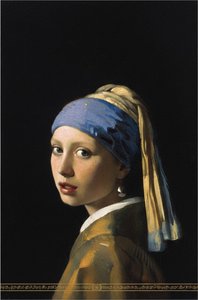
Abraham Bosschaert: Master of Botanical Still Life
Abraham Bosschaert (c. 1612/1613–1643) stands as a singular figure within the Dutch Golden Age, celebrated primarily for his unparalleled skill in botanical painting—a genre that elevated scientific observation to an art form and captured the beauty of the natural world with breathtaking precision. Though biographical details remain scarce, Bosschaert’s legacy persists through his remarkable canvases, which continue to fascinate collectors and scholars alike.- Early Life & Training: Precise information regarding Bosschaert's birthdate and familial background is elusive. He was born in Middelburg, Netherlands—a thriving maritime city at the time—likely inheriting artistic talent from his father, Pieter Bosschaert I., who himself practiced painting, primarily landscapes.
- Influence & Artistic Style: Bosschaert’s style owes considerable debt to Jan Bruegel the Elder and Ambrosius Johannes Rembrandt van Rijn. Like these masters, he embraced a Baroque aesthetic characterized by dramatic chiaroscuro—the interplay of light and shadow—to heighten realism and convey emotion. However, Bosschaert distinguished himself through his meticulous attention to detail, painstakingly rendering individual petals, stems, and leaves with astonishing accuracy.
- Notable Works: Bosschaert’s oeuvre comprises approximately 60 paintings—a relatively modest number considering his influence—yet each piece exemplifies his mastery. “Flowers in a Glass Vase” (circa 1637) is arguably his most iconic work, showcasing a luminous arrangement of tulips, narcissi, hyacinths, and roses bathed in soft light. Similarly, "Still Life Of Flowers In An Ovoid Vase" demonstrates Bosschaert’s ability to convey mood through subtle compositional choices.
- Symbolism & Artistic Technique: Beyond mere visual representation, Bosschaert's paintings carried symbolic weight. Flowers frequently represented virtues—beauty, purity, and faith—and their careful placement served as a commentary on humanist ideals. Bosschaert’s technique involved layering thin glazes of oil paint to achieve remarkable luminosity and depth, meticulously blending colors to create subtle gradations that captured the nuances of natural light.
Legacy & Historical Significance
Abraham Bosschaert's contribution to art history extends far beyond his individual paintings. He helped solidify the botanical still life as a respected artistic genre, demonstrating how observation and artistry could converge to produce works of profound beauty and intellectual merit. His meticulous technique influenced subsequent generations of painters, establishing standards for realism and tonal harmony that continue to resonate today. Bosschaert’s work serves as a testament to the Dutch Golden Age's commitment to both scientific inquiry and artistic excellence—a harmonious blend that secures his place among the most celebrated artists of his time.问答详情
在哪里可以浏览 Abraham Bosschaert 的全部作品?
您可以在 Abraham Bosschaert 的 全部作品 页面上浏览其在 本站 上的所有作品。
我可以在其所有作品中研究 Abraham Bosschaert 对色彩的运用吗?
您可以在Abraham Bosschaert的色彩基因页面上,深入研究其在本站所列作品中的色彩运用。
Abraham Bosschaert 来自哪里?
Abraham Bosschaert 出生于 Netherlands。