Eugenia Bosoni Majocchi: A Milanese Portraitist of Depth and Color
Born in Milan in 1890, Eugenia Bosoni Majocchi emerged as a significant figure in early 20th-century Italian art. Her life’s work centered primarily on portraiture, capturing the essence of her subjects with remarkable sensitivity and technical skill. Initially nurtured by a family steeped in artistic tradition – her father was a sculptor – she received formal training from several prominent Milanese artists, including Camillo Rapetti, Paolo Sala, Riccardo Galli, and Ermenegildo Agazzi, absorbing their diverse approaches while forging her own distinctive style.
Bosoni Majocchi’s early education laid the foundation for her later success. She honed her skills in traditional Italian techniques, mastering the nuances of oil painting and pastel. However, she wasn't simply a follower of established methods; she demonstrated an innovative spirit, experimenting with color palettes and brushwork to create works that were both realistic and emotionally resonant. Her training at the Academy of Fine Arts in Milan provided her with a solid grounding in artistic principles, but it was through independent study and personal observation that she truly developed her unique voice.
A Palette of Emotion: Style and Technique
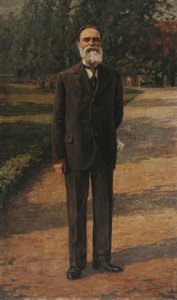
Bosoni Majocchi’s artistic style is immediately recognizable by its bold use of color and expressive brushstrokes. She favored a vibrant palette, often employing rich hues to convey mood and personality. Her portraits are not merely representations of likeness; they delve into the inner lives of her subjects, capturing their character with an intimate understanding. A key element of her technique involved layering colors to create texture and depth, particularly evident in works like “Portrait of Dr. Camillo Hajech,” where she skillfully rendered the doctor’s features and attire using a blend of realism and impressionistic touches.
The artist's ability to capture subtle nuances of expression was highly valued. She paid close attention to details – the glint in an eye, the curve of a smile – transforming them into powerful visual cues. Her portraits frequently evoke a sense of warmth and connection, suggesting a genuine engagement with her subjects. Pastel portraits were also a significant part of her oeuvre, allowing for delicate shading and vibrant color combinations.
Notable Portraits: Capturing Milanese Society
Among Bosoni Majocchi’s most celebrated works are the “Portrait of Dr. Camillo Hajech,” a striking realist depiction of the chief of pediatrics at the Ospedale Maggiore in Milan, and the portrait of Erasmo Pasini. These paintings exemplify her ability to balance technical precision with emotional depth. The Hajech portrait, for instance, is notable for its piercing gaze and the artist’s skillful rendering of the doctor's professional demeanor. The Pasini portrait similarly showcases her talent for capturing a subject’s personality through subtle details.
Beyond these prominent pieces, Bosoni Majocchi also produced numerous portraits of individuals from Milanese high society, reflecting her keen interest in documenting the social and cultural landscape of her time. These works offer valuable insights into the fashion, customs, and personalities of a bygone era. She was particularly adept at portraying children, as evidenced by “Portrait of a Boy From The 1920s,” a charming pastel work that captures the innocence and vitality of youth.
Legacy and Influence
Eugenia Bosoni Majocchi’s legacy extends beyond her individual works. She played a role in shaping the development of portraiture in Italy during the early 20th century, influencing subsequent generations of artists. Her innovative use of color and expressive brushwork paved the way for new approaches to representation, while her emphasis on capturing the emotional essence of her subjects set a high standard for portrait painting.
Although she remained largely active within Milanese artistic circles, Bosoni Majocchi’s work continues to be appreciated for its beauty, technical skill, and evocative power. AllPaintingsStore.com and other platforms offer reproductions of her paintings, ensuring that her art remains accessible to a wider audience. Her contribution to Italian art is a testament to the enduring appeal of portraiture as a means of capturing human experience and preserving memories.
问答详情
我可以通过艺术流派来浏览 Eugenia Bosoni Majocchi 的作品吗?
您可以在Eugenia Bosoni Majocchi的全部流派页面上,按艺术流派浏览其作品。
是否有Eugenia Bosoni Majocchi作品的3D虚拟展厅巡览?
您可以在Eugenia Bosoni Majocchi的3D 艺术展厅页面中,通过3D展厅欣赏其艺术作品。
Eugenia Bosoni Majocchi 还有哪些别名?
Eugenia Bosoni Majocchi 也以 Eugenia Bosone Majocchi 等其他名称为人所知。