A Fleeting Presence: The Enigmatic World of Francesca Woodman
Francesca Woodman, a name whispered with reverence and melancholy in the art world, remains one of contemporary photography’s most compelling and tragically short-lived figures. Born in Denver, Colorado, in 1958 to artist parents – painter George Woodman and ceramicist Betty Woodman – she was immersed in creativity from her earliest years. This upbringing wasn't merely supportive; it was foundational, fostering an environment where artistic exploration was not a pursuit but a way of life. The family’s frequent sojourns to Italy, beginning with young Francesca attending second grade in Florence, instilled within her a deep appreciation for European art history and architecture, influences that would profoundly shape her visual language. These early experiences weren't simply geographical; they were formative encounters with the weight of artistic tradition, a dialogue she would later engage with in her own hauntingly original work. Even as a child, Woodman demonstrated an intense curiosity, beginning self-portraiture at the age of thirteen – a practice that quickly evolved into a dedicated exploration of identity, space, and the ephemeral nature of existence.The Language of Absence: Themes and Techniques
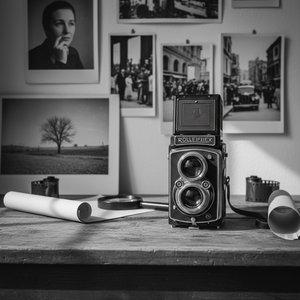
Woodman’s photographic oeuvre is characterized by its intensely personal and often unsettling quality. Her work rarely presents straightforward narratives; instead, it operates through suggestion, ambiguity, and a deliberate obscuring of form. The female figure – frequently herself or close friends – is central to her investigations, but seldom presented as fully realized individuals. Rather, these figures are often fragmented, blurred by motion, merging with architectural elements, or partially hidden within the shadows. This isn’t about concealment for its own sake; it's a deliberate strategy to dismantle conventional notions of representation and explore the complexities of identity. Recurring themes of fragility, decay, and the body’s relationship to its surroundings permeate her photographs, creating an atmosphere that is both dreamlike and deeply melancholic. She masterfully employed long exposure times and movement within the frame, resulting in images that feel less like captured moments and more like traces of a presence – echoes of experience rather than concrete depictions. Her choice of medium format cameras further contributed to this intimacy; the square negatives produced prints with an inherent sense of contained space, drawing the viewer into a world both familiar and profoundly alienating. The influence of artists such as Giotto and Max Beckmann is palpable in her compositions, particularly in their exploration of form and emotional weight, while the surrealist photography of Man Ray and Claude Cahun provided a precedent for self-representation and psychological depth.Series and Explorations: A Fragmented Narrative
Throughout her brief career, Woodman produced several distinct series that showcase the evolution of her artistic vision. The *Untitled Series*, a vast collection of photographs created over several years, forms the core of her work, exploring themes of identity and transformation with relentless intensity. The *Eel Series*, developed during her time at the Rhode Island School of Design’s program in Rome (1977-1978), demonstrates a heightened awareness of form and space, utilizing architectural settings as both backdrop and active participant in her compositions. *Space²* (1975-1978), created in Providence, Rhode Island, further emphasizes this interplay between the human figure and its environment, often featuring stark, minimalist spaces that amplify the sense of isolation and vulnerability. Beyond individual photographs, Woodman also experimented with artist’s books – notably *Portrait of a Reputation*, *Quaderno dei Dettati e dei Temi*, and *Some Disordered Interior Geometries* – combining photography with text and drawing to create multi-layered works that expanded upon the themes explored in her photographic series. These books weren't simply collections of images; they were carefully constructed narratives, offering a deeper insight into Woodman’s artistic process and intellectual concerns.A Legacy Forged in Loss: Recognition and Influence
After graduating from RISD in 1978, Woodman moved to New York City with aspirations of establishing herself as a photographer. However, she encountered significant challenges in gaining recognition for her work, facing the frustrations common to many emerging artists. Coupled with these professional obstacles, she struggled with depression, culminating in a suicide attempt in 1980. Tragically, she took her own life in January 1981 at the age of twenty-two. It was only after her death that Woodman’s work began to receive widespread critical acclaim. Initially overlooked during her lifetime, her photographs were rediscovered and exhibited in major museums worldwide, including The Museum of Modern Art (MoMA), Tate Modern, and the San Francisco Museum of Modern Art (SFMOMA). This posthumous recognition cemented her status as a pioneering figure in contemporary photography and feminist art. Her unflinching exploration of the body, identity, and space continues to resonate with audiences today, inspiring generations of artists to challenge conventional boundaries and embrace vulnerability in their work. While her life was tragically cut short, Francesca Woodman’s legacy endures – a testament to the power of artistic vision and the enduring impact of a fleeting presence captured in time. Her photographs are not merely images; they are invitations to contemplate the complexities of human existence, the fragility of identity, and the haunting beauty of absence.问答详情
Francesca Woodman 的创作时期属于哪个历史阶段?
Francesca Woodman 的创作活跃于 当代 时期,这一时期确立了艺术家在艺术史上的地位。
如何按特定色调查找 Francesca Woodman 的作品?
按色调浏览 页面按色调将 Francesca Woodman 的艺术作品进行了分类。
我可以通过主题来探索 Francesca Woodman 的作品吗?
Francesca Woodman 的 主题索引 旨在通过主题对艺术家的作品进行分类索引。