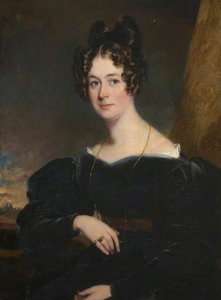
Frederick Richard Say: A Portraitist of Victorian Dignity
Frederick Richard Say (1804-1868) stands as a testament to the quiet brilliance of Victorian portraiture, capturing the essence of prominent figures – nobility, politicians and families – with an understated elegance that continues to resonate today. Born in London, Say’s artistic journey unfolded against the backdrop of a burgeoning era defined by social reform and artistic innovation, yet his style remained remarkably consistent: a masterful blend of Neoclassical ideals tempered by Romantic sensitivity.- Early Life & Training: Say’s formative years were marked by a privileged upbringing within a family steeped in artistic patronage. He received instruction from John Opie, a celebrated landscape painter and influential figure in the Romantic movement, fostering an appreciation for natural beauty alongside classical form. This dual influence would prove crucial to shaping his distinctive artistic vision.
A Style Defined by Refinement
Say’s technique was characterized by meticulous observation and painstaking detail—traits that elevated his portraits beyond mere likenesses into expressions of character and status. He favored oil paints on canvas, employing a subdued palette dominated by earthy tones and muted blues and greens. Unlike many contemporaries who embraced flamboyant colors and dramatic compositions, Say prioritized clarity of form and tonal gradation, creating images imbued with an atmosphere of dignified repose. His canvases often featured diffused lighting—a technique borrowed from Rembrandt—that subtly sculpted the contours of his subjects’ faces and drapery, conveying a profound sense of realism.- Notable Commissions & Subjects: Say garnered considerable acclaim for his portraits of influential individuals across British society. Among his most celebrated commissions were depictions of Edward Law, 1st Earl of Ellenborough—a staunch advocate for parliamentary reform—and Viscount Bangor, showcasing the aristocratic grandeur of the Victorian era. His meticulous renderings captured not only physical appearance but also psychological nuance, revealing glimpses into the inner lives of his subjects.
Influences & Artistic Legacy
Say’s artistic sensibilities were profoundly shaped by the prevailing aesthetic currents of his time—particularly the influence of Neoclassical sculpture and painting championed by Jacques-Louis David. However, he skillfully integrated Romantic principles into his work, notably in his use of chiaroscuro (the dramatic interplay of light and shadow), mirroring the expressive techniques favored by Rembrandt and Caravaggio. His legacy resides not merely in the beauty of his portraits but also in their contribution to documenting a pivotal period in British history—a time of social upheaval and artistic experimentation.- Further Exploration: For deeper insights into Say’s oeuvre, consider visiting the Marshall M. Fredericks Sculpture Museum in University Center, Michigan, where you can admire sculptures inspired by his meticulous attention to detail and classical ideals. Also explore online resources dedicated to Victorian art history for a comprehensive understanding of his artistic context.
Resources:
- Marshall M. Fredericks Sculpture Museum: https://www.fredericksculpturemuseum.org/
- Sir William Webb Follet: https://www.wfmuseum.org/en/art/sir-william-webb-follet/
问答详情
在哪里可以参观Frederick Richard Say作品的3D虚拟展厅?
您可以在Frederick Richard Say的3D 艺术展厅页面中,通过3D展厅欣赏其艺术作品。
目前目录中共有多少件 Frederick Richard Say 的作品可供浏览?
您可以在 全部作品 页面浏览由 Frederick Richard Say 创作的 29 件作品 件作品。
Frederick Richard Say 属于哪些艺术流派?
您可以在Frederick Richard Say的全部流派页面上,按艺术流派浏览其作品。