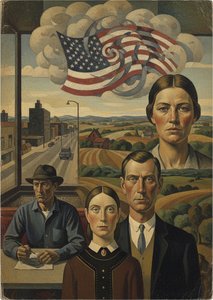
A Life Dedicated to Public Service and the Arts: Harold LeClair Ickes
Harold LeClair Ickes, born in Altoona, Pennsylvania, in 1874, was a figure whose influence extended far beyond the realm of American politics. Though best known for his unprecedented thirteen-year tenure as Secretary of the Interior under President Franklin D. Roosevelt – the longest anyone has held that office – Ickes’s commitment to progressive ideals and his quiet but significant support for the arts cemented his place as a pivotal figure in 20th-century American history. His early life was marked by hardship; the loss of his mother at a young age and a somewhat distant relationship with his father instilled in him a sense of self-reliance and a deep empathy for those facing adversity, qualities that would define his career. He pursued higher education at the University of Chicago, initially working to finance his studies, eventually earning both a Bachelor of Arts and a law degree. This academic foundation provided him with the tools he needed to navigate the complex world of politics and public administration.The New Deal Architect and Champion of Social Justice
Ickes’s appointment as Secretary of the Interior in 1933 coincided with the depths of the Great Depression, and he immediately threw himself into implementing President Roosevelt's ambitious New Deal programs. He oversaw the Public Works Administration (PWA), a massive undertaking that constructed vital infrastructure across the nation – bridges, dams, schools, hospitals – providing employment to millions during a time of widespread economic hardship. Beyond simply building structures, Ickes envisioned these projects as catalysts for social and economic revitalization. He was known as “Honest Harold” due to his meticulous management of funds and unwavering commitment to transparency, a rare quality in an era often plagued by corruption. But his dedication wasn’t limited to infrastructure; Ickes was a vocal advocate for civil rights at a time when such positions were politically risky. He championed the cause of African Americans, integrating the Department of the Interior and supporting artists like Marian Anderson when she faced discrimination. His actions demonstrated a profound belief in equality and social justice, principles that guided his decisions throughout his career.A Patron of the Arts: Fostering American Creativity
While not an artist himself, Harold Ickes played a crucial role in fostering the arts during the New Deal era. Recognizing the power of art to uplift spirits and provide employment, he championed programs that supported artists through the PWA and other initiatives. He understood that artistic expression was essential to the cultural fabric of the nation and actively worked to ensure its survival during challenging economic times. Ickes’s support wasn't merely financial; he genuinely appreciated the work of American artists and believed in their ability to capture the spirit of the age. Though often overshadowed by his political achievements, this aspect of his legacy is increasingly recognized as a vital contribution to the flourishing of American art during the 1930s and 40s. His influence helped shape a generation of artists who would go on to define American artistic identity.Legacy and Historical Significance
Harold LeClair Ickes’s impact resonates far beyond his years in public office. His unwavering commitment to social justice, environmental conservation, and the arts left an indelible mark on American society. He was a complex figure – often described as gruff and uncompromising – but beneath that exterior lay a deep sense of integrity and a genuine desire to improve the lives of others. His tenure as Secretary of the Interior laid the groundwork for many of the environmental policies we rely on today, and his advocacy for civil rights helped pave the way for future progress. He was a man ahead of his time, recognizing the interconnectedness of social, economic, and cultural well-being. His story serves as a reminder that true leadership requires not only political acumen but also a profound moral compass. Even today, his name is associated with public housing projects in Chicago – the Harold L. Ickes Homes – a testament to his enduring commitment to providing affordable housing for all Americans. His legacy continues to inspire those who strive to create a more just and equitable world.问答详情
Harold LeClair Ickes 的作品受欢迎程度如何?
Harold LeClair Ickes 拥有一个 统计数据 页面,其中展示了该艺术家在 本站 上的作品统计数据。
是否有关于Harold LeClair Ickes所创作的所有主题的概览?
主题索引 页面按主题对 Harold LeClair Ickes 的作品进行了分类索引。
我可以通过关键词来探索 Harold LeClair Ickes 的作品吗?
您可以通过艺术家关键词分类页面,按关键词探索Harold LeClair Ickes的作品。每个关键词都汇集了相关的艺术品。