The Luminous Legacy of Jan van Assen
In the golden twilight of the Dutch seventeenth century, few names evoke the profound atmospheric depth of the Baroque era quite like Jan van Assen. Born in Amsterdam in 1635, Van Assen emerged as a pivotal figure whose brushwork bridged the gap between the raw, emotive power of the early Dutch masters and the refined, classical elegance that would define the later decades of the century. His life and work represent a masterful synthesis of tradition and innovation, capturing not merely the physical landscapes of his homeland, but the very soul of the light that dances across them.
The foundations of Van Assen’s artistry were laid within the most prestigious studios of his time. His formative years were shaped by the transformative influence of Rembrandt Harmenszoon van Rijn, from whom he inherited a revolutionary understanding of chiaroscuro. This dramatic interplay of shadow and brilliance became a cornerstone of his technique, allowing him to sculpt figures out of darkness with an almost tactile presence. Furthermore, under the guidance of Pieter Steenwijk, Van Assen refined his command over anatomical precision and compositional equilibrium, ensuring that even his most atmospheric scenes possessed an underlying structural integrity.
A Vision of Light and Landscape
Van Assen’s stylistic evolution was deeply intertwined with the dramatic compositions of Nicolas Tempesta. Much like Tempesta, Van Assen possessed a singular ability to evoke movement and drama within a landscape, yet he tempered this energy with a serene grandeur. His canvases are celebrated for their meticulous observation, where every leaf, ripple of water, and distant mountain peak is rendered with an unwavering commitment to illusionistic realism. He was a master of atmospheric perspective, employing subtle gradations of tone and clarity to pull the viewer’s gaze through vast, receding vistas that seem to breathe with a life of their own.
His technical prowess is perhaps most evident in his ability to eschew flamboyant ornamentation in favor of an understated, intellectual elegance. Rather than relying on spectacle, he utilized tonal gradation and clarity of form to create works of profound depth. This approach allowed him to capture the essence of the Dutch landscape—not as a static backdrop, but as a living, breathing participant in the narrative of his paintings. His work often reflects a deep humanist connection, where the natural world serves as a mirror for contemplation and quiet wonder.
Enduring Artistic Significance
The historical significance of Jan van Assen lies in his ability to preserve the emotional weight of the Dutch Golden Age while steering the trajectory of landscape painting toward a more classical, balanced aesthetic. His notable works serve as windows into the artistic spirit of his era:
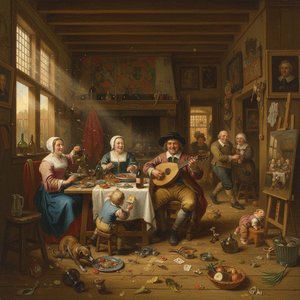
- The Painter’s Studio: A poignant and masterful depiction of Rembrandt’s workshop, where Van Assen uses diffused light to capture the very essence of creative endeavor and the sanctity of the artistic process.
- Landscape with Figures: An exemplary display of his ability to integrate human presence within a sweeping natural environment, showcasing his skill in balancing narrative intimacy with epic scale.
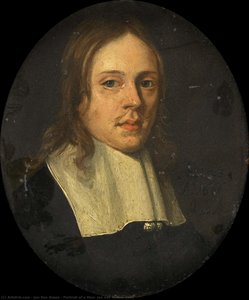
- Portraiture Works: Such as his Portrait of a Man (1666), which demonstrate his capacity for capturing the psychological depth and dignified character of his subjects through precise light and shadow.
Through his dedication to the principles of clarity, light, and atmosphere, Jan van Assen secured his place in the pantheon of Flemish and Dutch masters. His legacy continues to resonate with art historians and enthusiasts alike, offering a timeless exploration of the beauty found in the delicate balance between the seen and the felt.
问答详情
目前目录中共有多少件 Jan Van Assen 的作品可供浏览?
您可以在 全部作品 页面浏览由 Jan Van Assen 创作的 5 件作品 件作品。
如何按年份顺序浏览 Jan Van Assen 的作品?
Jan Van Assen 的作品时间轴现已上线:在艺术家的 作品时间轴 页面中,所有作品均按创作日期排序。
是否有关于Jan Van Assen所创作的所有主题的概览?
主题索引 页面按主题对 Jan Van Assen 的作品进行了分类索引。