Johann Baptist Clarot: A Viennese Master of Miniature and Lithography
Born in Vienna in 1798, Johann Baptist Clarot emerged as a significant figure within the Austrian art scene during the Romantic era. His career spanned several decades, marked by a remarkable versatility that encompassed portraiture, historical scenes, and, crucially, the burgeoning field of lithography. While often overshadowed by his more celebrated contemporaries, Clarot’s meticulous detail, nuanced understanding of human psychology, and innovative approach to printmaking secured him a lasting place in art history, particularly for his exquisite miniature paintings.
Clarot's early life remains somewhat shrouded in mystery, though it is known he was part of an artistic family. His father, Alexander Clarot, was also a painter, providing Johann with a foundational education in the visual arts. This familial connection undoubtedly influenced his development, instilling within him a deep appreciation for technique and observation. He initially trained as a miniaturist, a demanding discipline requiring exceptional skill and patience – qualities that would serve him well throughout his career. The miniature format allowed Clarot to capture intimate portraits with remarkable precision, focusing on subtle expressions and delicate details of clothing and accessories.
A Shift Towards Lithography and Historical Narrative
As the 19th century progressed, Clarot’s artistic interests expanded beyond the confines of the miniature. He embraced lithography, a technique that offered both creative freedom and commercial viability. This medium allowed him to produce larger-scale works depicting historical events, mythological scenes, and portraits of prominent figures – subjects often imbued with a Romantic sensibility. His lithographs are distinguished by their crisp lines, vibrant colors, and skillful rendering of textures, showcasing his mastery of the printing process.
A pivotal moment in Clarot’s career was his relocation to Pest (Budapest), then part of the Austro-Hungarian Empire, where he established himself as a respected artist. This period witnessed a flourishing of artistic activity in Budapest, and Clarot benefited from the city's vibrant cultural environment. He continued to produce both paintings and lithographs, establishing a diverse body of work that reflects his evolving style and interests.
Notable Works and Artistic Style
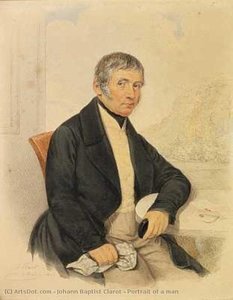
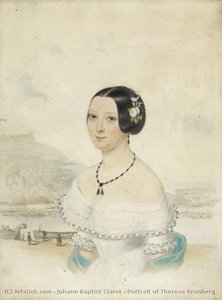
Several of Clarot’s works stand out as particularly noteworthy examples of his artistic talent. “Kaiser Franz I and Karoline Auguste” exemplifies his ability to capture the dignity and gravitas of royalty, while simultaneously conveying a sense of intimacy through the careful rendering of their expressions and attire. “Portrait of Therese Kronberg” demonstrates his skill in portraying individual character, capturing not just physical likeness but also subtle emotional nuances. “The Lieutenant Adalbert Hysel” showcases his talent for depicting military life with realism and detail.
Clarot’s style is characterized by a meticulous attention to detail, a refined sense of composition, and a deep understanding of human anatomy. His portraits are particularly notable for their psychological depth, capturing the inner lives of his subjects with remarkable sensitivity. He employed a palette that favored muted tones and subtle gradations of color, creating an atmosphere of quiet elegance and understated beauty. The influence of the Biedermeier style is evident in many of his works, characterized by a focus on domestic scenes and everyday life.
Legacy and Historical Significance
Despite not achieving widespread fame during his lifetime, Johann Baptist Clarot’s contribution to Austrian art is undeniable. He was a skilled miniaturist, a talented lithographer, and a perceptive portrait painter who captured the spirit of his era. His work provides valuable insights into the social and cultural landscape of 19th-century Vienna and Budapest. Today, his miniature paintings and lithographs are treasured for their artistic merit and historical significance, offering a glimpse into the world of Austrian Romanticism.
Further research can be found on WikiArt (WikiArt) and MutualArt (MutualArt), providing a more detailed account of his life, works, and influence.
问答详情
Johann Baptist Clarot 的作品传达了怎样的情绪?
您可以在艺术家 Johann Baptist Clarot 的 情境空间 页面上按心情浏览其作品,该页面已根据作品所传达的情绪进行了分类整理。
在哪里可以参观Johann Baptist Clarot作品的3D虚拟展厅?
您可以在Johann Baptist Clarot的3D 艺术展厅页面中,通过3D展厅欣赏其艺术作品。
是否有关于Johann Baptist Clarot所创作的所有主题的概览?
Johann Baptist Clarot 的 主题索引 旨在通过主题对艺术家的作品进行分类索引。