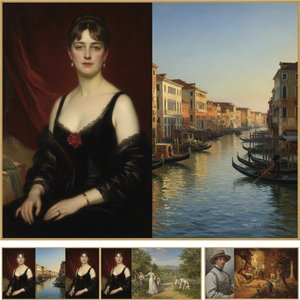
John Beckett (1799 – 1864): A Quiet Observer of Revolution
John Beckett, a British landscape painter born in Dorking, Surrey, remains an enigmatic figure despite his prolific output during the Romantic era. While overshadowed by more celebrated contemporaries like Turner and Constable, Beckett’s meticulous observation of the English countryside—particularly the idyllic villages of Surrey—yielded paintings that resonate with a subtle beauty and enduring appeal. His artistic journey unfolded against the backdrop of significant historical events, including the Napoleonic Wars and the burgeoning Industrial Revolution, shaping his perspective on both nature and society.- Early Life & Education: Beckett’s formative years were spent in a family steeped in intellectual pursuits. His father, William Beckett, was a barrister and instilled in John a passion for law and reason – influences that would subtly permeate Beckett's artistic sensibilities.
- Formal Training & Artistic Influences: Beckett received formal training at Eton College and subsequently pursued studies at Christ’s Hospital School, where he honed his drawing skills. Crucially, he apprenticed under John Constable, absorbing the master’s techniques for capturing atmospheric effects and conveying emotion through landscape painting. Constable's emphasis on tonal gradation and expressive brushwork undoubtedly impacted Beckett’s artistic style.
The Landscape Painter of Surrey: Style & Technique
Beckett’s distinctive approach to landscape painting centered around a commitment to accuracy combined with an understated sensitivity. Unlike the dramatic vistas favored by Turner, Beckett opted for tranquil scenes depicting rural life—often featuring cottages nestled amongst rolling hills and orchards laden with fruit. His canvases are characterized by meticulous detail – painstakingly rendered foliage, architectural features, and domestic interiors—reflecting Constable’s influence. However, Beckett skillfully avoided overtly sentimental depictions; instead, he conveyed a profound appreciation for the natural world through balanced compositions and subtle tonal harmonies. He employed a technique similar to Canaletto and Gainsborough, prioritizing clarity of form and atmospheric perspective.- Notable Paintings: Beckett produced over 300 paintings during his lifetime, many of which depict Surrey landscapes with remarkable precision. Among his most celebrated works are ‘Clarendon House,’ West Street, Dorking (1820), and ‘The Old Mill Pond,’ Farnham (circa 1845). These canvases exemplify Beckett’s mastery of tonal gradation and atmospheric perspective—techniques honed during his apprenticeship under Constable.
- Recurring Themes: Recurring themes in Beckett's oeuvre include the beauty of rural England, the rhythms of agricultural life, and the importance of harmony between humanity and nature. His paintings convey a sense of quiet contemplation and understated emotion – qualities that align with the broader aesthetic sensibilities of the Romantic movement.
Historical Context & Legacy
Beckett’s artistic output coincided with pivotal moments in British history. The Napoleonic Wars instilled a heightened awareness of national identity and fostered an interest in commemorating heroic deeds—themes that indirectly informed Beckett's artistic vision. Simultaneously, the Industrial Revolution transformed the English landscape, prompting artists to grapple with questions about progress versus tradition. Beckett’s paintings serve as valuable documents of this era, capturing the spirit of rural England before its dramatic transformation.- Recognition & Influence: While Beckett enjoyed modest commercial success during his lifetime, he gained posthumous recognition for his contribution to landscape painting. His meticulous observation and understated sensitivity continue to inspire artists today. Furthermore, Beckett’s work appeared in the HBO miniseries “John Adams,” providing a visual representation of the era and bolstering his artistic legacy.
Conclusion: A Painter's Quiet Contribution
John Beckett may not command the fame of Turner or Constable, but his paintings—particularly ‘Clarendon House’—remain treasured examples of Romantic landscape art. Through careful observation and masterful technique, Beckett captured a serene vision of rural England—a testament to the enduring power of quiet contemplation and artistic integrity.问答详情
John Beckett 的创作时期属于哪个历史阶段?
John Beckett 的创作活跃于 19th Century 时期,这一时期确立了艺术家在艺术史上的地位。
是否有John Beckett作品的3D虚拟展厅巡览?
您可以进行虚拟参观:在 John Beckett 的 3D 艺术展厅 页面中,您可以在三维画廊里欣赏艺术家的作品。
如何按特定色调查找 John Beckett 的作品?
按色调浏览 页面按色调将 John Beckett 的艺术作品进行了分类。