Early Life and Influences – The Seeds of a Vision
Born in Oxford, England, around 1818 (though precise dates remain elusive), John Bridges’s life unfolded against the backdrop of a rapidly changing Victorian era. While much remains shrouded in the mists of historical record, we can piece together a portrait of an artist deeply rooted in the traditions of English sporting art while simultaneously embracing the burgeoning interest in topographical views. His early years were likely shaped by his family – details are scarce, but it’s understood he was part of a creative lineage, with connections to other artists and potentially within the academic circles of Oxford.
The prevailing artistic currents of the time undoubtedly influenced Bridges's development. The Romantic movement, with its emphasis on emotion, nature, and the sublime, provided a crucial foundation. Simultaneously, the rise of realism in painting—particularly the work of artists like William Turner and J.M.W. Turner—demonstrated the potential for capturing the essence of landscapes and light with unprecedented accuracy. Furthermore, the popularity of sporting scenes – depictions of hunting, racing, and equestrian pursuits – reflected a growing fascination with leisure activities among the Victorian elite. Bridges’s work would ultimately synthesize these diverse influences into a distinctive style.
A Career Forged in Oxford and Beyond
Bridges established himself primarily as a painter based in Oxford, a city renowned for its artistic community during the 19th century. He was associated with the prestigious Worcester College, serving as a Fellow, which suggests an engagement with academic art traditions. However, his primary focus lay outside the confines of formal instruction, dedicating much of his career to capturing the dynamism and beauty of the English countryside and the world of sporting pursuits.
- Sporting Scenes: Bridges excelled at depicting horse racing, hunting expeditions, and other equestrian events. His paintings are characterized by a keen eye for detail, capturing the movement, energy, and excitement of these activities with remarkable skill.
- Topographical Views: Alongside his sporting scenes, Bridges produced a series of topographical views – detailed depictions of landscapes, buildings, and urban settings. These works demonstrate an interest in accurately representing the physical environment, reflecting the Victorian fascination with mapping and surveying.
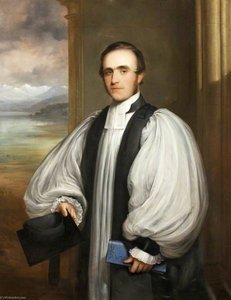
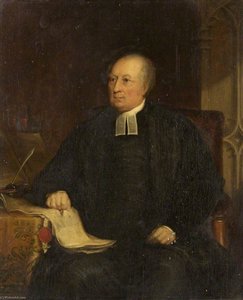
- Portraiture: Evidence suggests Bridges also engaged in portrait painting, as evidenced by his 1852 portrait of Hibbert Binney, Bishop of Nova Scotia. This work showcases his ability to capture likenesses and convey personality through careful observation and skillful brushwork.
Notable Works and Artistic Style
While a comprehensive catalog of Bridges’s oeuvre remains incomplete, several paintings have survived and offer valuable insights into his artistic style. His work is generally characterized by a meticulous attention to detail, a vibrant use of color, and a skillful rendering of light and shadow. He often employed a loose, expressive brushstroke that conveyed movement and energy, particularly in his depictions of sporting scenes.
- The Hibbert Binney Portrait (1852): This portrait exemplifies Bridges’s academic realism and his ability to capture the likeness and demeanor of his subject.
- Landscape Paintings: His landscapes often feature rolling hills, expansive skies, and carefully rendered details of flora and fauna.
- Racing Scenes: Bridges's racing scenes are particularly noteworthy for their dynamic compositions and skillful depiction of horses in motion.
Legacy and Historical Significance
John Bridges’s contribution to Victorian art lies primarily in his masterful depictions of sporting life and topographical views. He stands as a key figure in the development of English sporting art, capturing the spirit of leisure and adventure that defined the era. His work reflects both the artistic traditions of Oxford and the broader cultural trends of 19th-century England.
Furthermore, Bridges’s career coincided with significant social and political changes, including the gradual dismantling of the British Empire and the rise of industrialization. His paintings offer a glimpse into a world where rural life and traditional pursuits still held considerable importance, even as urban centers grew in size and influence. He is remembered alongside Peter Tillemans, another prominent artist of his time who shared similar interests and techniques.
问答详情
John Bridges 的哪些作品浏览量最高?
有关 John Bridges 作品的统计数据,请参阅艺术家的 统计数据 页面。
在哪里可以按色调浏览 John Bridges 的作品?
若要按特定色调查找 John Bridges 的作品,请访问艺术家的 按色调浏览 页面。
是否有关于 John Bridges 的生平年表?
John Bridges 的 艺术历程 是一个随滚动条变化的艺术时间轴,按创作时期进行章节划分,并按时间顺序呈现艺术家的作品。