John Hudson (1662–1719): A Master of Subtle Detail in the Age of Grubby Grandeur
The world of 17th and early 18th-century England was one of burgeoning wealth, intricate social hierarchies, and a fervent appetite for visual representation. Amidst this dynamic landscape emerged John Hudson, a British engraver whose meticulous portraits and contributions to decorative arts offer a fascinating glimpse into the era’s artistic sensibilities and technical advancements. Born in Wythop, near Cockermouth, in 1662, Hudson's life was marked by both professional success and personal complexities, culminating in a legacy of refined engravings that continue to captivate viewers today.
Hudson’s early education at Queen’s College, Oxford, laid the foundation for his scholarly pursuits. Initially destined for the clergy, he found himself drawn to the burgeoning field of engraving, a craft increasingly valued for its ability to replicate paintings with remarkable accuracy and detail. His initial foray into printmaking involved privately producing editions of classical texts, including a meticulously annotated version of Velleius Paterculus’s *History*, demonstrating his commitment to both scholarship and artistic skill. This early work established him as a respected figure within the academic community, though his Jacobite sympathies ultimately hindered his advancement in the Church.
His appointment as Bodley's librarian at Oxford University in 1701 marked a significant turning point in Hudson’s career. This role afforded him access to an unparalleled collection of manuscripts and allowed him to further refine his engraving techniques. He subsequently undertook the challenging task of editing *Thucydides*, a monumental undertaking that showcased his dedication to accuracy and scholarly rigor. Hudson's work during this period was characterized by a remarkable attention to detail, evident in the delicate rendering of textures, drapery, and facial expressions – hallmarks of his distinctive style.
The Portraiture of Power and Prestige
Hudson’s most celebrated achievements lie within the realm of portrait engraving. He quickly established himself as a sought-after artist for creating images of prominent figures—members of the aristocracy, government officials, and even theatrical personalities. His portraits were not merely likenesses; they were carefully constructed representations designed to convey status, character, and social standing. Hudson’s skill lay in his ability to capture the subtle nuances of personality through minute details – a raised eyebrow, a slight turn of the head, or the glint in an eye—transforming subjects into compelling visual narratives.
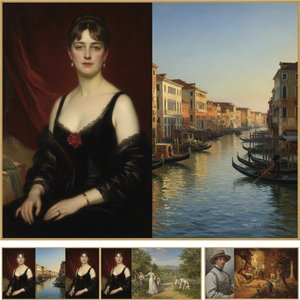
A particularly notable portrait is that of Susanna Trevelyan, wife of John Hudson. Created by a studio assistant of Joshua Reynolds, it exemplifies Hudson’s ability to render the complexities of human expression with remarkable subtlety. The image reveals not just physical likeness but also hints at the subject's inner life and social position. Similarly, his engravings for theatrical productions—such as those depicting actors like Nancy Gates—demonstrate his understanding of stagecraft and his talent for capturing the dynamism and charisma of performers.
Technique and Innovation
Hudson’s engraving style was distinguished by its precision, clarity, and a remarkable ability to reproduce fine details. He employed a combination of etching and drypoint techniques, allowing him to achieve both tonal variations and sharp lines. His meticulous approach involved multiple stages of preparation—drawing, transferring the design onto copper plates, and carefully controlling the pressure applied during the engraving process. Hudson’s work reflects the advancements in printmaking technology during his time, showcasing a mastery of materials and processes.
Furthermore, Hudson was known for his innovative use of color printing techniques, experimenting with mezzotint to create rich, velvety tones. This experimentation expanded the expressive possibilities of engraving and contributed to the growing popularity of this medium as an artistic tool. His willingness to push the boundaries of printmaking established him as a forward-thinking artist within his field.
Legacy and Historical Context
John Hudson’s career coincided with a period of significant social and political upheaval in England, marked by the decline of the monarchy and the rise of parliamentary power. His portraits reflect this shifting landscape, capturing the personalities and aspirations of an era defined by both grandeur and uncertainty. Hudson's work provides valuable insights into the cultural values and artistic trends of 17th and early 18th-century England.
Despite facing obstacles due to his political leanings, Hudson’s engravings continue to be admired for their technical brilliance, stylistic elegance, and ability to convey a sense of human character. His legacy as one of the most accomplished engravers of his time endures, reminding us of the enduring power of visual representation to capture the complexities of human experience.
问答详情
John Hudson 的哪些作品浏览量最高?
John Hudson 的 统计数据 页面展示了基于 本站 上列出的艺术家作品所计算出的统计数据。
在哪里可以按艺术流派浏览 John Hudson 的作品?
全部流派 页面按艺术流派对 John Hudson 的作品进行了分类。
如何按年份顺序浏览 John Hudson 的作品?
John Hudson 的作品时间轴现已上线:在艺术家的 作品时间轴 页面中,所有作品均按创作日期排序。