The Melancholic Landscapes of Joseph Paul Pettit
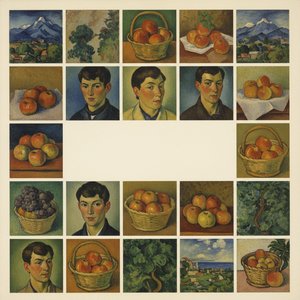
Joseph Paul Pettit, a name perhaps less familiar than many Victorian artists, nevertheless holds a significant place in the history of British watercolor painting. Born in 1812 in Gillingham on Medway, Kent, and passing away in 1882, Pettit’s career unfolded against the backdrop of rapid industrialization and social change, yet his art consistently focused on capturing the serene beauty of the English countryside – a deliberate act of resistance to the encroaching modernity. His work isn't characterized by dramatic narratives or bold statements; instead, it offers quiet contemplation through meticulously rendered landscapes imbued with a palpable sense of melancholy and nostalgia. Pettit’s artistic journey began modestly, likely influenced by his father, who was a local artist himself, though details about his early training remain somewhat obscure. He initially worked as an engraver before dedicating himself fully to painting in the mid-1840s, establishing a studio in Gillingham and quickly gaining recognition for his ability to evoke atmosphere with subtle shifts in color and light.A Master of Light and Shadow: Technique and Style
Pettit’s technical skill is undeniably impressive, but it's his *approach* to watercolor that truly distinguishes his work. He eschewed the bright, vibrant palettes favored by some contemporary artists, instead opting for a muted, almost somber range of tones – browns, greys, blues, and greens dominate his compositions. This restrained palette wasn’t born from a lack of color; rather, it was carefully considered to create an illusion of depth and atmosphere. Pettit employed a technique known as ‘wet-on-wet,’ applying paint to damp paper to achieve soft edges and hazy effects, particularly effective in depicting atmospheric conditions like mist or rain. His brushwork is remarkably delicate, almost hesitant at times, lending a sense of vulnerability and fragility to his scenes. He was particularly adept at capturing the play of light on water – reflections shimmered with an ethereal quality, while shadows deepened into pools of mystery. His landscapes aren’t simply representations of places; they are carefully constructed emotional experiences, inviting the viewer to share in a quiet sense of longing.Subjects and Inspirations: From Gillingham to Mont Saint-Michel
Pettit's subjects were largely drawn from the familiar landscapes surrounding his home in Kent – the Medway estuary, the rolling hills of North Downs, and the picturesque villages that dotted the countryside. However, he also embarked on extended excursions, notably traveling to France where he spent considerable time studying the works of Jean-Baptiste Oudard and other masters of landscape painting. This exposure to French techniques profoundly influenced his style, particularly in his depiction of water and light. His travels culminated in a significant period spent at Mont Saint-Michel in Normandy, where he produced some of his most celebrated works – evocative scenes of the tidal island bathed in mist and rain. These paintings are characterized by an almost haunting beauty, capturing the dramatic interplay between land and sea with remarkable precision. Other notable subjects included Lake Maggiore, the River Llugwy in North Wales, and various locations within England, including the Saw Mill at Camlaw. His biblical scenes, often depicting shepherds or rural life, demonstrate a deep understanding of religious iconography and a subtle ability to infuse them with a sense of quiet spirituality.Historical Context and Legacy
Pettit’s work emerged during a period of immense social and economic upheaval in Britain – the Industrial Revolution was transforming the landscape and society at an unprecedented rate. His choice to focus on traditional, rural subjects can be interpreted as a deliberate act of resistance against this rapid modernization. He wasn't interested in glorifying industrial progress; instead, he sought to preserve the memory of a disappearing world – a world of quiet beauty and timeless traditions. While he never achieved widespread fame during his lifetime, Pettit’s work has been increasingly recognized for its artistic merit and emotional depth in recent decades. His paintings are now held in major collections across Britain, including the Tate Gallery and the Higgins Bedford Museum & Art Gallery. Pettit's legacy lies not only in his technical skill but also in his ability to evoke a profound sense of place and time – a testament to the enduring power of landscape art to connect us with our past and remind us of the beauty that still exists in the world around us. His paintings continue to resonate with viewers today, offering a moment of quiet contemplation amidst the complexities of modern life.问答详情
我可以通过艺术流派来浏览 Joseph Paul Pettit 的作品吗?
所有艺术流派 页面按艺术流派对 Joseph Paul Pettit 的作品进行了分类。
是否有关于 Joseph Paul Pettit 的生平年表?
Joseph Paul Pettit 的 艺术编年史 是一个随滚动条变化的艺术时间轴,按创作时期进行章节划分,并按时间顺序呈现艺术家的作品。
可以按颜色对Joseph Paul Pettit的作品进行排序吗?
色彩索引 页面按色彩对 Joseph Paul Pettit 的作品进行了分类整理。