Viacheslav Atroshenko: A Painter of Light and Shadow
Viacheslav Atroshenko (1935-1994) remains a captivating figure in the landscape of Russian and European art, a master of evocative scenes that blend elements of folk tradition with a distinctly modern sensibility. Born in Shanghai amidst the complexities of his Ukrainian émigré family’s journey, Atroshenko's formative years were steeped in cultural duality – the vibrant energy of China juxtaposed against the echoes of Eastern Europe. This unique heritage profoundly shaped his artistic vision, informing a palette rich with both luminous warmth and brooding introspection.
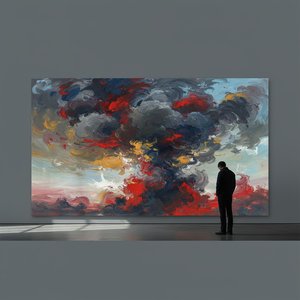
Early influences included the works of Russian landscape painters like Arkhip Kuindzhi, whose masterful use of light and color undoubtedly resonated within Atroshenko’s developing style. However, he also found inspiration in the bold experimentation of European abstract expressionists, particularly those exploring the emotional resonance of color. This synthesis is most strikingly evident in his later paintings, where traditional Russian motifs—rolling fields, ancient forests, and glimpses of rural life—are rendered with a dynamic, almost turbulent energy.
The Sicilian Years: A Turning Point
A pivotal period in Atroshenko’s artistic development occurred during his time in Sicily. Moving to the island in the early 1970s, he was immediately drawn to its dramatic landscapes – the sun-drenched coastlines, the rugged mountains, and the ancient ruins that whispered of a distant past. “Sicilian Waters,” perhaps his most celebrated work, exemplifies this period perfectly. This large-scale abstract painting is not merely a depiction of a seascape; it’s an exploration of light, texture, and emotion. Layered washes of color – blues, greens, ochres, and yellows – coalesce to create a sense of movement and depth, capturing the raw power and beauty of the Mediterranean environment.
The Sicilian experience fundamentally altered Atroshenko's approach. He began to prioritize feeling over precise representation, allowing his brushstrokes to convey atmosphere and mood rather than literal detail. This shift is reflected in many of his subsequent works, which increasingly leaned towards abstraction while retaining a strong connection to the natural world.
A Fusion of Styles: Folk Art and Abstract Expressionism
Atroshenko’s artistic identity was characterized by a remarkable ability to seamlessly blend seemingly disparate influences. He skillfully integrated elements of Russian folk art—traditional patterns, vibrant colors, and symbolic imagery—with the techniques and philosophies of abstract expressionism. This fusion is particularly evident in his depictions of rural life, where he often incorporated stylized figures and motifs reminiscent of traditional icons or peasant art.
His paintings are not simply landscapes; they’re narratives – glimpses into a world steeped in history, memory, and the enduring spirit of the Russian people. The use of impasto—thickly applied paint—adds a tactile quality to his work, inviting viewers to engage with the surface and feel the energy of the artist's hand.
Later Works and Legacy
In the 1980s and early 1990s, Atroshenko’s style continued to evolve, becoming increasingly expressive and emotionally charged. His paintings from this period are characterized by bold colors, dynamic brushstrokes, and a sense of urgency—a reflection perhaps of the turbulent political climate in Russia at the time.
Viacheslav Atroshenko died in 1994, leaving behind a significant body of work that continues to resonate with audiences today. His paintings are held in collections around the world, and his legacy as a master of landscape painting—a painter who seamlessly blended tradition and innovation—remains secure.
His works, such as “Summer’s Day,” demonstrate his ability to capture fleeting moments of beauty and emotion, solidifying his place as a significant voice in 20th-century art. Further research into his life and work can be found through resources like askART and AllPaintingsStore.
问答详情
Viacheslav Atroshenko 的作品传达了怎样的情绪?
艺术家的 心情空间 页面展示了 Viacheslav Atroshenko 按氛围分类排列的艺术作品。
在哪里可以按关键词浏览 Viacheslav Atroshenko 的作品集?
若要按特定主题查找 Viacheslav Atroshenko 的作品,请访问艺术家的 按关键词检索 页面,该页面通过关键词对作品进行了分类整理。
我可以通过艺术流派来浏览 Viacheslav Atroshenko 的作品吗?
Viacheslav Atroshenko 所属的艺术流派可以在其 所有艺术流派 页面中查看,该页面按流派对作品进行了分类。