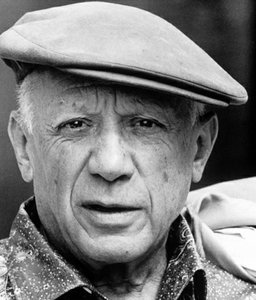
بابلو بيكاسو (1881–1973) is the most famous Cubist رسام, best known for غرنيكا و Witness Picasso’s revolutionary 'Young Ladies of Avignon'! Explore Cubism’s birth in this monumental 1907 masterpiece – a raw, unsettling & historically significant artwork.
The Young Ladies of Avignon
artworks_database
/en/art/pablo-picasso-the-young-. Then جورج براك, فرناند ليجيه, خوان غريس و روبرت ديلوناي. The list covers 47 رسامون born between 1858 and 1939 in 28 countries, from Carl Newman to ضياء العزاوي.
ACompiled by AllPaintingsStore.com
Method. Scope: artists filed under Cubist in our catalogue. Order: our artist fame ranking. Excluded: artists born after 1955 without a Wikidata identifier. Wikipedia figure: languages with an article, out of our 32.
This can be seen in pieces like “ Abstract Flowers in Left,” where geometric forms and muted tones suggest a move away from purely representational art.
A subsequent period in Paris and Italy allowed him to immerse himself in the vibrant artistic scene of the time, encountering the innovations of Post-Impressionism and early Modernism.
Born in Barcelona on September 21st, 1876, González was destined for a life intertwined with metal. He descended from a lineage steeped in the meticulous traditions of craftsmanship; his grandfather was a goldsmith in Galicia, and his father, Concordio González, operated a workshop specializing in the fabrication of gold, silver, and iron.
Polish-Frenchb. WarsawCubism, School of Paris, ImpressionismWikipedia 11/32
His still lifes, such as “ The Bottle Of Whisky And The Pack Of Scaferlati,” exemplify this masterful technique, demonstrating a profound understanding of spatial relationships and tonal harmonies.
Raymond Duchamp - Villon, born Pierre-Maurice-Raymond Duchamp in 1876 in Damville, France, stands as a pivotal figure in the dramatic shift from traditional sculpture to the dynamic language of modernism. Coming from a remarkably creative family—brothers Jacques Villon, Marcel Duchamp, and sister Suzanne Duchamp -Crotti all achieved prominence as artists—Raymond initially pursued medicine at the Sorbonne.
Armand Schonberger (1885–1974) stands as a captivating figure in the tapestry of early 20th-century modernism, a painter whose brush bridged the delicate light of Impressionism with the fractured, rhythmic energy of Cubism. Born in Galgóc and later finding his artistic soul within the vibrant bohemian circles of Munich and Budapest, Schonberger’s life was a continuous dialogue between tradition and the avant-garde.
To look upon a Portillo del Toro painting is to witness a lasting dialogue between form and feeling, a legacy of color that continues to illuminate the history of Latin American art.
Hungarianb. BudapestÉcole de Paris, CubismWikipedia 5/32
His work demonstrates a unique blend of influences – Cubism's fragmented forms, elements of Fauvism’s bold color palettes, and a distinctly Hungarian sensibility.
In works such as Munitions Factory, one can witness his mastery of the Cubist technique applied to the heavy, rhythmic atmosphere of wartime production, using geometric forms to convey the relentless momentum of industry.
Further experience as a scenery painter with the Wisconsin Players honed his skills in design and composition, while a move to Provincetown, Massachusetts, in 1919 proved decisive.
Frescoes & Decorative Art: Beyond painting, Gentilini excelled as a fresco artist, contributing to monumental murals that showcased his mastery of color and form on a grand scale.
Emilio Tadini was far more than a painter; he was a profound architect of meaning within the Italian cultural landscape. Born in Milan in 1927, his journey began not with a brush, but with the written word. A poet, novelist, and essayist, Tadini first emerged onto the prestigious literary stage in 1947 through Elio Vittorini's magazine, Politecnico.


 غرنيكا
 Witness Picasso’s revolutionary 'Young Ladies of Avignon'! Explore Cubism’s birth in this monumental 1907 masterpiece – a raw, unsettling & historically significant artwork.
The Young Ladies of Avignon
artworks_database
/en/art/pablo-picasso-the-young-
 Weeping Woman