


 Преглед в реален мащаб
 Сподели
 Сподели
 Подробности
 Ръководство

 Изтегляне
 Подобни артикули
 Рентгенова снимка
 Слайдшоу
 Статистика
GREETINGS

 Разгърни целия текст
Жикле / Художествен принт
Giclée печат или принт върху платно с музейно качество, бързо производство и гъвкави опции за завършен вид. ( Поръчайте ръчно рисувано репродукция на този колекционерски предмет Превключване към дигитално изображение)




P118B €10

P118H €10

P118W €10

P438Z €10

P508JH €12

P508YH €12

P805H €10

P805Z €10

P919BZ €10

P919G €10

P919XJ €10

P959ZH €10

P968JZ €12

W106C €8

W218G €10

W218JH €8

W218Y €10

W307PJ €10

W316G €10

W316PJ €8

W316Y €10

W398PJ €8

W4111J €10

W500HY €15

W500JH €15

W692G €12

W849H €8

W940BG €15

W953PJ €8




Изберете от нашите предварително зададени размери, които съответстват на оригиналните пропорции на произведението.

Въведете необходимата ширина и височина, за да паснат на вашата рамка или стена. Принтовете могат само да се изрязват, но никога не могат да бъдат по-големи от оригиналната картина, така че при размер с различен формат част от изображението ще бъде загубена. Преди да започнем печат, ще ви изпратим дигитален мок업 за одобрение. Изображението, показано на тази страница, не показва реалното изрязване — само мок업ът го показва.
Доставка по целия свят () в рамките на 2 седмици вместо стандартните 4/5 седмици. (25 Октомври)

Безплатна експресна доставка по целия свят

Висококачествено ленено платно

Пълно застраховане на доставката

Гаранция за възстановяване на митнически такси

Гаранция за пълно съответствие на цветовете

Политика за връщане в рамките на 100 дни (само при дефекти)

100% Гаранция за връщане на сумата

Отстъпка при поръчка на повече произведения
 Опцията със стъкло е налична само за размери под 110 см

GREETINGS
Жикле / Художествен принт
Размер на репродукцията
-


Крайна цена
€ 56
Greetings: An Exploration of Pollock’s Expressionist Vision
Paul Jackson Pollock's “Greetings” stands as a testament to the radical spirit of Abstract Expressionism, encapsulating the movement’s core tenets within a deceptively simple composition. This artwork, created sometime in the mid-1940s—the zenith of Pollock’s groundbreaking drip technique—immediately captivates with its dynamic interplay of color and form, inviting viewers into a realm where visual sensation transcends representational accuracy.
- Subject Matter: The painting depicts stylized human figures engaged in movement, albeit abstracted to the point of near anonymity. These forms swirl and intertwine across the canvas, conveying an impression of restless energy and perhaps hinting at psychological turbulence—themes prevalent throughout Pollock’s oeuvre.
- Style & Technique: Pollock's signature method – drip painting – dominates this piece. He meticulously applied paint onto a horizontal surface laid on the floor, allowing gravity to guide drips and splatters from sticks or cans directly onto the canvas. This process yielded an uneven, textured surface achieved through layering paint and incorporating collage elements—a deliberate departure from traditional painting conventions.
- Color Palette & Composition: The artwork’s color scheme is dominated by warm hues – browns, reds, and yellows – punctuated by darker accents that contribute to the overall mood. The composition is deliberately unbalanced, emphasizing horizontal movement while simultaneously disrupting visual stability. Lines are loose and gestural, creating a sense of spontaneity and mirroring the artist's emotional state.
- Historical Context: “Greetings” emerged during a period of profound artistic experimentation following World War II. Pollock’s work aligns with the broader Expressionist impulse to convey emotion directly—a reaction against formalism and a celebration of subjective experience. It reflects the influence of Surrealism, particularly its exploration of unconsciousness and dreamlike imagery.
- Symbolic Significance: The distorted figures and swirling lines within “Greetings” are laden with symbolic resonance. They represent not merely physical movement but also transformation—a visual metaphor for confronting inner turmoil and embracing change. Pollock’s intention was to bypass rational thought, tapping into primal instincts and conveying feelings beyond verbal articulation.
The painting's signature in the lower left corner – “Greetings Lee and Johnson” – serves as a subtle reminder of its provenance and underscores the collaborative spirit inherent in artistic creation. This artwork embodies Pollock’s unwavering commitment to pushing boundaries, establishing him as one of the most influential figures in 20th-century art.
Въпроси и отговори
Къде мога да купя дигитален образ на „GREETINGS“ на Пол Джаксън Полк?
Дигитален образ на „GREETINGS“ на Пол Джаксън Полк може да бъде закупен на неговата страница Дигитален образ: дигитално изтегляне на изображение с висока резолюция.
Как се съотнасят цветовете в "GREETINGS" един с друг?
„GREETINGS“ на Пол Джаксън Полк демонстрира Strong Color Unity цветова хармония.
Какъв национален произход стои зад Abstract Expressionism на "GREETINGS"?
Произведението в стил Abstract Expressionism „GREETINGS“ е създадено от художник, роден в Съединени американски щати.
Свързани произведения


Биография на художника
Early Life and the Seeds of Innovation
Paul Jackson Pollock, born in Cody, Wyoming, in 1912, was a restless spirit from the outset. His early life was marked by frequent relocation as his father pursued work as a land surveyor across the vast landscapes of the American West. This itinerant existence instilled in young Pollock a deep connection to the natural world and an exposure to diverse cultures, particularly through encounters with Native American art during those surveying trips – impressions that would subtly permeate his artistic vision later in life. Though he never explicitly imitated Indigenous styles, the raw energy and spiritual resonance of these early experiences undoubtedly left their mark. Pollock’s formal artistic training began at the Manual Arts High School in Los Angeles, followed by studies at the Art Students League of New York under the tutelage of Thomas Hart Benton. Benton, a prominent figure in the Regionalist movement, emphasized rhythmic composition and narrative themes rooted in American life. While Pollock initially absorbed these lessons, his inherent inclination leaned toward more abstract explorations. He was also profoundly impacted by Mexican muralists like José Clemente Orozco, whose powerful depictions of social struggle resonated deeply with him. These early influences laid a foundation, but it was the burgeoning world of Surrealism that truly unlocked Pollock’s artistic potential.The Birth of Action Painting and a Revolutionary Technique
The 1930s saw Pollock experimenting with various techniques, seeking alternatives to traditional brushwork. He began pouring paint, exploring its fluidity and unpredictable nature. However, it was around 1947 that his artistic trajectory underwent a radical transformation. Abandoning the easel altogether, Pollock laid canvases directly on the floor, initiating what would become known as his “drip technique.” He then proceeded to drip, splash, and fling paint onto the canvas from above, orchestrating a dynamic dance between artist, medium, and surface. This wasn’t merely about applying paint; it was about embodying the act of creation itself. Pollock's canvases became arenas for physical expression, capturing the immediacy of his gestures and emotions. The resulting paintings are characterized by their “all-over” composition – a lack of central focus that invites the viewer to explore the entire surface as a unified field of energy. Intricate networks of lines and colors intertwine, creating a visual complexity that is both captivating and challenging. He employed unconventional tools—sticks, knives, even syringes—to manipulate the paint in unpredictable ways, further emphasizing the spontaneous nature of his process.- This technique was revolutionary because it rejected traditional brushwork.
- It emphasized the physical act of painting as a performance.
Influences and Artistic Development
Pollock’s artistic development wasn't solely driven by experimentation. He drew inspiration from diverse sources, including the works of European masters like Picasso and Braque, as well as the vibrant murals of Mexican artists such as Diego Rivera. The influence of Surrealism, with its exploration of the subconscious and dreamlike imagery, also played a significant role in shaping his artistic vision. His exposure to Native American art during his father’s surveying trips instilled a deep appreciation for patterns, rhythms, and symbolic language – elements that subtly informed his abstract compositions. Key Influences:- Thomas Hart Benton (Regionalism)
- José Clemente Orozco (Mexican Muralism)
- Surrealism
- Native American Art
Iconic Works and Lasting Legacy
Pollock’s most celebrated works—such as Number 1, 1950 (Lavender Mist), One: Number 31, 1950, Blue Poles: Number 11, 1952, and Convergence—are testaments to his revolutionary technique. These paintings are not simply images; they are records of a performance, imbued with the artist’s physical presence and emotional intensity. The dynamic energy that emanates from these canvases is palpable, drawing viewers into a world of pure abstraction. Notable Works:- Number 1, 1950 (Lavender Mist)
- One: Number 31, 1950
- Blue Poles: Number 11, 1952
- Convergence
A Complex Figure and Enduring Influence
Despite initial skepticism, Pollock’s work eventually gained widespread recognition and acclaim. He was a complex figure—a brilliant artist grappling with personal demons, including alcoholism. His untimely death in 1956 at the age of 44 only served to heighten his mystique and solidify his place as one of the most important artists of the 20th century. His legacy continues to inspire artists today, demonstrating the power of experimentation, emotional expression, and a willingness to challenge conventional artistic boundaries. His innovative techniques and expressive style ensure his enduring influence for generations to come.
Пол Джаксън Полк
1912 - 1956 , Съединени американски щати
Бързи факти
- Artistic Movement Or Style: Абстрактен експресионизъм
- Artists Or Movements Influenced By This Artist:
- Цветно поле
- Абстрактен експресионизъм
- Artists Who Influenced This Artist:
- Бентън
- Орозко
- Массон
- Date Of Birth: 28 януари 1912
- Date Of Death: 11 август 1956
- Full Name: Paul Jackson Pollock
- Nationality: Американски
- Notable Artworks:
- Lavender Mist
- One: 31
- Blue Poles
- Convergence
- Place Of Birth: Коди, САЩ
Свързани статии
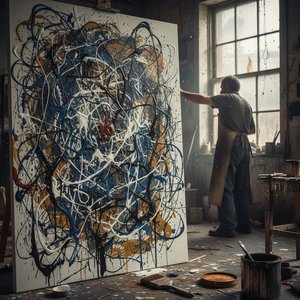
Paul Jackson Pollock: A Radical Departure – Exploring Abstract Expressionism's Pioneering Figure and His Enduring Legacy
Explore the revolutionary art of Jackson Pollock & Abstract Expressionism. Discover his iconic drip paintings, lasting impact, and considerations for collecting this pivotal American artist. Expert insights at AllPaintingsStore.
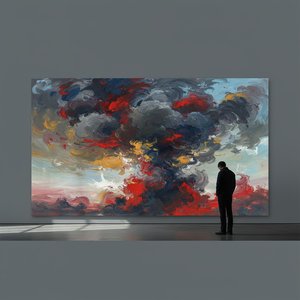
Beyond Representation: Exploring the Emotional Landscape of Abstract Expressionism
Explore the profound emotional world of Abstract Expressionism with AllPaintingsStore. Discover key artists like Pollock & Rothko, learn about collecting, and find museum-quality reproductions to inspire your space.

Pure Chaos & Color: The High-Voltage World of Abstract Expressionism
Dive into the high-voltage world of Abstract Expressionism. Explore the raw energy of Action Painting and the legendary masters of the New York School through a visual journey of pure chaos and color. Discover how to bring bold, high-impact abstract art into your modern space.

Beyond Form: A Definitive Guide to the Emotional Power of Abstract Expressionism
Explore the profound history and emotional depth of Abstract Expressionism. From Jackson Pollock to Mark Rothko, master the nuances of the New York School through our expert art history guide. Discover museum-quality hand-painted reproductions for your collection.

Топ 10 шедьовъра на абстрактния експресионизъм – изкуство за вашия дом от AllPaintingsStore.com
Разгледайте топ 10 шедьовъра на абстрактния експресионизъм – Полък, Ротко, де Кунинг и други. Открийте историите зад тези емблематични картини и преобразете дома си с изкуство от AllPaintingsStore.com! Разгледайте пълната колекция онлайн.


