


 Zobrazit v interiéru
 Odeslat
 Sdílet
 Podrobnosti
 Průvodce

 Stáhnout obrázek
 Podobné kousky
 Rentgenové snímky
 Slideshow
 Statistiky
Italianate Landscape with Umbrella Pines and River
 Romanticism
 1825
1825 110.0 x 153.0 cm
 Government Art Collection
 Přečíst si více
Ručně malovaná olejová reprodukce
Ručně malované olejné plátno v libovolném rozměru i s rámem, vyrobené našimi umělci na zakázku. ( Přepnout na tiskové verze Přepnout na digitální verzi obrazu)




































Vyberte si z našich přednastavených velikostí, které odpovídají původním proporcím díla.

Můžete zadat vlastní rozměry pro konkrétní rám nebo prostor. Pokud se vámi vybraná velikost neshoduje s proporcemi původního obrazu, dílo buď ořízneme, nebo jej doplníme ručně malovanými prvky. Před zahájením výroby vám bude zaslán digitální náhled ke schválení.
Upozorňujeme, že náhled na obrazovce neodpovídá skutečnému ořezu ani rozšíření. Pouze digitální náhled přesně zobrazí finální kompozici.
Ačkoliv je možné zvolit vlastní velikost, pro zachování původních proporcí doporučujeme vybrat rozměr z předdefinovaného seznamu.
Po přijetí objednávky vám tým AllPaintingsStore.com zašle e-mail s pokyny a poskytne náhledovou verzi.
Celosvětová doprava () za 3–4 týdny namísto standardních 5 týdnů. (21 září). Bez kompromisů v kvalitě.

Zdarma celosvětová expresní doprava

Vysoce kvalitní lněné plátno

Úplné pojištění přepravy

Záruka vrácení celního poplatku

Záruka věrného barevného shodu

100dení lhůta pro vrácení zboží (pouze při vadách výroby)

100% garance vrácení peněz

Sleva při více objednávkách
 Skleněná varianta je dostupná pouze u rozměrů menších než 110 cm

Italianate Landscape with Umbrella Pines and River
Technika provedení
Velikost reprodukce
-


Celková cena
$ 258
Související díla


Biografie umělce
The Ethereal Vision of John Tobias Young
In the annals of British Romanticism, few names evoke such a poignant sense of fleeting beauty as John Tobias Young. Born around 1786 in the quiet environs of Mildenhall, near Marlborough, Young’s life was a brief but luminous chapter in the history of landscape painting. Though his career was tragically truncated by his death in December 1824 at the young age of thirty-eight, he left behind a visual legacy that transcends the mere documentation of scenery. His work serves as a window into a period where the boundaries between the physical world and the spiritual sublime were perpetually blurred, capturing the very soul of the landscapes he traversed.
Young’s artistic journey was deeply shaped by his early exposure to the theatrical and the atmospheric. Before establishing himself as a master of the canvas, he served as a stage designer for Lord Barrymore’s private theatre at Wargrave. This unique background in scenography—a discipline requiring meticulous attention to depth, light, and emotional resonance—undoubtedly informed his approach to the natural world. He did not merely paint what was visible; he constructed vistas that invited the viewer into a carefully orchestrated emotional experience, much like a stage set designed to evoke wonder or melancholy.
The Spectral Beauty of the Channel Islands
While his roots lay in England, it was the rugged and enchanting landscape of Jersey that became the true muse for Young’s most profound achievements. Between 1816 and 1824, he produced a remarkable series of works often referred to as his "Jersey Paintings." These pieces are far more than topographical records; they are atmospheric meditations on the Channel Islands' dramatic coastline. Through his brush, the cliffs of Jersey become sites of sublime power, where the interplay of light and shadow suggests a haunting, spectral quality.
His technique was heavily influenced by the Luminism movement, a style he refined under the tutelage of the celebrated watercolorist Tobias Ragg. By mastering soft tonal gradations and a delicate atmospheric haze, Young was able to capture the ephemeral qualities of dawn, twilight, and the mist-laden sea. His ability to manipulate color and light allowed him to portray the rugged terrain with a breathtaking realism that felt almost supernatural. In works such as “Castle on a Rocky Road above a Bay,” one can sense the artist's profound desire to convey the spiritual resonance of nature—a hallmark of the Romantic era.
Legacy and Artistic Significance
The significance of John Tobias Young lies in his ability to bridge the gap between the meticulous observation of the landscape and the emotional depth of the Romantic ideal. His work anticipates the grandeur found in the later Hudson River School, sharing a common devotion to the majesty of the natural world. Though much of his reputation was once confined to the Southampton region, where he practiced for many years, his influence resonates through the enduring collections held in institutions such as the Victoria and Albert Museum and the Salisbury Library.
To look upon a Young landscape is to experience a sense of sublime isolation. His paintings remain vital testaments to a period of transition in British art, moving away from Neoclassical rigidity toward a more fluid, emotive expression. Even today, his depictions of the Jersey coastline continue to captivate, reminding us that true art does not just capture a moment in time, but preserves the very feeling of existence within the vast, ever-changing theater of nature.

john tobias young
1786 - 1828
Rychlé informace
- Artistic Movement Or Style: Romantic Landscape Painting
- Artists Or Movements Influenced By This Artist: ['Hudson River School']
- Artists Who Influenced This Artist:
- Edwin Young
- Tobias Ragg
- Date Of Death: 1824
- Full Name: John Tobias Young
- Nationality: British
- Notable Artworks: ['Castle on a Rocky Road above a Bay ca. 1811-1822']
- Place Of Birth: Mildenhall, England
Související články
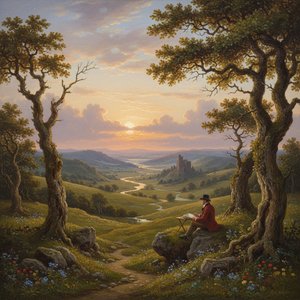
John Varley I: Intimate Observation & the British Romantic Landscape
Explore the serene landscapes of John Varley I, a key figure in British Romanticism. Discover his unique watercolour style, collaboration with William Blake & lasting artistic legacy. Learn about collecting Varley's work.

The Sublime and the Picturesque: Exploring Emotion & Nature in Romantic Landscape Painting
Explore the emotional power of Romantic landscape painting! Discover the sublime & picturesque traditions, key artists like Friedrich & Cole, and find your perfect artwork at AllPaintingsStore.
John Singer Sargent: 25 mistrovských děl a inspirace pro váš domov | AllPaintingsStore.com
Objevte 25 ikonických děl Johna Singera Sargenta – portrétů, impresionistických krajin a elegantních kompozic. Prozkoumejte příběhy umění, techniky a inspiraci pro váš interiér s reprodukcemi nejvyšší kvality na AllPaintingsStore.com

John Constable: 25 mistrovských děl krajinářské poezie | AllPaintingsStore.com
Prozkoumejte 25 ikonických děl Johna Constabla, mistra anglického krajinářství a romantismu. Obdivujte jeho olejomalby, plátna s venkovskou atmosférou a inspirujte se pro dekoraci interiéru. Reprodukce obrazů nejvyšší kvality na AllPaintingsStore.com

Romantická krajina v malbě: 10 mistrovských děl, které definovaly umělecký proud | AllPaintingsStore
Prozkoumejte 10 ikonických děl romantické krajinářské malby! Objevte příběhy Caspara Davida Friedricha, Turnera a dalších mistrů. Reprodukce obrazů nejvyšší kvality pro váš interiér na AllPaintingsStore.com.

