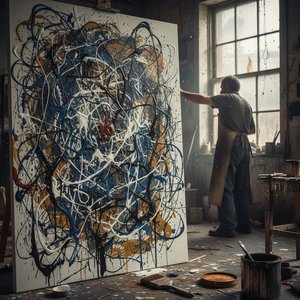
1953. Oil On Canvas, 84.0 x 58.0 cm.

§ 1Catalogue data
 Oil On Canvas
- WallArt
- Abstract Expressionism
 1953
1953- Modern
 84.0 x 58.0 cm
§ 2Abstract
Popis sbírného předmětu
Explore Jackson Pollock's 'Easter and the Totem,' a 1953 Abstract Expressionist masterpiece. Discover its dynamic composition, drip technique & cultural impact.
 Zobrazit více
Biografie umělce
Paul Jackson Pollock (1912-1956) byl americký malíř, průkopník abstrakce a „drip“ techniky. Jeho dynamické, expresivní obrazové plochy, jako "Blue Poles", definovaly moderní umění a ovlivnily generace umělců. #Pollock #Abstraktníexpresionismus
§ 3Commentary
Unveiling Jackson Pollock’s “Easter and the Totem”
- A Masterpiece of Abstract Expressionism: Jackson Pollock's 1953 painting, Easter and the Totem, stands as a pivotal work within the Abstract Expressionist movement. Measuring 84 x 58 cm and executed in oil on canvas, it’s not merely a visual experience but an exploration of form, symbolism, and the artist's inner world. This piece exemplifies Pollock’s revolutionary approach to painting, moving beyond traditional representation towards a more visceral and emotionally charged expression.
- Deconstructing the Composition: At first glance, Easter and the Totem appears as a dynamic interplay of color and shape – seemingly chaotic. However, closer inspection reveals a carefully constructed composition featuring at least six abstracted human figures interwoven with everyday objects: bowls, cups, a vase, and a bottle. These elements aren’t simply placed; they interact, creating a sense of movement and suggesting narratives within the abstract field. The arrangement isn't random; it hints at ritualistic gatherings or domestic scenes viewed through a fractured lens.
The Technique: Drip Painting and Action Painting
- Pollock’s Innovative Method: This painting is a prime example of Pollock's signature “drip” technique, also known as action painting. He laid the canvas flat on the floor and dripped, splashed, and poured paint onto it, eschewing traditional brushes in favor of sticks, knives, and even hardened paint. This method allowed for spontaneity and an all-over composition, where no single area dominates. The physicality of this process is crucial; Pollock didn’t just *paint* the canvas, he *engaged* with it, imbuing the work with his energy and emotion.
- Beyond Technique: A Philosophical Statement: Pollock believed that art should be an expression of the subconscious. The drip technique facilitated this by minimizing conscious control, allowing for a more direct translation of inner impulses onto the canvas. This wasn’t about depicting reality; it was about expressing the act of creation itself.
Historical Context and Symbolic Resonance
- A Post-War Reflection: Created in 1953, Easter and the Totem reflects the anxieties and uncertainties of the post-World War II era. The fragmented figures and ambiguous forms can be interpreted as a response to the trauma and disillusionment of the time. Abstract Expressionism, as a whole, emerged as a way to grapple with these complex emotions.
- The Title’s Significance: The title itself is intriguing. “Easter” suggests themes of rebirth and renewal, while "Totem" evokes ancient cultures and spiritual beliefs. This juxtaposition hints at Pollock's interest in mythology, symbolism, and the search for meaning in a rapidly changing world. The combination invites viewers to contemplate the relationship between personal experience and universal archetypes.
- Influence and Legacy: Pollock’s work profoundly impacted subsequent generations of artists. His exploration of abstraction and his emphasis on process paved the way for new artistic approaches, influencing figures like Roberto Matta and continuing to resonate in contemporary art today. The painting remains a powerful testament to the transformative potential of abstract expressionism.
Otázky a odpovědi
Je dílo „Easter and the Totem“ od Jackson Pollock spíše světlé, nebo tmavé?
Zaznamenané hodnoty pro dílo „Easter and the Totem“ od Jackson Pollock jsou: jas brilliant, luminance Bright Balance.
Jaké emoce vyvolávají barvy díla „Easter and the Totem“ od Jackson Pollock?
Paleta Neutrals díla „Easter and the Totem“ od Jackson Pollock harmonizuje s jeho Mysterious emocionálním vyzněním. Barva je jedním ze způsobů, jakými umělecké dílo předává pocity.
Lze dílo „Easter and the Totem“ zobrazit v náhledu v rozšířené realitě?
Dílo „Easter and the Totem“ od Jackson Pollock si můžete prohlédnout přímo na své vlastní stěně díky stránce Náhled v rozšířené realitě s využitím rozšířené reality na kompatibilním zařízení.


 Přepnout na tisk


 U děl nebo reprodukcí, u nichž je jakákoliv strana větší než 105 cm (přibližně 41 palců), bude rám dodán jako sestava v rozloženém stavu. Tato metoda zajišťuje bezpečné doručení a chrání dílo před poškozením během přepravy.