


 Se i fuld skala
 Del
Del Del
Del
 Detaljer

 Download
 Lignende værker
 Røntgenundersøgelse
 Diasshow
Automne

 Se mere
Håndlavet oliereproduktion
Håndmalet olie på lærred i din valgte størrelse og ramme, udført efter bestilling af vores kunstnere. ( Køb print Køb billede)




































Vælg mellem vores forudindstillede størrelser, der matcher kunstværkets originale proportioner.

Du kan indtaste dine egne mål for at passe til en bestemt ramme eller plads. Hvis den valgte størrelse ikke stemmer overens med det originale billedes proportioner, vil vi enten beskære kunstværket eller udvide maleriet med yderligere håndmalede elementer. En digital skitse sendes til din godkendelse, før produktionen påbegyndes.
Bemærk venligst, at forhåndsvisningen på skærmen ikke afspejler den faktiske beskæring eller udvidelse. Kun skitsen vil nøjagtigt vise den endelige komposition.
Selvom specialmål er mulige, anbefaler vi at vælge en dimension fra den foruddefinerede liste for at bevare de originale proportioner.
Efter bestilling vil AllPaintingsStore.com team sende en e-mail til kunden for at få instruktioner og levere et udkast til en skitse.
Levering i hele verden () på 3/4 uger i stedet for de standard 5 uger. (15 august). Ingen kompromiser med kvaliteten.

Gratis ekspresforsendelse til hele verden

Lærred af linned i høj kvalitet

Fuld transportforsikring

Garanti for refusion af told og importafgifter

Garanti for præcis farvegengivelse

60 dages returret (kun ved fabrikationsfejl)

100% Tilfredshedsgaranti

Mængderabat tilgængelig
 Glasmulighed er kun tilgængelig i størrelser under 110 cm

Automne
Reproduktionsmetode
Størrelse på reproduktion
-


Samlet pris
$ 258
Lignende kunstværker


Kunstnerens biografi
The Radiant Legacy of Albert Aublet
Born in the heart of Paris in 1851, Albert Aublet emerged from the vibrant, shifting currents of the French art scene during the Belle Époque. His journey began within the prestigious halls of the École des Beaux-Arts, where he refined his craft under the watchful eyes of masters such as Claudius Jacquand and the renowned Jean-Léon Gérôme. This rigorous academic foundation provided him with a technical precision that would later serve as the bedrock for his more expressive explorations. His early debut at the 1873 Salon marked the arrival of a significant talent, earning immediate recognition when works like Intérieur de Boucherie au Tréport were acquired by notable figures such as Alexandre Dumas Fils. In these formative years, Aublet’s brush captured the quiet dignity of rural life and the rugged beauty of Normandy, establishing a reputation for realism that resonated with the era's fascination with unvarnished truth.
As his career matured, Aublet’s artistic gaze drifted far beyond the borders of France, seeking the luminous allure of the Orient. A transformative journey to Constantinople in 1881 ignited a lifelong passion for Orientalist themes, forever altering the trajectory of his oeuvre. This fascination was not merely a pursuit of the exotic but a deep, scholarly engagement with new light and culture. Accompanied by contemporaries like Jean-Léon Gérôme and Alberto Pasini, he explored the vibrant landscapes of Algeria and Turkey, translating the bustling marketplaces, architectural grandeur, and atmospheric subtleties of the East onto canvas. His work became a bridge between European academic tradition and the sensory richness of North Africa and the Ottoman Empire, characterized by an acute sensitivity to light and a masterful use of tonal gradations that breathed life into every scene.
Mastery of Light and Subject
The evolution of Aublet’s technique saw him move seamlessly between the structured demands of Academic Art and the more fluid, emotive qualities found in his watercolors and gouaches. He possessed a rare ability to capture fleeting moments—the way sunlight filters through a veil or the soft glow of dusk over a Tunisian courtyard. This mastery extended into his depictions of human figures, where he explored both the grace of nudes and the intimate character studies of local dignitaries and everyday people. His later years were deeply intertwined with the culture of Tunis; having purchased the magnificent Palais Dar Ben Abdalah in 1905, he became a central figure in the local art community, even serving as president of the first local art salon. This deep immersion allowed his work to transcend mere observation, becoming a soulful documentation of a world in transition.
Aublet’s achievements were met with significant international acclaim, reflecting his status as a truly global artist. His contributions to the art world were punctuated by prestigious honors that solidified his standing among the elite of his time:
- The 1880 Salon Medal: An early recognition of his burgeoning skill and rising prominence in Paris.
- The 1889 Paris World's Fair Gold Medal: A crowning achievement that celebrated his ability to captivate a worldwide audience during the height of the Exposition Universelle.
- The Légion d'honneur (1890): A profound testament to his cultural impact and his service to the French artistic tradition.
Today, the historical significance of Albert Aublet lies in his ability to synthesize the meticulousness of the Academy with the evocative spirit of Impressionism. His paintings remain vital windows into a bygone era, preserved in esteemed collections such as the Musée National des Beaux-Arts de Québec and the Philadelphia Museum of Art. Through his eyes, we continue to witness the enduring magic of the Orient and the timeless elegance of the French tradition, rendered with a hand that understood both the weight of history and the lightness of a passing shadow.

albert aublet
1851 - 1938 , France
Kort om kunstneren
- Artistic Movement Or Style: Orientalist Art
- Date Of Birth: Paris, France (1851)
- Full Name: Albert Aublet
- Nationality: French
- Notable Artworks:
- Am Ufer
- Tea Roses
- Automne
- Place Of Birth: Paris
Relaterede artikler

Academic Classicism: A Revival of Form & Narrative in 19th-Century Art
Explore the revival of Academic Classicism in 19th-century art. Discover key artists like David & Duplessis, the influence of the French Académie, and its lasting legacy. Expert insights for collectors & enthusiasts.
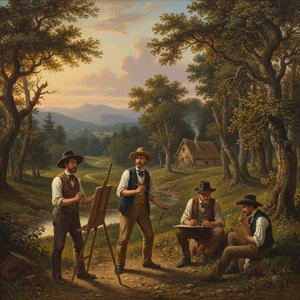
The Barbizon School: Pioneering Realism & the Pastoral Vision in 19th-Century French Painting
Explore the Barbizon School's pivotal role in 19th-century French painting. Discover how these artists revolutionized landscape art with their commitment to Realism and a profound connection to nature. Learn about key figures like Rousseau, Millet & Corot.

Realismens Mestre: Top 10 Kunstværker der Ændrede Kunsten | AllPaintingsStore.dk
Oplev realismens 10 største kunstværker! Fra Courbet til Millet – udforsk historierne bag ikoniske malerier, teknikker og farver. Find museumskvalitets reproduktioner & inspiration til dit hjem på AllPaintingsStore.com.

Nicolas Poussin: Classicism, Allegory & Order in 17th-Century French Painting
Explore the life & work of Nicolas Poussin, a master of French Classicism. Discover his allegorical paintings, Roman influences, and enduring impact on art history. Expert analysis & insights.
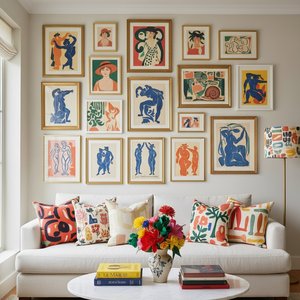
Henri Matisse' Top 25 Kunstværker: Farvernes Mester & Indretningens Ikoner
Oplev Henri Matisse' 25 mest ikoniske kunstværker – fra Fauvisme til Paper Cutouts. Lær historien bag farvernes mester og find inspiration til din boligindretning med museumskvalitets reproduktioner på AllPaintingsStore.com.



