1887. Olie på lærred, 146.0 x 133.0 cm. Musée Marmottan Monet.

§ 1Katalogdata

- 146.0 x 133.0 cm


§ 2Abstrakt
Beskrivelse af samlerobjektet
Claude Monet's 'Rude Båd' fanger sommerens lys og atmosfære perfekt! Et ikonisk impressionistmaleri om menneskets forbindelse til naturen og den flygtige skønhed i landskapet.
 Vis mere
Kunstnerbiografi
Udforsk Claude Monets verden, impressionismens mester, der er berømt for at indfange flygtigt lys og farve gennem ikoniske landskaber som Vandliljer & Høstakke.
§ 3Kommentarer
Claude Monet: A Symphony of Light and Impression
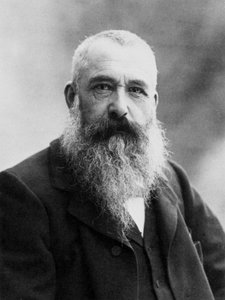
Claude Monet (1840–1926) stands as an undisputed titan of Impressionism, a movement he spearheaded with unwavering conviction—a movement that fundamentally reshaped the landscape of Western art. More than merely depicting scenes from nature; Monet sought to capture its essence, its fleeting beauty, and the very feeling of being present within it. His legacy extends far beyond his canvases, influencing generations of artists and establishing a new paradigm for artistic expression.
Monet’s formative years were marked by an early fascination with drawing and painting, nurtured initially by his aunt Marie-Jeanne Lecadre who recognized his prodigious talent. However, it was Eugène Boudin, a fellow artist and mentor, who instilled in him the revolutionary concept of “plein air” – painting outdoors directly from observation—a practice that would become synonymous with Monet’s artistic method.
The Essence of Impressionism: Capturing Fleeting Moments
Impressionism wasn't about meticulous detail or photographic accuracy; it was about conveying the sensory experience of a particular moment in time. Monet, alongside artists like Renoir and Sisley, rejected academic conventions that prioritized idealized representations over truthful impressions. Instead, they embraced loose brushstrokes, vibrant colors applied side by side without blending, and an emphasis on capturing the effects of light—particularly its shifting qualities—upon surfaces.
"The Row Boat," painted in 1887, exemplifies this core principle perfectly. It’s not a portrait of a boat; it's an embodiment of Monet’s belief that art should reflect the ephemeral nature of experience. He meticulously documented the same scene repeatedly, analyzing how light transformed throughout the day and across seasons—a process driven by scientific curiosity but imbued with profound artistic sensitivity.
A Detailed Examination: Technique and Composition
Monet's technique is characterized by short, broken strokes of pure pigment applied directly to the canvas. Notice how he captures the reflections dancing on the water’s surface – not as solid shapes, but as vibrant patches of blues, greens, and yellows, constantly shifting with the changing angle of the sun. These strokes mingle optically, creating an illusion of shimmering light—a deliberate departure from traditional painting methods.
The composition is remarkably balanced, drawing the eye gently across the canvas. Two indistinct figures are visible within the boat, their presence adding a touch of human scale to the vastness of the landscape without dominating its serene mood. The careful arrangement of elements contributes to the overall impression of tranquility and invites contemplation.
Symbolism Beyond Surface Appearance
"The Row Boat" resonates with deeper symbolic meanings. The boat itself can be interpreted as a symbol of human endeavor—a small vessel navigating an expansive world, mirroring Monet’s own journey as an artist. More broadly, the painting evokes nostalgia and peaceful contemplation – capturing the beauty of a summer afternoon and celebrating the simple pleasures of observing nature.
Monet's unwavering dedication to his craft resulted in a prolific output of paintings that continue to inspire awe and admiration. His influence on subsequent artistic movements is undeniable, cementing his place as one of the most important figures in modern art history.
Exploring Reproductions: Bringing Monet’s Vision Home
AllPaintingsStore offers meticulously hand-painted reproductions of “The Row Boat” that capture the essence of Monet’s artistry with unparalleled fidelity. Explore our collection today and immerse yourself in the serene beauty of this iconic Impressionist masterpiece.
Spørgsmål og svar
Hvor kan jeg købe et print af "Rude Båd" af Claude Monet?
"Rude Båd" er tilgængelig som et fine art-print på bomuldscanvas eller arkivbestandigt lærredspapir. Du kan bestille den i den ønskede størrelse på dens Kunstprint i høj kvalitet-side.
Hvor kan jeg finde kunstværker, der ligner "Rude Båd" af Claude Monet?
Se lignende værker til "Rude Båd" af Claude Monet på denne side: Lignende værker
Hvilken historisk periode stammer "Rude Båd" af Claude Monet fra?
"Rude Båd" stammer fra det 19. århundrede-æraen.


 Skift til printsalg


 For kunstværker eller reproduktioner, der er større end 105 cm (ca. 41 tommer) på en hvilken som helst side, vil rammen blive leveret som et adskilt sæt. Denne metode sikrer sikker levering og forhindrer skader under transport.