

Acrylic On Canvas.

§ 1Katalogdata

§ 2Abstrakt
Beskrivelse af samlerobjektet
Admire Claude Monet's 'untitled (1199)', capturing serene beauty with vibrant hues of red flowers and lush greenery – an iconic Impressionist masterpiece from Musée Marmottan Monet.
 Vis mere
Kunstnerbiografi
Udforsk Claude Monets verden, impressionismens mester, der er berømt for at indfange flygtigt lys og farve gennem ikoniske landskaber som Vandliljer & Høstakke.
§ 3Kommentarer
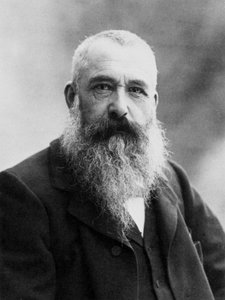
A Life Immersed in Light: The World of Claude Monet
Claude Monet, a name synonymous with Impressionism, wasn’t merely a painter of landscapes; he was a chronicler of fleeting moments, a poet of light and color. Born in Paris on November 14, 1840, his early life took an unexpected turn when his family relocated to Le Havre, Normandy, at the age of five. While initially destined for a commercial career by his father, young Claude’s innate artistic talent quickly surfaced, manifesting first in charcoal caricatures sold locally – a testament to both his skill and entrepreneurial spirit.
- Early Influences: Boudin and Impressionism's Genesis
- Formal Training & Artistic Development
- The Giverny Years: A Dedicated Pursuit of Light
- Monet’s Legacy: Shaping Modern Art
Early Influences: Boudin and Impressionism's Genesis
His encounter with Eugène Boudin proved pivotal. Boudin didn't just teach Monet *how* to paint; he instilled within him the revolutionary idea of painting en plein air—directly from nature—a practice that would define his entire artistic journey. Boudin championed this method, arguing passionately for capturing the immediacy of visual experience before it vanished. Monet embraced Boudin’s teachings wholeheartedly, recognizing them as foundational to his distinctive style.
Monet's initial works reflected a fascination with observation and experimentation. He diligently studied the effects of light on surfaces—particularly water—capturing the subtle shifts in hue and tone that characterize dawn, dusk, and midday. This dedication to capturing transient beauty would become a hallmark of Impressionism.
Formal Training & Artistic Development
Monet’s formal training began in Paris, briefly at the Académie Suisse and later under Charles Gleyre. It was here he forged lasting friendships with fellow artists like Auguste Renoir and Frédéric Bazille—artists who would become integral to the burgeoning Impressionist movement. Despite initial skepticism from his father regarding artistic pursuits, Monet persevered, honing his skills and refining his technique.
Gleyre’s instruction emphasized classical composition and academic color theory – a deliberate contrast to Boudin's advocacy for plein air painting. However, Monet skillfully blended these influences with his own intuitive understanding of light and color, establishing the groundwork for his groundbreaking artistic vision.
The Giverny Years: A Dedicated Pursuit of Light
From 1883, Monet relocated to Giverny, France—a move that would profoundly shape his artistic output. He purchased a sprawling estate and embarked on an ambitious landscaping project centered around a lily pond, meticulously recreating the Japanese garden he had admired during his travels.
This deliberate creation of an idealized natural environment served as constant inspiration for Monet’s paintings. He returned to Giverny repeatedly over several decades, documenting the changing seasons and capturing the ethereal beauty of the lily pads and surrounding foliage. The resulting series of canvases—particularly those depicting the water lilies—are considered among the most iconic examples of Impressionist art.
Monet’s Legacy: Shaping Modern Art
Monet's unwavering commitment to portraying light and color as perceived by the eye solidified his position as a pioneer of modern art. He challenged conventional artistic conventions, prioritizing subjective experience over objective representation—a revolutionary stance that paved the way for subsequent movements like Post-Impressionism and Fauvism.
His influence extends far beyond painting; Monet’s approach to artistic practice continues to inspire artists today who strive to capture the essence of visual perception. The enduring beauty and emotional resonance of his works attest to his genius as a translator of light, color, and atmosphere—a legacy that secures his place among the greatest painters in history.
Spørgsmål og svar
Er farverne i "untitled (1199)" af Claude Monet mættede eller dæmpede?
"untitled (1199)" af Claude Monet er gengivet med en Balanced Soft mætning.
Hvad forestiller "untitled (1199)" af Claude Monet, og hvilken stemning formidler det?
"untitled (1199)" viser garden landscape, woman walking, flowers red, impressionism, sunlight, tranquility, normandy, og den indfangede stemning er Serene.
Hvilket rum anbefales til "untitled (1199)" af Claude Monet?
Det anbefalede rum til "untitled (1199)" af Claude Monet er en Living Room. Forslaget kan naturligvis tilpasses din indretning.


 Skift til printsalg


 For kunstværker eller reproduktioner, der er større end 105 cm (ca. 41 tommer) på en hvilken som helst side, vil rammen blive leveret som et adskilt sæt. Denne metode sikrer sikker levering og forhindrer skader under transport.


