


 Se i rummet
 Del som kort
 Del
Del
 Detaljer
 Guide
Guide

 Download
 Lignende værker
 Røntgenundersøgelse
 Diasshow
 Spørgsmål og svar
 Statistikker
Circus (Abstract Composition)

- 35.0 x 50.0 cm


 Vis mere
Kunstværket vist på denne side er beskyttet af ophavsretsloven, hvilket betyder, at vi ikke lovligt kan skabe eller sælge en identisk reproduktion. Denne beskyttelse håndhæves i henhold til internationale aftaler som f.eks. den Bernerkonventionen og af nationale love, herunder de bestemmelser, der er fastlagt i Amerikansk ophavsretslov - Titel 17.
Denne metode overholder fuldt ud ophavsretsreglerne, da den ikke indebærer kopiering eller duplikering af det beskyttede kunstværk. I stedet er der tale om en kreativ nytolkning – et nyt maleri, som er inspireret af det oprindelige, men ikke identisk med det.
Giclée / Kunsttryk
Giclée- eller lærredstryk i museumskvalitet med hurtig produktion og fleksible muligheder for finish. ( Køb håndmalet maleri Skift til digitalt billede)




P118B Dkr10

P118H Dkr10

P118W Dkr10

P438Z Dkr10

P508JH Dkr12

P508YH Dkr12

P805H Dkr10

P805Z Dkr10

P919BZ Dkr10

P919G Dkr10

P919XJ Dkr10

P959ZH Dkr10

P968JZ Dkr12

W106C Dkr8

W218G Dkr10

W218JH Dkr8

W218Y Dkr10

W307PJ Dkr10

W316G Dkr10

W316PJ Dkr8

W316Y Dkr10

W398PJ Dkr8

W4111J Dkr10

W500HY Dkr15

W500JH Dkr15

W692G Dkr12

W849H Dkr8

W940BG Dkr15

W953PJ Dkr8




Vælg mellem vores forudindstillede størrelser, der matcher kunstværkets originale proportioner.

Indtast den bredde og højde, du har brug for, så det passer til din ramme eller din væg. Et print kan kun beskæres, aldrig gøres større end selve billedet, så en størrelse med et andet format vil medføre, at dele af motivet går tabt. Vi sender dig en digital mockup til godkendelse, før vi printer noget. Billedet vist på denne side viser ikke den faktiske beskæring — det er kun mockuppen, der gør.
Verdensomspændende levering () på 2 uger i stedet for de sædvanlige 4/5 uger. (18 november)

Gratis ekspresforsendelse til hele verden

Lærred af linned i høj kvalitet

Fuld transportforsikring

Garanti for refusion af told og importafgifter

Garanti for præcis farvegengivelse

100 dages returret ved fabrikationsfejl

100% fuld returret

Mængderabat ved flere køb
 Glasmulighed er kun tilgængelig i størrelser under 110 cm

Circus (Abstract Composition)
Giclée / Kunsttryk
Størrelse på reproduktion
-


Samlet pris
Dkr 433
A Whirlwind of Color and Form: David Bomberg’s “Circus”
David Bomberg's "Circus (Abstract Composition)," painted in 1921, isn’t merely a depiction of a traveling show; it’s an explosion of energy, emotion, and the restless spirit of early modernism. This vibrant canvas, now housed at the Ashmolean Museum in Oxford, captures a fleeting moment within a chaotic yet strangely ordered spectacle – a testament to Bomberg's unique ability to distill complex experience into powerful visual form. The painting immediately assaults the senses with its bold palette: assertive blues and reds clash dynamically against yellows and whites, creating an atmosphere of both excitement and underlying tension.
Bomberg’s style during this period was deeply influenced by the avant-garde movements sweeping through Europe. He absorbed the geometric abstraction of Cubism – evident in the fragmented forms suggesting figures and structures – while simultaneously embracing the dynamism and expressive power of Futurism, particularly its fascination with movement and speed. The painting's composition isn’t static; it feels like a captured rush, a snapshot of a scene perpetually in motion. Notice how the figures are reduced to angular shapes, almost dissolving into the swirling colors, mirroring the fragmented reality presented by Cubist principles.
The Artist and His Time
Born in Birmingham in 1890, David Bomberg’s early life was shaped by his Polish-Jewish heritage and a challenging upbringing. He initially trained as a lithographer but quickly gravitated towards painting, finding himself drawn to the radical artistic currents of the time. He became part of the “Whitechapel Boys,” a group of East End artists who pushed against established conventions and experimented with new forms of expression. This group, including Mark Gertler and Stanley Spencer, formed a vital network of support and influence during a period of significant social and political upheaval in Britain.
Bomberg’s artistic journey was marked by experimentation and controversy. His early work, particularly his engagement with Cubism and Futurism, drew criticism from some quarters who viewed these movements as overly abstract or even decadent. However, Bomberg remained steadfast in his pursuit of a new visual language, reflecting the anxieties and aspirations of a rapidly changing world. His expulsion from the Slade School of Art in 1913, due to his perceived disregard for traditional artistic methods, further solidified his position as an outsider artist challenging established norms.
Decoding the Composition: Symbolism and Emotion
While seemingly abstract, “Circus” is rich with symbolic potential. The figures themselves – a jumble of shapes suggesting people and animals – represent not individual portraits but rather archetypal elements of the circus experience: performers, spectators, and the spectacle itself. The swirling colors aren’t simply decorative; they convey a sense of disorientation, excitement, and perhaps even underlying unease. The dominant blues could symbolize both the vastness of the sky and the melancholy associated with transient experiences.
Consider the elephant in the center of the composition. It's not rendered realistically but rather as a powerful, simplified form – a symbol of strength, memory, and perhaps even the weight of tradition. The overall effect is one of controlled chaos, inviting the viewer to contemplate the complexities of human experience within a world of illusion and spectacle. Bomberg masterfully uses color and form to evoke a visceral response, capturing not just what he saw but also how he *felt* about it.
A Legacy of Innovation
“Circus (Abstract Composition)” stands as a pivotal work in David Bomberg’s oeuvre and a significant example of early British abstraction. It demonstrates his willingness to embrace radical experimentation, blending influences from Cubism, Futurism, and his own unique artistic vision. His exploration of form, color, and emotion paved the way for subsequent generations of artists, solidifying his place as a key figure in the development of modern art in Britain. Reproductions of this dynamic painting continue to resonate with viewers today, offering a glimpse into the turbulent yet exhilarating world of early 20th-century artistic innovation.
Spørgsmål og svar
Hvilken følelse formidler "Circus (Abstract Composition)" af David Bomberg?
Stemningen i "Circus (Abstract Composition)" af David Bomberg er Bold, og dens følelsesmæssige tone er Energetic.
Hvordan er farvesammensætningen i "Circus (Abstract Composition)" af David Bomberg opbygget?
Farveanalysen af "Circus (Abstract Composition)" af David Bomberg viser en Balanced kontrast og en Balanced Harmony harmoni.
Hvor høj er kontrasten i "Circus (Abstract Composition)" af David Bomberg?
Kontrastniveauet i "Circus (Abstract Composition)" af David Bomberg er Balanced.
Lignende kunstværker


Kunstnerbiografi
Tidligt liv og kunstnerisk uddannelse
- Født: Birmingham, Storbritannien (5. december 1890)
- Død: London, Storbritannien (19. august 1957)
- En af 'Whitechapel Boys' – en gruppe kunstnere fra East End, der trådte frem i begyndelsen af det 20. århundrede.
Som søn af de polsk-jødiske immigrantforældre, Abraham og Rebecca Bomberg, påbegyndte han sine studier ved City and Guilds Technical Art School, før han uddannede sig til litograf i Birmingham.
Han studerede under Walter Sickert ved Westminster School of Art (1908-1910), hvor han blev inspireret af Sickers fokus på form og det urbane liv. Han fik en betydelig introduktion til Paul Cézanne gennem Roger Fry's udstilling "Manet and the Post-Impressionists" i 1910. Senere tilsluttede han sig Slade School of Art (1911), hvor han vandt Tonks-prisen for sin tegning af medstuderende Isaac Rosenberg.
Avantgarde-årene: Kubisme, futurisme og kontrovers
- Ved Slade var Bomberg en del af en bemærkelsesværdig generation, der inkluderede Mark Gertler, Stanley Spencer, C.R.W. Nevinson og Dora Carrington.
- Han blev påvirket af de London-udstillinger i 1912, der præsenterede de italienske futurister samt Fry's anden postimpressionistiske udstilling (Picasso, Matisse, fauvisterne og Wyndham Lewis).
- Han udviklede en særpræget stil, der kombinerede kubisme og futurisme – karakteriseret ved geometriske kompositioner, begrænsede farvepaletter, kantede figurer og gitteragtige strukturer.
- Hans radikale tilgang førte til bortvisning fra Slade School of Art i 1913, da hans metoder blev anset for at være for dristige i forhold til institutionens konventionelle traditioner.
- Han var kortvarigt tilknyttet Bloomsbury Groups Omega Workshops og udstillede med Camden Town Group. Han viste en vis affinitet med Wyndham Lewis' vorticistiske bevægelse, men forblev uafhængig og nægtede fuld involvering.
Fra krig til landskab: Et stilskifte
Oplevelserne som menig soldat under Første Verdenskrig satte dybe spor i hans kunstneriske vision og førte til et opgør med abstraktionen.
I 1920'erne adopterede Bomberg en mere figurativ stil, med fokus på portrætter og landskaber hentet direkte fra naturen. Han udviklede en stadig mere ekspressionistisk teknik, kendetegnet ved tekstureret impasto og en intens følelsesmæssig dybde.
Omfattende rejser gennem Mellemøsten (især Palæstina) og Europa havde en betydelig indflydelse på hans senere værker. Hans skildringer af Jerusalem er særligt bemærkelsesværdige.
De senere år og eftermæle
- Fra 1945 til 1953 underviste han ved Borough Polytechnic (nu London South Bank University), hvor han inspirerede en hel generation af kunstnere, herunder Frank Auerbach, Leon Kossoff, Philip Holmes, Cliff Holden, Edna Mann, Dorothy Mead, Gustav Metzger, Dennis Creffield, Cecil Bailey og Miles Richmond.
- Han var gift med landskabsmaleren Lilian Holt.
- På trods af perioder med relativ glemsel i sin levetid, har Bombergs arbejde vundet stigende anerkendelse i de seneste årtier som et væsentligt bidrag til britisk modernisme.
- David Bomberg House ved London South Bank University er opkaldt efter ham for at ære hans minde.
- Hans eftermæle ligger i hans unikke syntese af de europæiske avantgarde-bevægelser og hans senere udvikling af en kraftfuld, ekspressiv landskabsstil, der indfangede essensen af både sted og menneskelig erfaring.

David Bomberg
1890 - 1957 , Storbritannien
Kort om kunstneren
- Bemærkelsesværdige Værker:
- Selvportræt (193t)
- Kitty, kunstnerens søster (1929)
- Studie til et maleri
- Jerusalem
- Dødsdato: 19. august 1957
- Fulde Navn: David Garshen Bomberg
- Fødested: Birmingham, Storbritannien
- Fødselsdato: 5. december 1890
- Kunstnere Der Påvirkede Denne Kunstner:
- Paul Cézanne
- Walter Sickert
- Wyndham Lewis
- Kunstnere Eller Bevægelser Påvirket Af Denne Kunstner:
- Frank Auerbach
- Leon Kossoff
- Kunstnerisk Bevægelse Eller Stil:
- Kubisme
- Futurisme
- Ekspressionisme
- Nationalitet: Britisk
Relaterede artikler
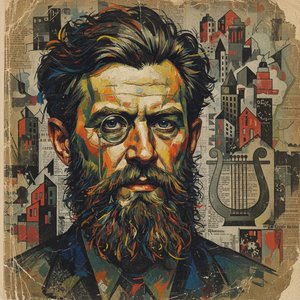
David Burliuk: A Pioneer of Russian Avant-Garde & His Enduring Legacy
Explore the revolutionary art of David Burliuk, a key figure in Russian Avant-Garde & Cubo-Futurism. Discover his impact on painting, poetry, and design with AllPaintingsStore.

The Painted Spectacle: Tracing the Lineage of Circus Art and Vintage Lithography
Explore the history of circus art from Astley to Seurat. Discover the magic of vintage lithography and motion today.

Rummets Ankerpunkt: Psykologi & Æstetik i Abstrakt Kunsts Indflydelse på Boligindretningen
Opdag hvordan abstrakt kunst transformerer dit hjem! Ekspertguide til farvepsykologi, komposition og indretningsstile. Find det perfekte maleri hos AllPaintingsStore – skab et harmonisk rum med emotionel dybde.

Deconstructing Reality: Cubism's Revolutionary Impact on 20th-Century Art
Explore the revolutionary world of Cubism with AllPaintingsStore. Discover Picasso & Braque's groundbreaking techniques, its philosophical roots, and lasting impact on modern art. Expert insights for collectors.

David Bomberg: Reassessing the Pioneering Spirit of Early British Abstraction
Explore the groundbreaking work of David Bomberg, a pivotal figure in British abstraction. Discover his artistic evolution, influences, and lasting legacy through insightful analysis & expert commentary.


