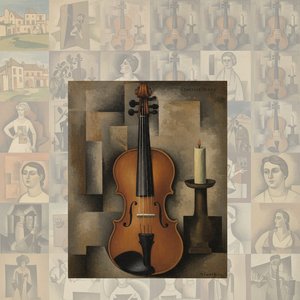
Acrylic On Canvas.

§ 1Catalogue data

Dette kunstværk er ophavsretsbeskyttet
Kunstværket vist på denne side er beskyttet af ophavsretsloven, hvilket betyder, at vi ikke lovligt kan skabe eller sælge en identisk reproduktion. Denne beskyttelse håndhæves i henhold til internationale aftaler som f.eks. den Bernerkonventionen og af nationale love, herunder de bestemmelser, der er fastlagt i Amerikansk ophavsretslov - Titel 17.
Som et respektfuldt og lovligt alternativ tilbyder vi skræddersyede, håndmalede kunstværker inspireret af originalen. Vores dygtige og professionelle kunstnere studerer omhyggeligt originalens stil, stemning og kunstneriske essens for at skabe et nyt, unikt værk, der fremkalder den samme følelse – samtidig med at det forbliver en original skabelse i egen ret.
Denne metode overholder fuldt ud ophavsretsreglerne, da den ikke indebærer kopiering eller duplikering af det beskyttede kunstværk. I stedet er der tale om en kreativ nytolkning – et nyt maleri, som er inspireret af det oprindelige, men ikke identisk med det.
 Læs mere
§ 2Abstract
Beskrivelse af samlerobjektet
Kunstnerbiografi
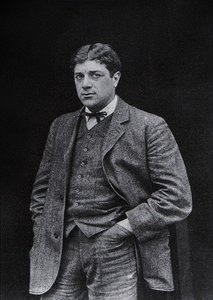
Georges Braque (1882-1963): En fransk maler, pionér indenfor kubismen og fauvism. Oplev hans innovative kunstværker, herunder 'Huse ved L'Estaque', og fascinerende collager.
§ 3Commentary
A Symphony in Monochrome – Georges Braque’s Exploration of Form
Georges Braque’s “Vase of Flowers,” painted circa 1917-1918, stands as a cornerstone of Cubist aesthetics and a testament to the artist's unwavering commitment to dissecting and reconstructing visual reality. Emerging from the crucible of artistic experimentation that defined the First World War era, this deceptively simple composition transcends mere representation; it’s an invitation into a profound meditation on perception itself.
- Subject Matter: The centerpiece is a ceramic vase adorned with a profusion of blossoms—primarily lilies and roses—creating a vibrant counterpoint to the predominantly muted palette.
- Style: Braque’s Cubist approach abandons traditional illusionistic perspective, fracturing the vase and flowers into geometric planes that overlap and intersect simultaneously. This fragmentation isn't random; it’s meticulously calculated to convey multiple viewpoints of the same object at once.
Technique – Precision and Texture Amidst Geometric Fragmentation
Braque employed a masterful technique characterized by painstaking precision and subtle textural variations. He utilized oil paints applied with thick impasto—a technique involving applying paint in textured layers—to imbue the vase’s surface with palpable physicality. Careful brushstrokes delineate the planes of color, creating a visual rhythm that guides the eye across the canvas.
- Color Palette: Dominated by shades of gray, beige, and ochre, the palette deliberately eschews bright hues, reflecting the somber mood prevalent during wartime. However, flashes of pale yellow and pink subtly illuminate certain blossoms, hinting at underlying warmth.
- Brushwork: The artist’s brushstrokes are deliberate and controlled, emphasizing the geometric forms while simultaneously conveying a sense of organic texture—a paradoxical juxtaposition that underscores Braque's core artistic philosophy.
Historical Context – Cubism as Response to Trauma
Cubism arose in Paris during World War I as a reaction against Impressionistic idealism and academic conventions. Artists like Picasso and Braque sought to capture the fragmented experience of modern life—the disorientation and uncertainty engendered by conflict—through geometric abstraction. “Vase of Flowers” embodies this spirit, mirroring the anxieties of its time while simultaneously elevating artistic expression beyond mere depiction.
- Influence: The painting draws inspiration from Cézanne’s explorations of sculptural form and anticipates developments in Futurism and Constructivism—movements that would further propel abstraction into the mainstream.
- Reaction to War: Braque's deliberate use of monochrome reflects a broader artistic preoccupation with confronting difficult emotions and challenging established aesthetic norms during a period marked by profound upheaval.
Symbolism – Beyond Representation; An Invitation to Contemplation
While ostensibly depicting flowers, “Vase of Flowers” operates on multiple symbolic levels. Lilies traditionally represent purity and resurrection—themes resonant with Christian iconography—suggesting a spiritual dimension beneath the surface. The vase itself symbolizes stability and containment, juxtaposed against the fractured planes of color to convey an ambivalent message about permanence and transformation.
- Geometric Forms: The geometric shapes—cubes, cylinders, and cones—represent not only spatial relationships but also intellectual rigor and a desire to transcend subjective experience.
- Emotional Impact: Ultimately, Braque’s masterpiece invites viewers into a contemplative state—encouraging them to consider the complexities of perception and the enduring power of artistic abstraction.
Spørgsmål og svar
Hvilket rum passer bedst til "Sheets, Color Light" af Georges Braque, når man ser på dets farver?
Med hensyn til dets Earthy farver foreslås "Sheets, Color Light" til et Living Room.
Hvad foreslås der at bruge "Sheets, Color Light" af Georges Braque til?
Det anbefales at bruge et tryk af "Sheets, Color Light" til Accent.
Er en højtopløselig download af "Sheets, Color Light" tilgængelig?
Du kan købe en digital fil af "Sheets, Color Light" af Georges Braque ved at bestille et højopløseligt digitalt billeddownload på dens Digitalt billede-side.


 Skift til printsalg


 For kunstværker eller reproduktioner, der er større end 105 cm (ca. 41 tommer) på en hvilken som helst side, vil rammen blive leveret som et adskilt sæt. Denne metode sikrer sikker levering og forhindrer skader under transport.