

Painting.

§ 1Catalogue data


Dette kunstværk er ophavsretsbeskyttet
Kunstværket vist på denne side er beskyttet af ophavsretsloven, hvilket betyder, at vi ikke lovligt kan skabe eller sælge en identisk reproduktion. Denne beskyttelse håndhæves i henhold til internationale aftaler som f.eks. den Bernerkonventionen og af nationale love, herunder de bestemmelser, der er fastlagt i Amerikansk ophavsretslov - Titel 17.
Som et respektfuldt og lovligt alternativ tilbyder vi skræddersyede, håndmalede kunstværker inspireret af originalen. Vores dygtige og professionelle kunstnere studerer omhyggeligt originalens stil, stemning og kunstneriske essens for at skabe et nyt, unikt værk, der fremkalder den samme følelse – samtidig med at det forbliver en original skabelse i egen ret.
Denne metode overholder fuldt ud ophavsretsreglerne, da den ikke indebærer kopiering eller duplikering af det beskyttede kunstværk. I stedet er der tale om en kreativ nytolkning – et nyt maleri, som er inspireret af det oprindelige, men ikke identisk med det.
 Læs mere
§ 2Abstract
Beskrivelse af samlerobjektet
Capturing an intimate moment through a vibrant palette, this striking work by Cubism co-founder Georges Braque offers a profound exploration of form and invites you to bring its beauty into your collection.
Kunstnerbiografi
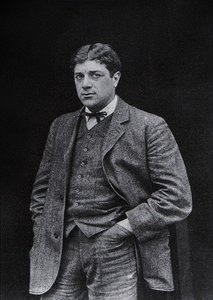
Georges Braque (1882-1963): En fransk maler, pionér indenfor kubismen og fauvism. Oplev hans innovative kunstværker, herunder 'Huse ved L'Estaque', og fascinerende collager.
§ 3Commentary
Georges Braque’s Intimate Exploration of Form and Color
Georges Braque (1882-1963), a titan amongst the vanguard artists of the early 20th century, stands as a pivotal figure in the genesis of Cubism alongside Pablo Picasso. His artistic journey began humbly—apprenticeships with his father’s decorating business instilled a foundational understanding of material and spatial relationships that would profoundly influence his groundbreaking approach to painting.
- Early Influences: Braque's formative years were marked by exposure to Impressionism and Post-Impressionism, particularly Cézanne’s exploration of geometric simplification. These influences subtly prepared him for the radical departures that would characterize his artistic development.
- Academic Training & Parisian Circle: Formal training at the École des Beaux-Arts in Le Havre provided a crucial counterbalance to these initial impulses, grounding him in traditional academic conventions before he dared to dismantle them. His association with Marie Laurencin and Francis Picabia fostered an environment of intellectual ferment within Paris’s burgeoning artistic community.
The Birth of Cubism: A Revolutionary Shift
Braque’s pivotal contribution arrived in 1907 with the co-creation of “Houses at L’Estaque” alongside Picasso—a seminal work that cemented Cubism's emergence as a dominant aesthetic force. Unlike Impressionists who sought to capture fleeting moments of light and color, Braque and Picasso interrogated perception itself. They fragmented objects into geometric planes, presenting multiple viewpoints simultaneously on a single canvas.
- Analytical Cubism: This initial phase prioritized monochrome palettes—often browns and ochres—and meticulous dissection of form. The goal wasn’t to depict reality faithfully but rather to reveal its underlying structure.
- Synthetic Cubism: Braque subsequently embraced a more colorful approach, incorporating collage elements – fragments of newspaper or fabric – into his paintings. This technique expanded the visual vocabulary and challenged conventional notions of artistic representation.
“untitled (3150):” A Study in Color and Texture
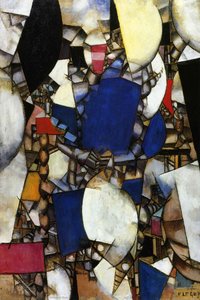
"untitled (3150)" exemplifies Braque’s masterful synthesis of analytical and synthetic principles. The artwork depicts a nude woman reclining on the ground, bathed in hues of blue and red—a deliberate juxtaposition that speaks to the artist's preoccupation with color theory and spatial illusion.
Technique: Braque employed oil paint on canvas, utilizing layering and glazing techniques to achieve remarkable depth and luminosity. The subtle gradations of tone contribute to an atmosphere of serene contemplation. Symbolism & Emotional Impact: Beyond its formal considerations, the painting resonates with themes of vulnerability and intimacy. The woman’s posture conveys repose and surrender, while the enveloping presence of another figure suggests a connection rooted in shared experience. Braque's masterful manipulation of color and form invites viewers to consider not just what is seen but also how it feels—a testament to his enduring legacy as one of art history’s most perceptive innovators.Spørgsmål og svar
Hvor placerer "untitled (3150)" sig i forhold til Georges Braques samlede værk?
"untitled (3150)" deler med Georges Braques øvrige værker sin Cubist Exploration-stil og de gennemgående temaer: deconstructing form, challenging perspective, exploring emotion, geometric abstraction, artistic innovation.
Er farverne i "untitled (3150)" kraftige eller dæmpede?
Farven på "untitled (3150)" har en mætning på Clear Color Presence og en intensitet på Vivid.
Hvor kan jeg finde statistik om "untitled (3150)" af Georges Braque?
Statistikker for "untitled (3150)" af Georges Braque findes på værkets Besøgsstatistik-side: månedlige besøg på værket, besøg på kunstnerens øvrige værker samt en opdeling af de seneste besøgende efter land og sprog.




 Skift til printsalg


 For kunstværker eller reproduktioner, der er større end 105 cm (ca. 41 tommer) på en hvilken som helst side, vil rammen blive leveret som et adskilt sæt. Denne metode sikrer sikker levering og forhindrer skader under transport.


