


 Se i rummet
 Send
Send Del
Del
 Detaljer
 Studieguide til kunstværker

 Download
 Lignende værker
 Røntgenundersøgelse
 Se diasshow
 Statistik
Small Triptych (central panel)
 Olie
Olie- Vægkunst
- Early Netherlandish Painting
 1437
1437- Renæssance
 27.0 x 21.0 cm
 Gemäldegalerie Alte Meister
 Læs mere
Håndlavet oliereproduktion
Håndmalet olie på lærred i din valgte størrelse og ramme, udført efter bestilling af vores kunstnere. ( Skift til printversion Skift til digitalt billede)




P118B Dkr10

P118H Dkr10

P118W Dkr10

P438Z Dkr10

P508JH Dkr12

P508YH Dkr12

P805H Dkr10

P805Z Dkr10

P919BZ Dkr10

P919G Dkr10

P919XJ Dkr10

P959ZH Dkr10

P968JZ Dkr12

W106C Dkr8

W218G Dkr10

W218JH Dkr8

W218Y Dkr10

W307PJ Dkr10

W316G Dkr10

W316PJ Dkr8

W316Y Dkr10

W398PJ Dkr8

W4111J Dkr10

W500HY Dkr15

W500JH Dkr15

W692G Dkr12

W849H Dkr8

W940BG Dkr15

W953PJ Dkr8




Vælg mellem vores forudindstillede størrelser, der matcher kunstværkets originale proportioner.

Indtast den bredde og højde, du har brug for, så det passer til din ramme eller din væg. Da dette er håndmalet, kan kunstneren ved en anden form på størrelsen male lidt mere rundt om billedet eller skære lidt væk — det er op til dig. Vi sender dig et digitalt mockup til godkendelse, før maleriet påbegyndes. Billedet, der vises på denne side, viser ikke det endelige resultat — det er kun mockuppet, der gør.
Efter bestilling vil AllPaintingsStore.com team sende en e-mail til kunden for at indhente instruktioner og fremsende et udkast til gennemgang.
Levering i hele verden () på 3-4 uger i stedet for de standard 5 uger. (24 oktober). Ingen kompromiser med kvaliteten.

Gratis ekspresforsendelse til hele verden

Lærred af linned i høj kvalitet

Komplet transportforsikring

Garanti for refusion af told og importafgifter

Garanti for autentisk farvegengivelse

100 dages returret ved fabrikationsfejl

100% fuld returret

Mængderabat ved flere køb
 Glasmulighed er kun tilgængelig i størrelser under 110 cm

Small Triptych (central panel)
Reproduktionsmateriale
Reproduktionsstørrelse
-


Samlet pris
Dkr 1696
The Intimate World of Jan van Eyck's Central Panel
Within the confines of the ‘Small Triptych,’ a masterpiece by Jan van Eyck completed around 1437, resides a scene of profound serenity and quiet contemplation. This central panel, measuring just 27 x 21 centimeters, isn’t merely a depiction of a mother and child; it's an exquisitely rendered meditation on domesticity, faith, and the enduring bond between generations. Van Eyck, a pivotal figure in the Early Netherlandish movement, masterfully employs his revolutionary oil painting technique to capture not just the outward appearance but also the very essence of this intimate moment. The woman, seated comfortably within a simple chair, exudes an aura of gentle authority and profound love as she cradles her infant – a visual embodiment of nurturing and protection. The subtle modeling of her garments, achieved through layers of meticulously applied paint, creates a remarkable sense of tactile realism, inviting the viewer to almost feel the softness of the fabric against their fingertips.
Notice the deliberate placement of the figures within the space. They are not isolated but subtly integrated into a carefully constructed architectural setting. Three arches frame the scene, hinting at a sacred or domestic space—perhaps a chapel or a private chamber—and adding depth to the composition. Above the mother and child, a clock serves as a poignant reminder of time’s passage, anchoring the scene in both earthly reality and spiritual contemplation. The inclusion of this seemingly mundane object elevates it to a symbol of mortality and the preciousness of fleeting moments.
Light and Shadow: Van Eyck's Revolutionary Technique
What truly distinguishes Van Eyck’s work is his unparalleled mastery of light. He doesn’t simply paint light; he *creates* it, manipulating its effects to sculpt form and imbue the scene with a luminous quality. Unlike earlier painters who relied on tempera, which produced flat, lifeless surfaces, Van Eyck's use of oil paints allowed him to build up layers of color gradually, creating subtle gradations of tone and texture. This technique enabled him to achieve an astonishing level of realism – the way light catches on the woman’s hair, the delicate folds in her dress, and the soft glow around the infant are all testament to his skill.
The interplay of light and shadow is particularly evident in the modeling of the figures. Van Eyck uses highlights to accentuate their forms, creating a sense of three-dimensionality that was revolutionary for its time. The shadows, conversely, recede into the background, drawing the viewer’s eye towards the central figures and enhancing the overall sense of intimacy. This masterful control of light is not merely aesthetic; it serves to convey a profound emotional resonance, suggesting both serenity and a quiet reverence.
A Window into the Renaissance: Symbolism and Context
The ‘Small Triptych’ resides within the Gemäldegalerie Alte Meister in Dresden, Germany—a treasure trove of Early Netherlandish art. Van Eyck's work is deeply rooted in the International Gothic style, yet he pushed beyond its decorative flourishes to embrace a more naturalistic and realistic approach. His innovations in oil painting – particularly his ability to create luminous colors and incredibly detailed textures – profoundly influenced subsequent generations of artists. The triptych itself represents a shift towards private devotional art, moving away from the grand altarpieces commissioned by churches and towards smaller, more intimate works intended for domestic use.
The inclusion of elements like the clock and the arches suggests a connection to both earthly and spiritual realms. The mother-child relationship is central to Christian iconography, representing the Virgin Mary and Christ—a potent symbol of divine grace and salvation. The overall composition evokes a sense of timelessness, inviting viewers to contemplate the enduring power of family, faith, and the beauty of the everyday.
Bringing Jan van Eyck Home: A Hand-Painted Reproduction
AllPaintingsStore offers exquisite, hand-painted reproductions of Jan van Eyck’s ‘Small Triptych (central panel)’, capturing the artist's revolutionary techniques and profound emotional depth. Each reproduction is meticulously crafted by our skilled artisans, using traditional oil painting methods to faithfully recreate Van Eyck’s luminous colors, intricate details, and masterful modeling. Owning a AllPaintingsStore reproduction allows you to bring this iconic masterpiece into your home or office, celebrating the enduring legacy of one of art history's greatest masters. Explore our collection today and experience the magic of Van Eyck’s vision firsthand.
Spørgsmål & svar
Hvilken følelse formidler Early Netherlandish Painting-værket "Small Triptych (central panel)"?
Inden for Early Netherlandish Painting-bevægelsen er "Small Triptych (central panel)" nedfældet med en Reflekterende tone.
Hvordan kan jeg se "Small Triptych (central panel)" af Jan van Eyck som et diasshow?
Diaporamaet af "Small Triptych (central panel)" kan ses på værkets Diaporama-side.
Hvilken kunstretning tilhører "Small Triptych (central panel)" af Jan van Eyck?
Den kunstretning, der er forbundet med "Small Triptych (central panel)" af Jan van Eyck, er Early Netherlandish Painting. Denne klassificering placerer værket blandt relaterede kunstnere og kunstværker.
Lignende kunstværker


Om kunstneren
Et Liv i Lys: Jan van Eycks Verden
Jan van Eyck, et navn synonymt med gryningen af tidlig nederlandsk maleri og den revolutionerende brug af oliemaling, forbliver en gådefuld figur på trods af sin monumentale indflydelse på kunsthistorien. Født omkring 1390 i Maastricht, beliggende i det nuværende Nederlandene, opvoksede van Eyck i en familie gennemsyret af kunstnerisk tradition – hans ældre bror Hubert praktiserede også malerkunsten, selvom detaljerne om hans arbejde forbliver uklare. Mens præcise biografiske detaljer er sparsomme, især vedrørende hans formative år, er det tydeligt, at Jan besad et medfødt talent og hurtigt steg i graderne inden for tidens kunstneriske kredse. Allerede omkring 1422 havde han etableret et værksted i Haag, hvor han ansatte hjælpere og påtog sig bestillinger, der signalerede hans beherskelse af håndværket. Denne tidlige succes byggede ikke udelukkende på kunstnerisk dygtighed; van Eyck var en intelligent og troværdig mand, kvaliteter der snart ville trække ham ind i tjeneste hos magtfulde mæcener.Tjenesten ved Burgund: Diplomati og Kunstnerisk Blomstring
Et afgørende øjeblik i van Eycks karriere kom med hans udnævnelse til det burgundiske hof, først under Johan den Pitiless og senere Filip den Gode. Dette var ikke blot en beskyttelsesordning; van Eyck blev betroet diplomatiske missioner, hvilket demonstrerede hertugens tillid til hans diskretion og intellekt. Disse rejser over hele Europa – herunder ture til Portugal og Spanien – udsatte ham for forskellige kulturer og kunstneriske påvirkninger, der subtilt formede hans udviklende stil. Hoffet gav ikke kun økonomisk sikkerhed, men også adgang til ressourcer, der gjorde det muligt for van Eyck at forfølge ambitiøse projekter, der skubbede grænserne for, hvad der kunstnerisk var opnåeligt. Han var ikke blot en maler *for* den burgundiske elite; han blev en integreret del af deres verden og afspejlede og fremhævede deres prestige gennem sin kunst. Denne unikke position gav ham et niveau af kunstnerisk frihed, der sjældent nødtes af malere i æraen, hvilket muliggjorde eksperimentering og innovation, der for evigt ville ændre maleriets gang.Oliens Alkemiske Kraft: En Revolution inden for Teknikken
Selvom van Eyck ikke opfandt oliemaling – dens brug går forud for ham – er han utvivlsomt dens mesterlige perfektionist. Før hans innovationer var tempera det dominerende medium, der tilbød begrænsede blandingsevner og en relativt mat finish. Van Eyck låste oliemalings fulde potentiale op gennem omhyggelig lagdeling af gennemsigtige glasurer, hvilket opnåede et hidtil uset niveau af detaljer, luminøsitet og realisme. Denne teknik tillod subtile tonale gradueringer, rigere farver og skabelsen af teksturer, der efterlignede selve livet. Effekten var transformerende; overflader syntes at gløde indefra, stoffer besad en taktil kvalitet, og portrætter fangede ikke kun lighed, men også psykologisk dybde. Hans beherskelse var ikke blot teknisk – det var en alkymisk proces, der forvandlede pigmenter til noget i nærheden af levende virkelighed. Denne innovation gik ikke ubemærket hen; den blev grundlaget for generationer af malere efter ham og ændrede fundamentalt landskabet inden for vestlig kunst.Mesterværker og Varig Arv
Van Eycks kunstneriske arv er cementeret af et relativt lille, men dybt indflydelsesrigt oeuvre. Gent-alteret (1432), et monumentalt polyptikon, står som hans mest ambitiøse foretagende – et komplekst tapetseri af religiøs symbolik og teknisk genialitet. Lige så berømt er Portrættet af Giovanni Arnolfini og hans hustru (1434), et banebrydende værk i portrætmaleri, der fejres for sin realisme, intrikate detaljer og gådefulde symbolik. Andre bemærkelsesværdige værker omfatter Dresden-triptykonet, der viser hans evne til at skildre religiøse scener med bemærkelig klarhed, og det slående Mand med rød turban, et vidnesbyrd om hans evne til at fange individuel karakter. Disse malerier er ikke blot visuelle repræsentationer; de er vinduer ind i en anden verden – en verden minutiøst gengivet med en næsten besat opmærksomhed på detaljer. Van Eycks indflydelse strækker sig langt ud over disse ikoniske værker og former udviklingen af tidlig nederlandsk maleri og inspirerer utallige kunstnere i århundreder fremover. Han døde i Brugge i 1441 og efterlod sig en arv, der fortsætter med at resonere den dag og minder os om kunsten magt til at belyse den menneskelige oplevelse.- Tidlig karriere: Etablerede et værksted i Haag omkring 1422.
- Burgundisk tjeneste: Fungerede som maler og diplomat for Johan den Pitiless og Filip den Gode.
- Oliemalingsrevolutionen: Perfektionerede oliemalingsteknikken gennem lagdeling af glasurer.
- Nøgleværker: Gent-alteret, Portrættet af Arnolfini og hans hustru, Dresden-triptykonet, Mand med rød turban.
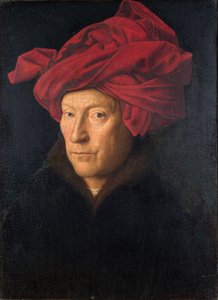
Jan van Eyck
1390 - 1441 , Holland
Hurtige fakta
- Bemærkelsesværdige Værker:
- Ghent-alteret
- Arnolfinis bryllup
- Dresden-triptykon
- Dødsdato: 1441
- Fulde Navn: Jan van Eyck
- Fødested: Maastricht, Nederlandene
- Fødselsdato: ca. 1390
- Kunstnere/Bevægelser Påvirket: ['Tidlig nederlandske malere']
- Kunstnerisk Stil: Tidlig nederlandsk maleri
- Nationalitet: Flamsk
Relaterede artikler

Early Netherlandish Renaissance: A Professional Guide to Mastering Detail and Realism for Luxury Interior Design
Expert guide for hotel designers on sourcing Early Netherlandish Renaissance reproductions. Discover how the hyper-realism of Jan van Eyck can elevate hospitality interiors through high-quality, large-scale oil paintings and custom multi-panel installations.


