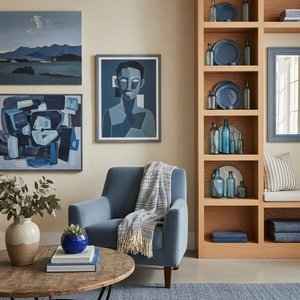
1925. Oil On Canvas, 115.0 x 88.0 cm.

§ 1Katalogdata

- 115.0 x 88.0 cm


Dette kunstværk er ophavsretsbeskyttet
Kunstværket vist på denne side er beskyttet af ophavsretsloven, hvilket betyder, at vi ikke lovligt kan skabe eller sælge en identisk reproduktion. Denne beskyttelse håndhæves i henhold til internationale aftaler som f.eks. den Bernerkonventionen og af nationale love, herunder de bestemmelser, der er fastlagt i Amerikansk ophavsretslov - Titel 17.
Som et respektfuldt og lovligt alternativ tilbyder vi skræddersyede, håndmalede kunstværker inspireret af originalen. Vores dygtige og professionelle kunstnere studerer omhyggeligt originalens stil, stemning og kunstneriske essens for at skabe et nyt, unikt værk, der fremkalder den samme følelse – samtidig med at det forbliver en original skabelse i egen ret.
Denne metode overholder fuldt ud ophavsretsreglerne, da den ikke indebærer kopiering eller duplikering af det beskyttede kunstværk. I stedet er der tale om en kreativ nytolkning – et nyt maleri, som er inspireret af det oprindelige, men ikke identisk med det.
 Læs mere
§ 2Abstrakt
Beskrivelse af samlerobjektet
Explore Joan Miró’s ‘Dancer,’ a surrealist masterpiece blending movement & stillness. Discover its symbolism, vibrant blues, & influence on modern art. #Miró #Surrealism #ArtHistory
Kunstnerbiografi
Udforsk Joan Mirós fantastiske univers! Opdag surrealistiske kunstværker og abstrakte billeder med katalanske symboler – en pioner inden for moderne kunst!
§ 3Kommentarer
A Dance Between Dreams and Reality
Joan Miró’s *Dancer*, created in 1925, is a captivating exploration of movement and stillness rendered through the lens of Surrealism. This oil on canvas (115 x 88 cm) isn't merely a depiction of a dancer; it’s a visual poem—a distillation of rhythm, energy, and subconscious thought. Miró masterfully translates the ephemeral quality of dance into a static image, inviting viewers to participate in its silent performance.Inspiration & Historical Context
The genesis of *Dancer* lies in Miró’s fascination with a performance he witnessed at Eden Concert in Barcelona. However, rather than a literal representation, the painting embodies the *feeling* of dance—its fluidity and grace juxtaposed with an underlying sense of quietude. Created during a period when artists were actively challenging traditional artistic conventions, *Dancer* reflects the burgeoning Surrealist movement’s interest in exploring the realm of dreams, the unconscious mind, and automatic processes. While Miró resisted strict categorization within any single movement, his work undeniably shares key characteristics with Surrealism, particularly its embrace of symbolism and non-representational forms. 1925 was a pivotal year for the Surrealists, marked by their first group exhibition in Paris, further solidifying the artistic landscape that influenced Miró’s creative direction.Composition & Symbolic Language
The canvas is dominated by deep blues layered over a warm brown primer, creating a grounding effect and framing the dynamic composition. A striking black and white form suggests the dancer's head, while a heart shape—pierced by a spider—symbolically represents the dancer’s core and sensuality. The spider, often interpreted as representing creativity or even danger, adds an intriguing layer of complexity. Stylized musical notes serve as feet, directly linking the figure to rhythm and movement. Ascending from the right side is a sinuous line adorned with yellow dots, evoking the snake-like undulation of the dancer’s body.- Style: Surrealism
- Medium: Oil on Canvas
- Dimensions: 115 x 88 cm
- Date: 1925
Technique & Artistic Innovation
Miró’s technique in *Dancer* is characterized by a deliberate simplicity and boldness. He employs broad brushstrokes and flat planes of color, eschewing traditional modeling techniques to create a sense of immediacy and visual impact. The layering of blues creates depth while maintaining an overall flatness that emphasizes the painting's two-dimensionality. This approach aligns with his exploration of “automatic painting,” where he sought to bypass conscious control and allow images to emerge from his subconscious—a technique celebrated by the Surrealists for its innovative spirit.Emotional Impact & Legacy
*Dancer* evokes a sense of mystery, longing, and playful energy. The abstract forms invite individual interpretation, allowing viewers to project their own emotions and experiences onto the artwork. It’s a piece that resonates on both an intellectual and emotional level—a testament to Miró's ability to tap into universal themes of movement, desire, and the human condition. Miró’s influence extends far beyond Surrealism, impacting generations of artists working in Abstract Expressionism and Color Field painting. His bold use of color, simplified forms, and evocative symbolism continue to inspire contemporary artists and designers alike. *I*t remains a powerful example of how art can transcend representation and communicate directly with the soul.Further Exploration
To delve deeper into Miró’s world, visit Dancer on AllPaintingsStore (here). For a comprehensive overview of his artistic journey, consider a visit to the Fundació Joan Miró in Barcelona (here).Spørgsmål og svar
Hvordan relaterer farverne i "Dancer" af Joan Miró sig til værkets følelsesmæssige udtryk?
Den Dark farvepalet i "Dancer" af Joan Miró harmonerer med værkets Mysterious følelsesmæssige tone. Farven er en af de måder, et værk formidler følelser på.
Hvilken epoke stammer "Dancer" fra?
"Dancer" af Joan Miró stammer fra Modern-perioden, som giver den historiske kontekst til værket.
Er "Dancer" tilgængelig som et fine art-print?
"Dancer" er tilgængelig som et fine art-print på bomuldscanvas eller arkivbestandigt lærredspapir. Du kan bestille den i den ønskede størrelse på dens Kunstprint i høj kvalitet-side.


 Skift til printsalg


 For kunstværker eller reproduktioner, der er større end 105 cm (ca. 41 tommer) på en hvilken som helst side, vil rammen blive leveret som et adskilt sæt. Denne metode sikrer sikker levering og forhindrer skader under transport.