


 Se i rummet
 Del som kort
 Del
Del
 Detaljer
 Guide
Guide

 Download
 Lignende værker
 Røntgenundersøgelse
 Diasshow
 Q&A
Q&A Statistikker
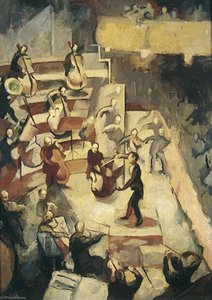
Blackpool Siesta

- 43.0 x 59.0 cm

 Vis mere
Giclée / Kunsttryk
Giclée- eller lærredstryk i museumskvalitet med hurtig produktion og fleksible muligheder for finish. ( Køb håndmalet maleri Skift til digitalt billede)




































Vælg mellem vores forudindstillede størrelser, der matcher kunstværkets originale proportioner.

Indtast den bredde og højde, du har brug for, så det passer til din ramme eller din væg. Et print kan kun beskæres, aldrig gøres større end selve billedet, så en størrelse med et andet format vil medføre, at dele af motivet går tabt. Vi sender dig en digital mockup til godkendelse, før vi printer noget. Billedet vist på denne side viser ikke den faktiske beskæring — det er kun mockuppen, der gør.
Verdensomspændende levering () på 2 uger i stedet for de sædvanlige 4/5 uger. (1 november)

Gratis ekspresforsendelse til hele verden

Lærred af linned i høj kvalitet

Fuld transportforsikring

Garanti for refusion af told og importafgifter

Garanti for præcis farvegengivelse

100 dages returret ved fabrikationsfejl

100% fuld returret

Mængderabat ved flere køb
 Glasmulighed er kun tilgængelig i størrelser under 110 cm

Blackpool Siesta
Giclée / Kunsttryk
Størrelse på reproduktion
-


Samlet pris
Dkr 432
Lignende kunstværker


Kunstnerbiografi
A Victorian Vision of Rural England
John Albert Cooper (1894–1943) emerged as a profound voice within the British Impressionist movement, capturing the fleeting soul of the landscape during the late Victorian and early Edwardian eras. While history often reserves its brightest spotlights for luminaries such as Turner or Constable, Cooper carved out a unique space in the art world through his ability to translate the quiet dignity of rural Yorkshire into luminous, breathing canvases. His work serves as more than mere documentation; it is a poignant reflection on a changing social landscape, where the encroaching industrial spirit of the north met the enduring, pastoral beauty of the English countryside.
Born in Leeds, West Yorkshire, Cooper’s early life was steeped in the duality of his surroundings. Growing up amidst the tension between industrial innovation and the ancient rhythms of nature, he developed an eye for the subtle interplay of light and shadow that would become his stylistic hallmark. His formal training at the Leeds School of Art provided him with a rigorous foundation, yet it was his subsequent solo journey into the heart of the landscape that truly defined his artistic identity. He found himself deeply moved by the atmospheric mastery of J.M.W. Turner, seeking to replicate that sense of emotional weight through color and light, while also drawing inspiration from the soft, sensory textures of Impressionist masters like Claude Monet and Pierre-Auguste Renoir.
The Alchemy of Light and Technique
To observe a Cooper landscape is to witness a meticulous study of the natural world’s most transient moments. He possessed an almost spiritual devotion to observing light during the "golden hours" of dawn and dusk, periods when the atmosphere thickens and colors undergo dramatic transformations. His technique was characterized by a masterful use of watercolor, where he applied delicate, thin washes of pigment to build layers of profound luminosity. This method allowed him to achieve a sense of depth that felt both ethereal and grounded, inviting the viewer into a state of quiet contemplation.
Unlike many of his contemporaries who sought only to capture the immediate visual sensation of a scene, Cooper’s work often possessed a deeper, more meditative quality. His brushwork, while loose and impressionistic, was never haphazard; rather, it was directed by an intention to convey mood. Whether depicting the sturdy silhouettes of oasthouses in Menston or the rugged charm of stone cottages, his paintings evoke a sense of permanence amidst change. Through his use of color, he could transform a simple rural structure into a symbol of historical endurance, making his oeuvre a vital record of a vanishing way of life.
Legacy and Artistic Significance
The significance of John Albert Cooper lies in his ability to bridge the gap between traditional academic landscape painting and the emotive freedom of Impressionism. His work remains a testament to the beauty of the British landscape, rendered with a sensitivity that honors both the physical reality of the land and the emotional response of the observer. Even as the world moved toward more abstract forms of expression, Cooper remained committed to the idea that art could serve as a vehicle for spiritual contemplation through the observation of natural splendor.
Today, his contributions to British art history are recognized through his evocative depictions of:
- The Yorkshire Countryside: Capturing the atmospheric charm of rural structures and landscapes.
- Atmospheric Landscapes: Utilizing light and watercolor washes to create depth and emotion.
- Historical Continuity: Reflecting the transition from the Victorian era into a more modern, industrial age.
Though his life was relatively short, ending in 1943, the enduring vitality of his color palettes ensures that his vision of England remains as vibrant and evocative today as it was during his lifetime.
John Albert Cooper
1894 - 1943
Kort om kunstneren
- Artistic Movement Or Style: Impressionism
- Artists Or Movements Influenced By This Artist: ['Turner']
- Artists Who Influenced This Artist: ['Albert Goodwin']
- Date Of Birth: 1894
- Date Of Death: 1943
- Full Name: John Albert Cooper
- Nationality: British
- Notable Artworks: ['Oasthouses, Menston']
- Place Of Birth: Yorkshire