


 Se i rummet
 Send
Send Del
Del
 Detaljer
 Studieguide til kunstværker

 Download
 Lignende værker
 Røntgenundersøgelse
 Se diasshow
 Statistik
Før Forår
 Akryl på lærred
- Vægkunst
- Polish Realism
 1917
1917 100.0 x 130.0 cm
 Polens parlament
 Læs mere
Håndlavet oliereproduktion
Håndmalet olie på lærred i din valgte størrelse og ramme, udført efter bestilling af vores kunstnere. ( Skift til printversion Skift til digitalt billede)




P118B Dkr10

P118H Dkr10

P118W Dkr10

P438Z Dkr10

P508JH Dkr12

P508YH Dkr12

P805H Dkr10

P805Z Dkr10

P919BZ Dkr10

P919G Dkr10

P919XJ Dkr10

P959ZH Dkr10

P968JZ Dkr12

W106C Dkr8

W218G Dkr10

W218JH Dkr8

W218Y Dkr10

W307PJ Dkr10

W316G Dkr10

W316PJ Dkr8

W316Y Dkr10

W398PJ Dkr8

W4111J Dkr10

W500HY Dkr15

W500JH Dkr15

W692G Dkr12

W849H Dkr8

W940BG Dkr15

W953PJ Dkr8




Vælg mellem vores forudindstillede størrelser, der matcher kunstværkets originale proportioner.

Indtast den bredde og højde, du har brug for, så det passer til din ramme eller din væg. Da dette er håndmalet, kan kunstneren ved en anden form på størrelsen male lidt mere rundt om billedet eller skære lidt væk — det er op til dig. Vi sender dig et digitalt mockup til godkendelse, før maleriet påbegyndes. Billedet, der vises på denne side, viser ikke det endelige resultat — det er kun mockuppet, der gør.
Efter bestilling vil AllPaintingsStore.com team sende en e-mail til kunden for at indhente instruktioner og fremsende et udkast til gennemgang.
Levering i hele verden () på 3-4 uger i stedet for de standard 5 uger. (23 oktober). Ingen kompromiser med kvaliteten.

Gratis ekspresforsendelse til hele verden

Lærred af linned i høj kvalitet

Komplet transportforsikring

Garanti for refusion af told og importafgifter

Garanti for autentisk farvegengivelse

100 dages returret ved fabrikationsfejl

100% fuld returret

Mængderabat ved flere køb
 Glasmulighed er kun tilgængelig i størrelser under 110 cm

Før Forår
Reproduktionsmateriale
Reproduktionsstørrelse
-


Samlet pris
Dkr 1696
En Nostalgisk Vision af Polen: Józef Rapacki og Maleriet "Før Forår"
Józef Rapacki var en kunstner dybt følsom for sjælen i det polske landskab. Hans liv udfoldede sig mod baggrunden af skiftende politiske landskaber og spirende kunstneriske bevægelser, men hans arbejde forbliver fastslået i en nostalgisk fremstilling af Mazovia – den historiske region, der blev både hans muse og hans varige arv. Udkommet fra et teaterfamilie – hans far skuespiller, forfatter og oversætter, med søskende følger lignende veje – virkede Rapacki først og fremmest bestemt til scenen. Men allerede i fjortenårsalderen fandt han sin sande kald inden for linjerne og penselstrøgene af tegning, hvor han tilmeldte sig klasser undervist af Wojciech Gerson, en fremtrædende figur i polsk Realisme. Denne tidlige vejledning gav ikke kun teknisk færdighed, men også en dyb værdsættelse for at observere og fortolke den naturlige verden.
Om Maleriet "Før Forår"
Maleriet "Før Forår", skabt i 1917 af Józef Rapacki, er et imponerende eksempel på polsk Realisme. Det præsenterer et stort landskabsdrama – en flad lavlandslayout med perspektiv der åbner sig mod horisonten og sandsynligvis er malet direkte fra naturen. Stilistisk er værket uden staffage, hvilket fremhæver den rene observation af miljøet og fokuserer på detaljer i landskabet. De korte, dybe grønne strøg i forgrundsgræsset og de sparsomme birkegrene skaber en følelse af atmosfære og præcision, hvilket er karakteristisk for Rapackis kunstneriske tilgang.
Teknik og Stil
Rapacki anvendte en teknik kendetegnet ved korte penselstrøg og brug af konturer til at skildre landskabet. Dette sikrede ikke kun korrekt gengivelse af lys og skygge, men også en følelse af dybde og tekstur. Farvetonen er dunkel – hvide blandede med grå og mørke brune – hvilket bidrager til den generelle stemning af kommende forår og understreger kunstnerens fokus på atmosfærisk præcision.
Historisk Kontext og Symbolisme
Maleriet blev skabt i en periode præget af politisk uro og søgen efter identitet. Rapacki var en kunstner, der var dybt engageret i den nationale ånd og forsøgte at fange essensen af Mazovias landskab – et område kendt for sin fattige frugtbarthed og dets forbindelse til Polen's historie. Maleriet kan ses som en refleksion over denne tid og udtrykker længsel efter stabilitet og harmoni i mødet mellem menneske og natur.
Emotionel Impact
"Før Forår" er et værk, der fremkalder følelser af nostalgi og ærefrygt for den naturlige verden. Maleriet inviterer betragteren til at træde ind i en atmosfære af fred og ro og efterlade sig selv overfor skønheden i det polske landskab – et landskab, der fortsat inspirerer kunstnere og dekoratører verden over.
Spørgsmål & svar
Hvordan downloader jeg billedet af "Før Forår" af Józef Rapacki?
Billedet af "Før Forår" af Józef Rapacki kan downloades fra værkets Download-side: et højtopløseligt digitalt billeddownload.
Hvor intens er farveintensiteten i "Før Forår" af Józef Rapacki?
Farveintensiteten i "Før Forår" er Monokrom. Intensitet beskriver, hvor kraftige farverne fremstår.
Hvordan forbinder "Før Forår" af Józef Rapacki Polish Realism med kunstnerens hjemland?
"Før Forår" forbinder Polish Realism-bevægelsen med Poland gennem skaberens fødested.
Lignende kunstværker


Om kunstneren
A Nostalgic Vision of Poland: The Life and Art of Józef Rapacki
Józef Rapacki, born in Warsaw in 1871, was a painter deeply attuned to the soul of the Polish countryside. His life unfolded against a backdrop of shifting political landscapes and burgeoning artistic movements, yet his work remained steadfastly rooted in a nostalgic portrayal of Mazovia – the historical region that became both his muse and his enduring legacy. Coming from a theatrical family—his father an actor, writer, and translator, with siblings following similar paths—Rapacki initially seemed destined for the stage. However, at the age of fourteen, he discovered his true calling within the lines and washes of drawing, enrolling in classes taught by Wojciech Gerson, a prominent figure in Polish Realism. This early mentorship instilled in him not only technical skill but also a deep appreciation for observing and interpreting the natural world. His subsequent studies at the Kraków Academy of Fine Arts under Izydor Jabłoński, Florian Cynk, and Feliks Szynalewski further refined his abilities, preparing him for a journey that would ultimately define his artistic identity.From Munich to Mazovia: Artistic Development and Influences
Rapacki’s artistic development was significantly shaped by his time in Munich, where he studied with Conrad Fehr beginning in 1889. Exposure to the “Munich School” broadened his perspective, influencing his approach to composition and color. However, it was a study trip to Italy around 1898 that truly ignited his passion for landscape painting. He returned to Poland imbued with a desire to capture the unique beauty of his homeland. Initially working in landscapes, cityscapes, and genre scenes, Rapacki gradually focused on the Mazovian countryside, drawn to its vast plains, scattered woodlands, and humble rural life. His work began appearing in prominent Warsaw periodicals like *Tygodnik Ilustrowany*, and he illustrated works by Ignacy Krasicki, demonstrating his versatility as an artist. He exhibited at the Exposition Universelle in 1900, gaining international recognition for his talent. This period saw him absorbing influences from various sources, yet always filtering them through a distinctly Polish sensibility. The Barbizon School’s emphasis on direct observation and natural light would later become particularly evident in his work.Landscapes of the Heart: Style and Subject Matter
Józef Rapacki's paintings are characterized by their quiet realism, luminous atmosphere, and a profound sense of tranquility. He masterfully captured the subtle nuances of light and shadow, imbuing his landscapes with an almost ethereal quality. His palette favored muted tones—soft greens, browns, grays, and ochres—reflecting the natural colors of the Mazovian countryside. While he occasionally depicted figures within his scenes – peasant women gathering mushrooms or working in fields – they were rarely the focal point; instead, they served to enhance the sense of place and evoke a feeling of harmony between humanity and nature. He became known as “the painter of birches and lilac heathers,” subjects that recurred frequently throughout his oeuvre. His compositions often feature expansive vistas, drawing the viewer into the depth of the landscape and creating a sense of spaciousness. Buttercups, painted in 1927, exemplifies this style—a vibrant marsh scene rendered with delicate brushwork and bathed in golden light. Similarly, Mushroom Picking (1910) showcases his ability to capture the serenity of rural life, inspired by the Barbizon School’s approach to depicting everyday scenes.Wartime Reflections and Lasting Legacy
Rapacki's life was marked by personal hardship; a severe lung ailment forced him to relocate from Warsaw to Kraków and eventually to Olszanka, where he found solace in the landscapes that would become his signature subject matter. The outbreak of World War I brought new challenges and responsibilities. He contributed numerous drawings to the Warsaw press, including the powerful series *Prusak w Polsce* (“Prussian in Poland”), which served as propaganda during the Silesian Uprisings. This work demonstrates Rapacki’s willingness to use his art for a political purpose, reflecting his deep patriotism and concern for the fate of Poland. He passed away in Olszanka in 1929, leaving behind a rich artistic legacy that continues to resonate with audiences today. His paintings can be found in prominent museums such as the Muzeum w Warszawie and the Museum Pomorskie (Danzig), ensuring his place within the canon of Polish art history. Józef Rapacki’s work offers more than just picturesque scenes; it provides a poignant glimpse into a vanishing way of life, a nostalgic tribute to the beauty and spirit of Mazovia, and a testament to the enduring power of landscape painting.
Józef Rapacki
1871 - 1929 , Poland
Hurtige fakta
- Full Name: Józef Rapacki
- Nationality: Polish
- Date Of Birth: 1871
- Date Of Death: 1929
- Place Of Birth: Warsaw, Poland
- Notable Artworks:
- Buttercups
- Mushroom Picking
- Before Spring
- Artistic Movement Or Style: Realism, Munich School
- Artists Who Influenced This Artist:
- Wojciech Gerson
- Conrad Fehr
Relaterede artikler

Romantic Realism's Finest: 10 Masterpieces for Your Home | AllPaintingsStore
Explore 10 defining masterpieces of Romantic Realism! Discover Courbet, Millet & Daumier's powerful paintings—capturing emotion and social realities. Find museum-quality reproductions for your home at AllPaintingsStore.com.

Evocations of Place: A Historical Journey Through Landscape Art
Explore the rich history of landscape art with AllPaintingsStore. Discover renowned artists, movements like Impressionism & Romanticism, and expert guidance for collecting timeless pieces. Find your perfect serene escape today!

Romantikkens Landskaber: Top 10 Malerier der Definerede En Æra | AllPaintingsStore
Oplev romantikkens storhedstid! Dyk ned i top 10 landskabsmalerier af Caspar David Friedrich, Turner & Constable. Historiske fortællinger og museumskvalitets reproduktioner på AllPaintingsStore.com – find din inspiration til væggen her!

John Constables 25 Mesterværker: En Hyldest til Englands Landskabskunst | AllPaintingsStore.com
Oplev John Constables 25 mest ikoniske værker! Fordyb dig i engelsk romantik, betagende landskaber og tidløs skønhed. Køb museumskvalitets reproduktioner af 'The Hay Wain' & mere på AllPaintingsStore.com – inspiration til dit hjem.
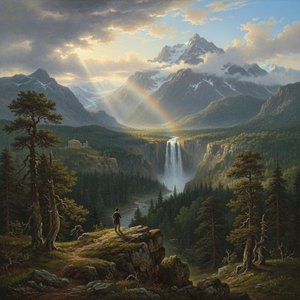
Evoking Nature's Sublime: A Comprehensive Exploration of 19th-Century Landscape Painting
Explore the captivating world of 19th-century landscape painting! Discover renowned artists like Friedrich & Monet, key movements, and find the perfect artwork to bring nature's serenity into your home. Expert insights at AllPaintingsStore.


