


 Se i rummet
 Send
Send Del
Del
 Detaljer
 Guide
Guide

 Download
 Lignende værker
 Røntgenundersøgelse
 Se diasshow
 Statistik
The Battle of Centaurs and Lapiths at Hippodamia's Wedding
 Oil On Canvas
- WallArt
- Baroque
 1667
1667- Early Modern
 177.0 x 139.0 cm
 Schloss Sanssouci
 Læs mere
Håndlavet oliereproduktion
Håndmalet olie på lærred i din valgte størrelse og ramme, udført efter bestilling af vores kunstnere. ( Skift til printversion Skift til digitalt billede)




P118B $10

P118H $10

P118W $10

P438Z $10

P508JH $12

P508YH $12

P805H $10

P805Z $10

P919BZ $10

P919G $10

P919XJ $10

P959ZH $10

P968JZ $12

W106C $8

W218G $10

W218JH $8

W218Y $10

W307PJ $10

W316G $10

W316PJ $8

W316Y $10

W398PJ $8

W4111J $10

W500HY $15

W500JH $15

W692G $12

W849H $8

W940BG $15

W953PJ $8




Vælg mellem vores forudindstillede størrelser, der matcher kunstværkets originale proportioner.

Du kan indtaste dine egne mål for at passe til en bestemt ramme eller plads. Hvis den valgte størrelse ikke stemmer overens med det originale billedes proportioner, vil vi enten beskære kunstværket eller udvide maleriet med yderligere håndmalede elementer. En digital skitse sendes til din godkendelse, før produktionen påbegyndes.
Bemærk venligst, at forhåndsvisningen på skærmen ikke afspejler den faktiske beskæring eller udvidelse. Kun skitsen vil nøjagtigt vise den endelige komposition.
Selvom specialmål er mulige, anbefaler vi at vælge en dimension fra den foruddefinerede liste for at bevare de originale proportioner.
Efter bestilling vil AllPaintingsStore.com team sende en e-mail til kunden for at indhente instruktioner og fremsende et udkast til gennemgang.
Levering i hele verden () på 3-4 uger i stedet for de standard 5 uger. (21 september). Ingen kompromiser med kvaliteten.

Gratis ekspresforsendelse til hele verden

Lærred af linned i høj kvalitet

Komplet transportforsikring

Garanti for refusion af told og importafgifter

Garanti for autentisk farvegengivelse

100 dages returret ved fabrikationsfejl

100% fuld returret

Mængderabat ved flere køb
 Glasmulighed er kun tilgængelig i størrelser under 110 cm

The Battle of Centaurs and Lapiths at Hippodamia's Wedding
Reproduktionsmateriale
Reproduktionsstørrelse
-


Samlet pris
$ 258
A Symphony of Light and Myth: The Chaos of Centauromachy
In the grand theater of the Dutch Golden Age, few works capture the visceral collision of myth and movement as profoundly as Karel Dujardin’s 1667 masterpiece, The Battle of Centaurs and Lapiths at Hippodamia's Wedding. This monumental canvas serves as a window into a legendary moment of ancient Greek tragedy, where the sanctity of a wedding feast is shattered by the wild, untamed impulses of the centaur tribe. Dujardin does not merely document a historical myth; he invites the viewer to step into the very heart of the struggle. As the eyes wander across the composition, one encounters a swirling vortex of human and equine forms, where the grace of the Lapith clan clashes violently with the primal strength of the Centaurs. It is a scene defined by tension, a breathtaking moment frozen in time just as the celebration dissolves into a desperate fight for survival.
The emotional weight of the painting is anchored by the figure of Hippodamia herself, whose wedding day has become a backdrop for carnage. Through Dujardin’s masterful hand, we feel the palpable anguish of the women caught in the fray and the grim determination of the men defending their kin. The subject matter, drawn from the tales of Apollodoros and Virgil, resonates with a timelessness that transcends its 17th-century origins, offering a profound meditation on the thin veil between civilization and savagery.
Baroque Mastery: Chiaroscuro and Dynamic Motion
Technically, Dujardin demonstrates the pinnacle of Baroque sensibility, utilizing chiaroscuro to sculpt drama out of shadow. The artist employs dramatic contrasts between light and dark to direct the viewer's gaze, spotlighting the central figures with a theatrical intensity that makes their expressions of terror and resolve feel almost tactile. This interplay of light does more than provide depth; it imbues the flesh of the figures and the muscular anatomy of the horses with a lifelike vitality, making the struggle feel immediate and breathing.
The composition is a masterclass in controlled chaos. While the scene appears tumultuous, Dujardin maintains a rigorous structural precision inherited from his mentor, Nicolaes Berchem. Every brushstroke contributes to a sense of rhythmic motion, guiding the eye through the interlocking limbs and rearing steeds. For the discerning collector or interior designer, this painting offers a commanding presence. Its ability to command attention through complex movement and sophisticated lighting makes it an ideal centerpiece for a gallery-style room or a sophisticated study, where its intricate details can be discovered anew with every glance.
An Eternal Legacy for the Modern Collector
Beyond its technical brilliance, this work stands as a testament to Dujardin’s unique ability to blend the pastoral naturalism of his Dutch roots with the epic grandeur of the Italianate style. The painting is not just an exploration of conflict, but an exploration of texture and atmosphere—the way light catches a muscular shoulder or how shadow swallows the periphery of the battlefield. It is an evocative piece that speaks to the enduring power of storytelling through art.
For those seeking to infuse their living spaces with historical depth and emotional resonance, a high-quality reproduction of this masterpiece offers more than mere decoration; it provides a conversation piece of unparalleled prestige. Whether placed in a contemporary setting to provide a bold, classical contrast or within a traditional library to complement an atmosphere of scholarly reflection, The Battle of Centaurs and Lapiths at Hippodamia's Wedding remains a breathtaking triumph of the human spirit and artistic skill.
Lignende kunstværker


Om kunstneren
A Life Immersed in Light and Landscape
Karel Dujardin, a name resonating softly within the pantheon of Dutch Golden Age masters, was born in Amsterdam in 1626 – though some records suggest 1622. His life unfolded during a period of unprecedented artistic flourishing in the Netherlands, yet his path wasn’t one of immediate acclaim but rather a gradual unfolding of talent nurtured by careful study and extensive travel. Details surrounding his early years remain somewhat elusive, shrouded in the mists of time, however it is widely accepted that he received foundational training under Nicolaes Berchem, a painter celebrated for his idyllic landscapes populated with animals. This mentorship proved pivotal, instilling in Dujardin a deep appreciation for naturalism and a keen eye for capturing the subtle nuances of light and atmosphere. But Dujardin’s artistic journey wasn't confined to the studios of Amsterdam; he possessed an adventurous spirit that led him to Rome, where he became a member of the *Bentvueghels*, a society of predominantly Dutch and Flemish painters who embraced a bohemian lifestyle and often adopted satirical nicknames. In Rome, he was known as “Barba di Becco” or "Goat-Beard," a moniker likely referencing his distinctive facial hair, and it was here that his artistic voice truly began to mature.Early Training and Artistic Foundations
Dujardin’s formative years were marked by an immersion in the artistic traditions of Amsterdam. His apprenticeship under Nicolaes Berchem wasn't merely about acquiring technical skills; it instilled within him a profound understanding of how to represent the natural world with accuracy and beauty. Berchem’s landscapes, characterized by luminous colors and meticulous detail, served as an invaluable model for Dujardin, shaping his aesthetic sensibilities and establishing a cornerstone of his artistic style. This influence is palpable in many of Dujardin's later works, where he consistently strives to emulate Berchem’s masterful depiction of light and atmosphere—a testament to the enduring power of mentorship and the transmission of artistic knowledge across generations.The Roman Influence: Embracing Satire and Experimentation
Dujardin’s decision to relocate to Rome in 1650 represented a significant turning point in his artistic career. Joining the *Bentvueghels*, he embraced a vibrant intellectual and social milieu that fostered experimentation and challenged conventional artistic norms. This society of painters, renowned for its satirical sketches and flamboyant nicknames—including “Barba di Becco”—provided Dujardin with an environment conducive to pushing boundaries and exploring new stylistic approaches. The Roman landscape captivated him, inspiring compositions infused with Italianate grandeur and a fascination with classical motifs. Simultaneously, he honed his skills in portraiture, producing striking likenesses that captured not only physical appearance but also psychological character—a skill that would become central to his artistic legacy.Genre Painting: Capturing Everyday Life
Dujardin’s artistic output is predominantly characterized by genre paintings – scenes depicting ordinary life with remarkable realism and sensitivity. Unlike the idealized depictions favored by some of his contemporaries, Dujardin focused on portraying rural landscapes populated with animals—particularly cows—and domestic interiors inhabited by peasants engaged in their daily routines. His canvases are imbued with a palpable warmth and immediacy, conveying a profound appreciation for the beauty found in commonplace subjects. Consider Woman Milking a Red Cow; the artist’s meticulous attention to detail—from the texture of the cow’s hide to the subtle interplay of light and shadow—transforms an unremarkable activity into a moment of contemplative grandeur. This dedication to observation and representation distinguishes Dujardin from many other artists of his time, elevating genre painting to new heights of artistic achievement.Notable Works and Legacy
Karel Dujardin produced a prolific oeuvre spanning landscapes, portraits, and historical scenes—a testament to his versatility as an artist and his unwavering commitment to mastering various techniques. Among his most celebrated paintings are Rest at an Italian Inn, which captures the atmosphere of a Tuscan tavern with evocative detail; The Regents of the Spinhuis and Nieuwe Werkhuis, Amsterdam, a monumental group portrait showcasing the dignity and solemnity of Dutch governance; and Self-Portrait (1662), offering an intimate glimpse into the artist’s own personality. His works are held in prestigious institutions worldwide—including the Mauritshuis Royal Picture Gallery in The Hague and the National Gallery in London—affirming their enduring artistic merit and securing his place as one of the foremost figures of Dutch Golden Age painting. Dujardin's influence can be seen in subsequent generations of artists who sought to emulate his masterful technique and his profound understanding of the human condition, ensuring that his legacy continues to inspire admiration and scholarly study for centuries to come.
Karel Dujardin
1626 - 1678 , Nederland
Hurtige fakta
- Artistic Movement Or Style: Dutch Gouden Eeuw schilderkunst
- Artists Who Influenced This Artist:
- Nicolaes Berchem
- Rembrandt van Rijn
- Date Of Birth: 27. september 1626
- Date Of Death: 20. november 1678
- Full Name: Karel Dujardin
- Nationality: Nederlandsk
- Notable Artworks:
- Kvæg i skyggen af et træ
- Landskab med gård og dyr
- Rest ved en italiensk kro
- Place Of Birth: Amsterdam, Nederland
Relaterede artikler
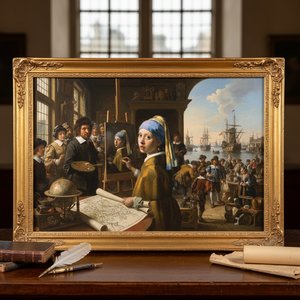
Golden Age Reflections: Dutch Baroque Painting & Cultural Innovation
Explore the Dutch Golden Age of painting! Discover key artists like Vermeer & ter Borch, their innovative techniques, and the rich cultural context behind these Baroque masterpieces. Learn about collecting & appreciating this iconic art period.

Nicolaes Berchem: Dutch Golden Age Pastoralism & the Evolution of Landscape Painting
Explore the captivating world of Nicolaes Berchem, a leading Dutch Golden Age painter. Discover his idyllic landscapes, masterful technique & lasting influence on art history. Learn more at AllPaintingsStore.

Golden Light & Dutch Skies: The Timeless Magic of Dutch Golden Age Landscapes
Discover the breathtaking beauty of Dutch Golden Age landscapes. Explore the mastery of light, chiaroscuro, and 17th-century realism through an expert art history lens, celebrating the enduring legacy of the Dutch Masters for discerning collectors and art lovers.

Golden Light & Dutch Skies: Bringing the Magic of Dutch Golden Age Landscapes into Your Home
Transform your home with the breathtaking light of Dutch Golden Age landscapes. Discover how hand-painted oil reproductions of masterworks like Ruisdael and Vermeer bring timeless elegance, atmosphere, and soulful texture to modern interiors. Elevate your space with museum-quality art.
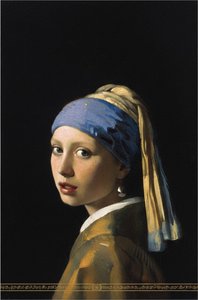
Hollandske Mestre: Top 10 Værker fra Guldalderen – Kunst til Dit Hjem
Oplev de 10 mest ikoniske værker fra den hollandske guldalder! Rembrandt, Vermeer og andre mestre afsløres. Find inspiration til dit hjem & køb museumskvalitets kunsttryk på AllPaintingsStore.com.


