

Acrylic On Canvas.
§ 1Katalogdata


Dette kunstværk er ophavsretsbeskyttet
Kunstværket vist på denne side er beskyttet af ophavsretsloven, hvilket betyder, at vi ikke lovligt kan skabe eller sælge en identisk reproduktion. Denne beskyttelse håndhæves i henhold til internationale aftaler som f.eks. den Bernerkonventionen og af nationale love, herunder de bestemmelser, der er fastlagt i Amerikansk ophavsretslov - Titel 17.
Som et respektfuldt og lovligt alternativ tilbyder vi skræddersyede, håndmalede kunstværker inspireret af originalen. Vores dygtige og professionelle kunstnere studerer omhyggeligt originalens stil, stemning og kunstneriske essens for at skabe et nyt, unikt værk, der fremkalder den samme følelse – samtidig med at det forbliver en original skabelse i egen ret.
Denne metode overholder fuldt ud ophavsretsreglerne, da den ikke indebærer kopiering eller duplikering af det beskyttede kunstværk. I stedet er der tale om en kreativ nytolkning – et nyt maleri, som er inspireret af det oprindelige, men ikke identisk med det.
 Læs mere
§ 2Abstrakt
Beskrivelse af samlerobjektet
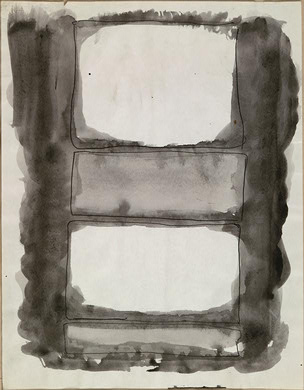
Explore Mark Rothko’s Untitled 126 – a minimalist masterpiece of stacked frames & subtle tonal variations. Abstract Expressionism at its finest! #Rothko #AbstractArt
Kunstnerbiografi
Udforsk Mark Rothkos ikoniske farvefeltmalerier & Ekspressionisme! Oplev kunstnerens dybe følelser og hans betydning i moderne kunsthistorie.
§ 3Kommentarer
The Essence of Minimalism: An Exploration of Color and Form
Mark Rothko's "Untitled 126" isn't a painting that shouts for attention; it’s an invitation to pause, to breathe, and to contemplate. Born in 1903 amidst the turbulent backdrop of Tsarist Russia and later navigating the complexities of American assimilation, Rothko’s life profoundly shaped his artistic vision – a relentless pursuit of emotional resonance through pure color. This particular work, created around 1968, exemplifies his mature style: a masterful distillation of abstract expressionism, reduced to its most elemental components. The piece presents three rectangular frames stacked vertically, each containing a vast expanse of white space punctuated by subtle tonal variations. These aren’t merely blank canvases; they are carefully orchestrated fields of color – delicate washes of pink, green, and red that seem to bleed into one another, creating an illusion of depth and shadow without the need for traditional perspective.
The influence of watercolor and ink is palpable in the loose, fluid lines and uneven application of paint. Rothko deliberately eschewed precise representation, opting instead for a gestural approach – a sense of movement and spontaneity captured on the canvas. The deliberate lack of sharp edges and defined forms contributes to the painting’s ethereal quality, inviting viewers to lose themselves within its chromatic depths. It's a testament to his belief that color itself could evoke profound emotional responses, bypassing the need for narrative or recognizable imagery.
Technique and Materials: A Dance with Wet-on-Wet
The painting’s remarkable texture is achieved through a technique known as “wet-on-wet,” where colors are applied to a still-damp surface, allowing them to blend and merge organically. This process results in soft edges, hazy transitions, and an overall sense of atmospheric depth. Rothko utilized watercolor paper, likely diluted with water to achieve the desired transparency and luminosity. The irregular edges of the frames further enhance this informal aesthetic, suggesting a deliberate rejection of rigid boundaries and a celebration of imperfection. The subtle shifts in tone – the almost imperceptible gradients within each rectangular field – are achieved through meticulous layering and blending, creating an illusion of movement and light that seems to emanate from within the painting itself.
Rothko’s Legacy: Existentialism and the Search for Meaning
Understanding Rothko requires acknowledging his deeply personal journey. His early life in Latvia, marked by displacement and loss – including the death of his father – instilled a profound sensitivity to human suffering. This experience resonated throughout his oeuvre, informing his exploration of existential themes such as mortality, trauma, and the search for meaning. "Untitled 126," while devoid of explicit symbolism, embodies this underlying emotional current. The painting’s quiet contemplation invites viewers to confront their own anxieties about existence, offering a space for introspection and perhaps even a sense of solace. It's not a painting that provides answers; rather, it poses questions – prompting us to consider our place in the universe and the nature of human experience.
A Reproduction Worthy of Display: Bringing Rothko’s Vision Home
AllPaintingsStore offers meticulously crafted hand-painted reproductions of "Untitled 126," allowing you to bring this iconic work into your own space. Our skilled artisans replicate Rothko's unique technique with the utmost care, capturing not only the colors and forms but also the subtle textures and atmospheric depth that define the painting’s power. Whether displayed in a minimalist gallery or a serene living room, this reproduction serves as a constant reminder of Rothko’s profound exploration of color, form, and emotion – a timeless testament to the enduring beauty of abstract art. Consider it an investment not just in a piece of art, but in a moment of quiet contemplation.
Spørgsmål og svar
Er Mark Rothko, skaberen af "Untitled 126", kendt under andre navne?
Mark Rothko er også kendt som Marcus Rothkowitz.
Hvad er den anbefalede anvendelse af et print af "Untitled 126"?
Det anbefales at bruge et tryk af "Untitled 126" til Reflective.
Hvor meget lys ser farverne i "Untitled 126" ud til at reflektere?
Farverne i "Untitled 126" har en Bright Balance luminans.


 Skift til printsalg


 For kunstværker eller reproduktioner, der er større end 105 cm (ca. 41 tommer) på en hvilken som helst side, vil rammen blive leveret som et adskilt sæt. Denne metode sikrer sikker levering og forhindrer skader under transport.


