Acrylic On Canvas.

§ 1Catalogue data

Dette kunstværk er ophavsretsbeskyttet
Kunstværket vist på denne side er beskyttet af ophavsretsloven, hvilket betyder, at vi ikke lovligt kan skabe eller sælge en identisk reproduktion. Denne beskyttelse håndhæves i henhold til internationale aftaler som f.eks. den Bernerkonventionen og af nationale love, herunder de bestemmelser, der er fastlagt i Amerikansk ophavsretslov - Titel 17.
Som et respektfuldt og lovligt alternativ tilbyder vi skræddersyede, håndmalede kunstværker inspireret af originalen. Vores dygtige og professionelle kunstnere studerer omhyggeligt originalens stil, stemning og kunstneriske essens for at skabe et nyt, unikt værk, der fremkalder den samme følelse – samtidig med at det forbliver en original skabelse i egen ret.
Denne metode overholder fuldt ud ophavsretsreglerne, da den ikke indebærer kopiering eller duplikering af det beskyttede kunstværk. I stedet er der tale om en kreativ nytolkning – et nyt maleri, som er inspireret af det oprindelige, men ikke identisk med det.
 Læs mere
§ 2Abstract
Beskrivelse af samlerobjektet
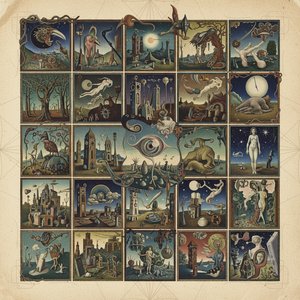
Dive into the surreal world of Max Ernst with this captivating painting! Explore a haunting image of a damaged boat, reflecting his Dada & Surrealist innovations – frottage, collage, and dreamlike imagery.
Kunstnerbiografi
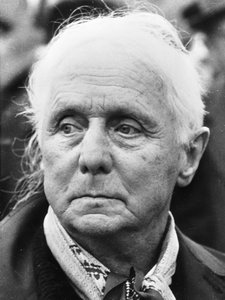
Max Ernst (1891-1976): En surrealist pioner med frottage, collage og drømmende malerier! Udforsk hans unikke kunstneriske verden. #MaxErnst #Surrealisme #Dada
§ 3Commentary
The Haunting Geometry of Absence: Unpacking Max Ernst’s ‘Untitled (3407)’
Max Ernst's “Untitled (3407)” isn’t merely a depiction of a damaged boat; it’s a meticulously constructed tableau of psychological unease and fractured reality. The image, rendered in a style deeply rooted in Surrealism, immediately arrests the viewer with its stark simplicity and unsettling core: a solitary wooden vessel riddled with a gaping hole in its center. This isn't a scene of dramatic action or immediate danger; instead, it’s imbued with a profound sense of isolation, decay, and the inherent instability of perception. The muted palette – primarily reds and browns – contributes to this atmosphere of melancholic stillness, while the background hints at other vessels, suggesting a wider, equally desolate landscape.
Ernst, born in Brühl, Germany, in 1891, was a restless intellectual and artist who deliberately rejected traditional artistic training. His journey began with philosophical inquiry, fueled by a fascination with psychology and psychiatry – disciplines he studied rigorously at the University of Bonn. This academic grounding profoundly shaped his approach to art, moving beyond mere representation towards an exploration of the subconscious mind and the illogical structures of dreams. His early experiences during World War I, marked by trauma and disillusionment, undoubtedly informed this preoccupation with fractured realities and the unsettling nature of existence – themes that resonate powerfully within “Untitled (3407).”
Technique and Innovation: The Language of Frottage
The painting’s distinctive quality stems largely from Ernst's innovative techniques, most notably *frottage*. This method, developed by Ernst himself, involved rubbing a pencil over textured surfaces – wood grain, fabric, or even the pages of books – to create seemingly random patterns. These patterns were then incorporated into his compositions, adding layers of hidden imagery and suggestive symbolism. In “Untitled (3407),” traces of this technique are subtly present, contributing to the painting’s dreamlike quality and hinting at a deeper, unseen narrative.
Furthermore, Ernst frequently employed *grattage*, scraping paint across the canvas to reveal the textures beneath – often creating layered images that defy easy interpretation. This process mirrors the disruption of the boat's structure, visually representing the breakdown of order and the emergence of unexpected forms. The deliberate roughness and unevenness of the surface further enhance the painting’s unsettling effect, inviting viewers to contemplate the fragility of form and the inherent ambiguity of visual experience.
Symbolism and Psychological Depth
The central image of the damaged boat is rich in symbolic potential. It can be interpreted as a representation of vulnerability, loss, or perhaps even the human condition itself – susceptible to damage, adrift without direction, and bearing the scars of past experiences. The hole within the vessel isn’t simply a structural flaw; it's a portal, an opening into the unknown, suggesting a descent into the subconscious or a confrontation with repressed memories. The surrounding boats in the background could represent other journeys, other lives, all equally vulnerable to the forces of time and circumstance.
Ernst’s frequent use of birds – often depicted as enigmatic figures within his work – adds another layer of complexity. In “Untitled (3407),” the absence of a bird suggests a loss of guidance or a disruption in the natural order. The overall composition evokes a sense of disorientation and uncertainty, mirroring the psychological landscape explored by Ernst throughout his career.
A Legacy of Surrealist Innovation
“Untitled (3407)” stands as a testament to Max Ernst’s pioneering spirit and his profound impact on 20th-century art. His exploration of subconscious imagery, innovative techniques like *frottage* and *grattage*, and willingness to challenge conventional artistic norms cemented his place as a central figure in the Surrealist movement. Reproductions of this evocative work offer a unique opportunity to experience the unsettling beauty and psychological depth of Ernst’s vision – a journey into the heart of the surreal.
Spørgsmål og svar
Hvilken placering passer bedst til formatet på "untitled (3407)" af Max Ernst?
Med sin Landscape form foreslås en reproduktion af "untitled (3407)" til et Living Room.
Hvor kan jeg finde en guide til "untitled (3407)"?
Der er en Elevguide-side tilgængelig for "untitled (3407)" af Max Ernst: et printbart faktablad om kunstværket, designet til elever og undervisningsbrug.
Hvor kan jeg finde kunstværker, der ligner "untitled (3407)" af Max Ernst?
Se lignende værker til "untitled (3407)" på siden Lignende værker.


 Skift til printsalg


 For kunstværker eller reproduktioner, der er større end 105 cm (ca. 41 tommer) på en hvilken som helst side, vil rammen blive leveret som et adskilt sæt. Denne metode sikrer sikker levering og forhindrer skader under transport.