

1909. Acrylic On Canvas, 610.0 x 806.0 cm. Artizon Museum.

§ 1Katalogdata

- 610.0 x 806.0 cm


§ 2Abstrakt
Beskrivelse af samlerobjektet
Nakamura Tsune Delve into the poignant beauty of Nakamura Tsune’s ‘Self-Portrait,’ a masterful Kanō School landscape painting from 1909. Explore its evocative light and detailed brushstrokes – now available as stunning hand-painted reproductions.
 Vis mere
Kunstnerbiografi
Discover Nakamura Tsune (1887-1924), a Japanese artist famed for evocative landscapes & portraits. Explore his Kanō School influence & poignant legacy on AllPaintingsStore! #JapaneseArt
§ 3Kommentarer
A Window into Soul: Examining Nakamura Tsune’s “Self-Portrait”
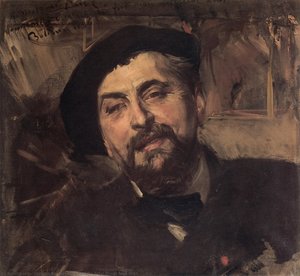
Nakamura Tsune’s “Self-Portrait,” completed in 1909, stands as a poignant testament to the burgeoning Kanō School aesthetic and a deeply personal exploration of artistic identity. Measuring an impressive 610 x 806 cm on canvas, this monumental work immediately draws the eye with its masterful use of chiaroscuro – dramatic contrasts between light and shadow – reminiscent of Rembrandt’s iconic portraits.
The photograph captures a meticulously rendered depiction of Tsune himself. He is positioned centrally within the frame, bathed in an intense beam of illumination originating from the upper left corner. This deliberate compositional choice isn't merely stylistic; it serves to amplify the figure’s presence and directs the viewer’s gaze directly onto his face, fostering a palpable connection between artist and observer – a hallmark of humanist portraiture prevalent during the early 20th century.
The Kanō School Influence & Artistic Technique
Tsune's style is undeniably rooted in the Kanō School tradition, known for its emphasis on idealized beauty and spiritual contemplation. The artist employs meticulous brushwork—characteristic of Kanō painters—to achieve remarkable textural detail, particularly evident in the folds of his shirt and the subtle nuances of skin tone. Careful layering of pigments creates depth and luminosity, mirroring the influence of Rembrandt’s masterful use of light to convey emotion.
- Brushwork: Precise, layered strokes emulate Kanō School techniques for capturing form and texture.
- Color Palette: Primarily muted tones—browns, ochres, and blacks—reflect the solemn mood and contribute to the overall sense of introspection.
- Composition: Central placement emphasizes the subject’s gaze and reinforces the portrait's communicative power.
Historical Context & Symbolic Resonance
Created during a period of significant artistic experimentation in Japan, “Self-Portrait” reflects the broader cultural anxieties surrounding tuberculosis – Tsune himself suffered from this illness during his formative years. The image transcends mere representation; it embodies a profound engagement with themes of vulnerability and resilience—qualities that resonate powerfully across time.
The stark illumination serves as a visual metaphor for confronting inner darkness, mirroring the artist’s own struggle for self-understanding. Furthermore, Tsune's gaze – unwavering and direct – speaks to an enduring artistic impulse: to capture not just likeness but also spirit—a desire that continues to inspire artists today.
Emotional Impact & Artistic Legacy
"Self-Portrait" transcends its formal qualities to evoke a feeling of quiet contemplation. It invites viewers to consider questions of identity, mortality, and the pursuit of artistic excellence. Like Rembrandt’s portraits before it, Tsune's work remains an enduring symbol of human dignity and artistic introspection—a masterpiece that continues to captivate audiences worldwide.
Spørgsmål og svar
Hvilket rum anbefales til "Self-Portrait" af Nakamura Tsune?
"Self-Portrait" af Nakamura Tsune anbefales til et Living Room. Denne anbefaling er baseret på værkets motiv, farver og stemning.
Hvilken type værk er "Self-Portrait"?
"Self-Portrait" af Nakamura Tsune er klassificeret som WallArt. Kategorien beskriver den type kunstværk, som originalen er.
Hvilken teknik blev brugt til "Self-Portrait", og hvornår blev den skabt?
"Self-Portrait" blev skabt i 1909 med Acrylic On Canvas.




 Skift til printsalg


 For kunstværker eller reproduktioner, der er større end 105 cm (ca. 41 tommer) på en hvilken som helst side, vil rammen blive leveret som et adskilt sæt. Denne metode sikrer sikker levering og forhindrer skader under transport.


