


 Se i rummet
 Send
Send Del
Del
 Detaljer
 Studieguide til kunstværker

 Download
 Lignende værker
 Røntgenundersøgelse
 Se diasshow
 Statistik
Midas and Bacchus

 Læs mere
Giclée / Kunsttryk
Giclée- eller lærredstryk i museumskvalitet med hurtig produktion og fleksible muligheder for finish. ( Bestil håndmalet reproduktion Skift til digitalt billede)




P118B Dkr10

P118H Dkr10

P118W Dkr10

P438Z Dkr10

P508JH Dkr12

P508YH Dkr12

P805H Dkr10

P805Z Dkr10

P919BZ Dkr10

P919G Dkr10

P919XJ Dkr10

P959ZH Dkr10

P968JZ Dkr12

W106C Dkr8

W218G Dkr10

W218JH Dkr8

W218Y Dkr10

W307PJ Dkr10

W316G Dkr10

W316PJ Dkr8

W316Y Dkr10

W398PJ Dkr8

W4111J Dkr10

W500HY Dkr15

W500JH Dkr15

W692G Dkr12

W849H Dkr8

W940BG Dkr15

W953PJ Dkr8




Vælg mellem vores forudindstillede størrelser, der matcher kunstværkets originale proportioner.

Indtast den bredde og højde, du har brug for, så det passer til din ramme eller din væg. Et print kan kun beskæres, aldrig gøres større end billedet, så en størrelse med en anden form vil miste en del af motivet. Vi sender dig en digital mockup til godkendelse, før vi printer noget. Billedet vist på denne side viser ikke den faktiske beskæring — det er kun mockuppen, der gør.
Verdensomspændende levering () på 2 uger i stedet for de sædvanlige 4/5 uger. (23 oktober)

Gratis ekspresforsendelse til hele verden

Lærred af linned i høj kvalitet

Komplet transportforsikring

Garanti for refusion af told og importafgifter

Garanti for autentisk farvegengivelse

100 dages returret ved fabrikationsfejl

100% fuld returret

Mængderabat ved flere køb
 Glasmulighed er kun tilgængelig i størrelser under 110 cm

Midas and Bacchus
Giclée / Kunsttryk
Reproduktionsstørrelse
-


Samlet pris
Dkr 427
A Symphony of Light and Antiquity: Exploring Nicolas Poussin’s Midas and Bacchus
Nicolas Poussin's "Midas and Bacchus" stands as an emblem of French Baroque painting, yet its genesis lies firmly within the Italian Renaissance tradition. Completed around 1648-1650, this monumental canvas transcends mere depiction; it embodies a profound meditation on myth, desire, and the transformative power of divine grace—themes central to Poussin’s artistic philosophy. The painting resides in the Musée du Louvre, Paris, where its breathtaking scale and meticulous detail continue to captivate audiences centuries after its creation.- Subject Matter: Drawn from Greek mythology, “Midas and Bacchus” recounts the tale of King Midas’s hubristic wish—to turn everything he touched into gold—and his subsequent encounter with Dionysus (Bacchus), god of wine and revelry. The scene unfolds in a stylized Roman landscape, populated by figures representing both earthly pleasure and spiritual contemplation.
- Style: Poussin’s style is characterized by its serene composure and masterful use of chiaroscuro—the dramatic interplay between light and shadow—a technique perfected during his formative years in Rome. Unlike the exuberant dynamism of Caravaggio, Poussin prioritizes balance and harmony, striving to convey an idealized vision of beauty.
Technique: The Art of Illusion – Mastering Chiaroscuro and Atmospheric Perspective
Poussin’s technique exemplifies the Renaissance preoccupation with scientific observation. He meticulously studied aerial perspective—the gradual blurring of distant objects due to atmospheric haze—creating an illusion of depth that surpasses mere visual representation. Layers upon layers of thinly applied paint, painstakingly blended by hand, contribute to the painting's luminous quality and enhance its sense of realism. The artist’s meticulous attention to detail extends beyond the figures themselves; he renders every leaf, stone, and ripple of water with astonishing accuracy.Symbolism: Divine Intervention and Moral Reflection
Beyond its visual splendor, “Midas and Bacchus” is laden with symbolic significance. Dionysus’s presence represents divine indulgence and the allure of sensual gratification—a stark contrast to Midas's folly. The shepherdess, positioned centrally in the composition, embodies purity and innocence, serving as a moral counterpoint to the king’s avarice. Furthermore, the golden fleece adorning Midas’s tunic symbolizes wealth and earthly ambition, ultimately undermined by the transformative influence of Dionysus’s wine—a reminder that true happiness resides not in material possessions but in spiritual enlightenment.Emotional Impact: Tranquility Amidst Chaos – A Vision of Sublime Beauty
Despite its narrative complexity, “Midas and Bacchus” exudes an aura of profound tranquility. Poussin’s masterful orchestration of light and color evokes a sense of sublime beauty—a feeling akin to awe and wonder—inspiring contemplation on the human condition. The painting's stillness belies the tumultuous events unfolding within its frame, suggesting that inner peace can prevail even amidst external pressures. It remains an enduring testament to Poussin’s artistic genius and his unwavering commitment to conveying a vision of idealized harmony.Concluding Thoughts: An Artistic Legacy Enduring Through Time
“Midas and Bacchus” continues to resonate with audiences today, securing its place as one of the most celebrated paintings of the Baroque era. Its influence can be discerned in countless subsequent artworks—a testament to Poussin’s pioneering role in establishing a new aesthetic standard. More than simply a depiction of mythic narrative, it represents an exploration of fundamental human concerns—desire, morality, and the pursuit of spiritual fulfillment—making it an invaluable contribution to the history of art and a source of inspiration for generations of artists.Spørgsmål & svar
Hvordan beskrives stemningen i "Midas and Bacchus" af Nicolas Poussin?
"Midas and Bacchus" har en Elegant atmosfære.
Hvordan spiller farverne i "Midas and Bacchus" sammen med hinanden?
Farverne i "Midas and Bacchus" af Nicolas Poussin udviser en Strong Color Unity harmoni. Harmoni beskriver, hvordan farverne relaterer sig til hinanden.
Hvor kan jeg finde kunstværker, der ligner "Midas and Bacchus" af Nicolas Poussin?
Værker, der ligner "Midas and Bacchus" af Nicolas Poussin, er samlet på værkets Lignende værker-side.
Lignende kunstværker


Om kunstneren
Nicolas Poussin – En Klassiker Af Fransk Barokkunst
Nicolas Poussin, en navn synonymt med den majestætiske franske barok kunst, var dog en sjæl dybt rodfæstet i italiensk jord gennem størstedelen af sin kunstneriske karriere. Han blev født i Les Andelys, Normandien, i juni 1594 og hans tidlige år forbliver noget eftertragtet, hvorimod de uden tvivl lagde grundlaget for en beskæftigelse, der skulle forme klassisk tradition inden for fransk kunst. Selvom han kortvarigt studerede i Paris i begyndelsen af 1610’erne og absorberede indflydelse fra mindre kendte kunstnere på tiden, var hans rejse til Rom i 1624 virkelig en katalysator for hans kunstneriske skæbne. Dette var ikke blot en geografisk omplacering; det var en immersion i hjertet af antikken, en pilgrimsfærd til selve kilden til inspiration, der skulle definere hans æstetiske vision. Poussin’s første forsøg på maleri var præget af sensualitet, hvilket mindede om venetianske mesterværker som Titian, men selv i disse tidlige værker begyndte en næsten følelsesløs orden og intellektuel dygtighed at dukke op – et forvarsel om stilen han så perfektionerede.Rom Årene: Skabelsen Af En Klassisk Ideal
Rom viste sig mere end blot et atelier for Poussin; det blev hans intellektuelle kildehus. Han fandt sig midt i en blomstrende cirkel af forskere, arkæologer og kunstnere, hvoraf Cassiano dal Pozzo var særligt bemærkelsesværdig – hvis dybe forståelse af klassisk antikken havde en enorm indflydelse på kunstnerens tilgang. Dal Pozzo’s dedikation til omhyggeligt dokumentation af gamle rester fik Poussin til at udvikle en dyb respekt for historisk nøjagtighed og et ønske om at præge hans malerier med følelsen af tidløshed. Denne periode så Poussin træde væk fra den flamboyante ekstravagance hos nogle af sine samtidige og omfavne en stil karakteriseret af klarhed, balance og en målrettet fokus på linjekomposition. Han studerede minutiøst Rafael’s værker og absorberede deres harmoniske arrangementer og elegante former, samtidig med at han søgte inspiration fra gamle statuer og litterære kilder som Ovids *Metamorphoser*. Hans malerier begyndte at udfolde sig med figurer trukket fra klassisk historie og mytologi og blev præsenteret ikke blot som dekorative elementer, men som udtryk for moralske værdier og filosofiske idealer. Han var særligt imponeret af Rafael’s brug af perspektiv og lys – teknikker han efterfølgende perfektionerede og anvendte konsekvent i sine værker.Temaer Af Historie, Myth Og Det Hellige
Poussin’s kunstneriske produktion var bemærkelsesværdigt diversificeret, men forbundet af hans engagement i disse grundlæggende principper. Han malede ofte scener fra klassisk historie – den tragiske skæbne for Germanicus, f.eks. – hvilket blev præget af stoic visdom og moralsk vægt. Hans mytologiske billeder var ikke blot fortællinger om kendte historier; de var udforskninger af menneskelig natur og ofte fyldt med allegorisk betydning. *Arcadia*-serien, især *Et in Arcadia ego*, blev ikonisk for hans filosofiske dybde og fremkaldte refleksion over døden og den vedvarende kraft af hukommelse. Han var en stor admirer af klassisk kunst og arkitektur og søgte konstant inspiration fra gamle monumenter og kunstværker. Denne interesse manifesterede sig i hans præcise gengivelse af detaljer og hans omhyggelige brug af komposition – egenskaber, der gjorde hans værker unikke og satte nye standarder for kunstuddannelse og praksis i Frankrig. Han var en aktiv deltager i Akademiet i Paris og blev betragtet som en af de mest betydningsfulde kunstnere på sin tid.Et Efterladenskab Af Orden Og Æstetisk Reflektion
Nicolas Poussin døde i Rom i 1665 og efterlod sig et kunstnerisk arv, der fortsatte at inspirere efterfølgende generationer af kunstnere. Hans fokus på klassiske idealer var ikke blot en stilistisk præference; det repræsenterede en dyb respekt for menneskelig kultur og historie samt en søgen efter skønhed og harmoni – et testament til en kunstner, der ønskede mere end blot at gengive verden; han ville hæve den gennem linserne af fornuft og æstetisk refleksion. Hans værker blev udstillet i nogle af Europas mest prestigefulde museer og galerier og fortsætter med at fascinere publikum over hele verden. Han er blandt de få kunstnere, hvis stil og filosofi har haft en varig indflydelse på udviklingen af europæisk kunst gennem århundrederne. Hans navn vil altid være forbundet med klassisk fransk kunst og hans værker vil fortsat inspirere kunstnere og kunsthistorikere til denne dag.- Bemærkelsesværdige Værker: *The Death of Germanicus*, *The Seven Sacraments Series*, *A Roman Road*, *Orion Blinded Searching for the Sun*, *The Seasons*.
- Nøgleegenskaber: Klassisk Komposition, Linjekomposition, Historiske Og Mytologiske Temaer, Serene Landskaber.
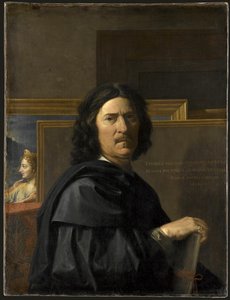
Nicolas Poussin
1594 - 1665 , Frankrig
Hurtige fakta
- Artistic Movement Or Style: Barok, Klassicisme
- Artists Who Influenced This Artist:
- Raphael
- Titian
- Date Of Birth: 1594
- Date Of Death: 1665
- Full Name: Nicolas Poussin
- Nationality: Fransk
- Notable Artworks:
- Døden af Germanicus
- Syv Sakramenter Serien
- Romersk Vej
- Orion Blinde Efter Solen
- Sæsonerne
- Place Of Birth: Les Andelys, Frankrig
Relaterede artikler

Baroque Classicism: A Professional Guide to Integrating Timeless Grandeur into Luxury Hotel Interiors
Elevate luxury hospitality with Baroque Classicism. Our guide for hotel designers explores integrating grand, classical oil reproductions into professional interiors. Discover efficient bulk procurement, custom sizing, and large-format murals to create timeless, high-impact spaces.


