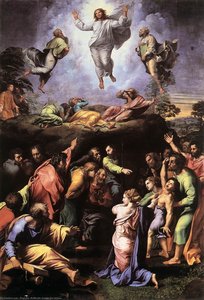
Acrylic On Canvas.

§ 1Catalogue data

§ 2Abstract
Beskrivelse af samlerobjektet
 Vis mere
Kunstnerbiografi
Raphael (1483-1520): En af Renæssancens mest berømte kunstnere, kendt for sine elegante Madonner og mesterværker som 'Skolen i Athen'. Udforsk hans Urbino-baggrund og kunstneriske arv.
§ 3Commentary
The Parnassus by Raphael: A Symphony of Myth and Renaissance Ideal
Raphael’s “Mount Parnassus,” completed in 1510-1511 during his papal commission for Pope Julius II, stands as a cornerstone of High Renaissance art—a testament to humanist ideals intertwined with classical mythology. More than just a depiction of a mountain landscape, it's an elaborate allegory exploring the pursuit of poetic inspiration and representing the harmonious balance between pagan wisdom and Christian faith.
- Subject Matter: The fresco portrays Mount Parnassus, revered in ancient Greek mythology as the dwelling place of Apollo—god of music, poetry, and light—and his nine Muses. These goddesses presided over the arts and sciences, embodying creativity and intellectual enlightenment.
- Style & Technique: Raphael employed masterful *fresco* technique, applying pigment directly onto wet plaster, ensuring exceptional durability and luminosity. His meticulous attention to detail is evident in every brushstroke, capturing the serene beauty of the landscape and the expressive gestures of the figures with remarkable precision. The use of chiaroscuro—the dramatic interplay of light and shadow—creates depth and enhances the emotional impact of the scene.
- Historical Context: Commissioned amidst the burgeoning humanist movement in Rome, “The Parnassus” reflects the Renaissance fascination with reviving classical learning and celebrating human potential. It aligns perfectly with the Stanza della Segnatura’s overarching theme—the four disciplines of knowledge (philosophy, theology, poetry, law)—demonstrating the belief that artistic representation could elevate the mind and inspire virtuous behavior.
- Symbolism: The composition is laden with symbolic significance. Apollo's central position symbolizes divine inspiration, while his lira da braccio represents musical creativity. The Muses are depicted in various poses—some contemplative, others animated—representing different facets of poetic endeavor. Notably, Raphael incorporated the face of Laocoön and His Sons—a monumental sculpture rediscovered in Rome—adding a layer of classical grandeur and conveying the idea that even tragedy could serve as a catalyst for artistic expression.
- Emotional Impact: “The Parnassus” evokes a sense of tranquility and contemplation, inviting viewers to immerse themselves in the realm of imagination and beauty. Raphael’s masterful rendering captures not only the visual splendor of Mount Parnassus but also the profound spiritual aspiration inherent in the pursuit of artistic excellence—a timeless message that continues to resonate with audiences today.
This stunning fresco exemplifies Raphael's unparalleled skill as a painter and his unwavering commitment to humanist ideals, securing its place as one of the most celebrated artworks of the Renaissance.
Spørgsmål og svar
Er farverne i "Mount Parnassus (left view)" kraftige eller dæmpede?
Farven på "Mount Parnassus (left view)" har en mætning på Balanced Soft og en intensitet på Balanced.
Hvilken atmosfære ville en reproduktion af "Mount Parnassus (left view)" af Rafael tilføre et rum?
Med sin Serene stemning foreslås "Mount Parnassus (left view)" til et Living Room.
Hvor kommer de besøgende til "Mount Parnassus (left view)" af Rafael fra?
Statistikker for "Mount Parnassus (left view)" af Rafael findes på værkets Besøgsstatistik-side: månedlige besøg på værket, besøg på kunstnerens øvrige værker samt en opdeling af de seneste besøgende efter land og sprog.



 Skift til printsalg


 For kunstværker eller reproduktioner, der er større end 105 cm (ca. 41 tommer) på en hvilken som helst side, vil rammen blive leveret som et adskilt sæt. Denne metode sikrer sikker levering og forhindrer skader under transport.