

1448. Acrylic.

§ 1Catalogue data


§ 2Abstract
Beskrivelse af samlerobjektet
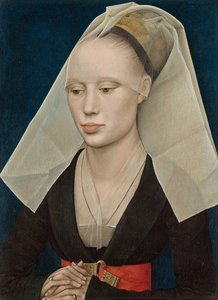
Explore Rogier van der Weyden’s haunting ‘Scupstoel,’ a masterful study in quiet intensity capturing the contemplative spirit of Early Netherlandish painting—a revolutionary depiction of emotion and meticulous detail that invites you to discover its timeless beauty.
 Vis mere
Kunstnerbiografi
Rogier van der Weyden (1400-1464): En pioner inden tidlig flamsk maleri, kendt for følelsesfulde religiøse billeder, rig farvepalet og detaljerede udtryk. Udforsk hans mesterværker!
§ 3Commentary
A Study in Quiet Intensity: Examining Rogier van der Weyden’s ‘Scupstoel’
Rogier van der Weyden’s “Scupstoel,” completed around 1448, stands as a remarkable testament to the burgeoning artistic spirit of Early Netherlandish painting. More than just a depiction of a man seated upon a pile of chairs—a seemingly simple subject matter—the artwork embodies profound emotional depth and meticulous craftsmanship that cemented Van der Weyden’s reputation as one of the era's foremost masters.
Style & Technique: The piece exemplifies the stylistic hallmarks of its time, firmly rooted in the Northern Renaissance tradition. Characterized by a restrained palette dominated by muted browns, ochres, and reds—a deliberate choice reflecting the solemnity of religious contemplation—the painting prioritizes naturalistic detail over flamboyant ornamentation. Van der Weyden’s mastery is evident in his painstaking rendering of textures: the worn fabric of the chairs, the subtle creases in the man's clothing, and even the delicate folds of drapery convey a palpable sense of realism.
Historical Context: Created during a period marked by significant religious fervor—the Burgundian Netherlands experienced a fervent devotion to saints and biblical narratives—‘Scupstoel’ speaks directly to this cultural milieu. The artwork likely served as a preparatory sketch or study for a larger altarpiece, reflecting the prevailing artistic practice of exploring compositional ideas before committing them to monumental canvases.
Symbolism & Emotion: While the precise symbolism embedded within ‘Scupstoel’ remains debated by scholars, its central figure—a man seated amidst the chairs—is interpreted as representing contemplation and humility. The arrangement itself suggests a deliberate effort to convey inner turmoil balanced by serene composure. Van der Weyden's ability to capture such nuanced psychological states was revolutionary for his time, marking him as a pioneer in portraying human emotion with unprecedented sensitivity.
Interior Design Inspiration: “Scupstoel”’s understated elegance and masterful execution offer valuable insights into the aesthetic sensibilities of the fifteenth century. Its muted tones and textured surfaces can inspire designers seeking to create spaces imbued with warmth, tranquility, and intellectual curiosity—a timeless reminder that beauty resides not merely in grandeur but also in profound emotional resonance.
Spørgsmål og svar
Hvilken følelse formidler "Scupstoel" af Rogier van der Weyden?
Den emotionelle stemning, der er registreret for "Scupstoel" af Rogier van der Weyden, er Reflective. Den opsummerer den følelse, som værket udtrykker.
Hvordan passer "Scupstoel" ind i Rogier van der Weydens temaer og stil?
"Scupstoel" er et værk fra Rogier van der Weydens Early Netherlandish Renaissance-periode, hvis gennemgående temaer inkluderer religious emotion, human expression, medieval tradition, psychological insight, artist legacy.
Hvordan relaterer motivet i "Scupstoel" sig til Rogier van der Weydens sædvanlige temaer?
Blandt Rogier van der Weydens gennemgående temaer – religious emotion, human expression, medieval tradition, psychological insight, artist legacy – bringer "Scupstoel" sit eget fokus på religious painting, human figure, chair arrangement, psychological depth, medieval art, detail rendering, symbolism.


 Skift til printsalg


 For kunstværker eller reproduktioner, der er større end 105 cm (ca. 41 tommer) på en hvilken som helst side, vil rammen blive leveret som et adskilt sæt. Denne metode sikrer sikker levering og forhindrer skader under transport.


