

1952. Acrylic On Canvas.

§ 1Katalogdata


Dette kunstværk er ophavsretsbeskyttet
Kunstværket vist på denne side er beskyttet af ophavsretsloven, hvilket betyder, at vi ikke lovligt kan skabe eller sælge en identisk reproduktion. Denne beskyttelse håndhæves i henhold til internationale aftaler som f.eks. den Bernerkonventionen og af nationale love, herunder de bestemmelser, der er fastlagt i Amerikansk ophavsretslov - Titel 17.
Som et respektfuldt og lovligt alternativ tilbyder vi skræddersyede, håndmalede kunstværker inspireret af originalen. Vores dygtige og professionelle kunstnere studerer omhyggeligt originalens stil, stemning og kunstneriske essens for at skabe et nyt, unikt værk, der fremkalder den samme følelse – samtidig med at det forbliver en original skabelse i egen ret.
Denne metode overholder fuldt ud ophavsretsreglerne, da den ikke indebærer kopiering eller duplikering af det beskyttede kunstværk. I stedet er der tale om en kreativ nytolkning – et nyt maleri, som er inspireret af det oprindelige, men ikke identisk med det.
 Læs mere
§ 2Abstrakt
Beskrivelse af samlerobjektet
Kunstnerbiografi
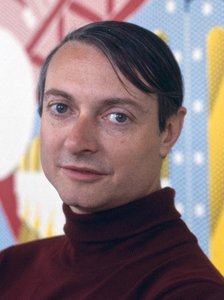
Roy Lichtenstein (1923-1997): En pioner indenfor Pop Art, kendt for Ben-Day prikker, komiske billeder og et kritisk blik på forbrugerkulturen. Udforsk 'Whaam!' & mere.
§ 3Kommentarer
A Cherokee Brave by Roy Lichtenstein: Decoding Pop Art’s Bold Narrative
Roy Lichtenstein's "A Cherokee Brave," painted in 1952, stands as a cornerstone of American Pop Art—a movement that irrevocably challenged the conventions of fine art and embraced imagery derived from popular culture. More than just a visually striking composition featuring birds and cats, this artwork embodies Lichtenstein’s meticulous approach to translating comic strip aesthetics into monumental canvases, offering a profound commentary on visual language and societal anxieties of the mid-century era.The Comic Strip Influence: A Formal Innovation
At its core, Lichtenstein's technique—characterized by Ben-Day dots—directly borrows from halftone printing processes used in newspaper comics. These dots create an illusion of shading and texture, mimicking the printed image with remarkable accuracy. This stylistic choice wasn’t merely decorative; it was a deliberate rejection of traditional oil painting methods, signaling a decisive break from artistic traditions rooted in realism. The artist meticulously recreated the visual language of comic strips—bold outlines, simplified forms, and vibrant colors—transforming familiar motifs into powerful statements about perception and representation.Symbolism Within Simplicity: Birds, Cats, and Narrative Tension
The painting’s imagery is deceptively straightforward. Two birds perched atop each other convey a dynamic relationship – one larger dominates the scene, suggesting hierarchy or perhaps vulnerability. The presence of three cats adds another layer of complexity, their watchful gaze hinting at observation and potentially unease. These animals aren't merely decorative elements; they contribute to an unspoken narrative tension—a subtle suggestion of conflict or interaction that resonates beyond the literal depiction. Lichtenstein’s masterful use of visual cues invites contemplation about themes of dominance, vulnerability, and the anxieties inherent in everyday life.Historical Context: Postwar America and Artistic Rebellion
“A Cherokee Brave” emerged during a period of significant social and cultural upheaval following World War II. The postwar era witnessed an explosion of consumer culture and mass media—influences that profoundly impacted artistic sensibilities. Lichtenstein’s embrace of Pop Art reflected this broader societal shift, aligning with the burgeoning interest in vernacular imagery and rejecting the elitism associated with Abstract Expressionism. By appropriating comic strip conventions, Lichtenstein positioned himself as a provocateur, questioning established artistic hierarchies and engaging in dialogue with the anxieties of his time—a conversation that continues to captivate audiences today.Emotional Impact: Bold Color Palette and Visual Rhythm
The painting’s vibrant color palette – predominantly reds, yellows, and blues – amplifies its emotional impact. Lichtenstein deliberately avoids nuanced shading or expressive brushstrokes, prioritizing visual rhythm and clarity. This stylistic decision serves not only to reproduce the comic strip aesthetic but also to convey a sense of immediacy and excitement. The bold colors and simplified forms contribute to an overall feeling of dynamism—a deliberate attempt to capture the energy and pace of modern life. “A Cherokee Brave” remains a testament to Lichtenstein’s ability to distill complex ideas into visually arresting images, leaving viewers with a lingering impression of both beauty and intellectual engagement.Spørgsmål og svar
Hvor lys eller mørk fremstår "A Cherokee Brave" af Roy Lichtenstein?
I forhold til den oplevede lysstyrke er "A Cherokee Brave" af Roy Lichtenstein bright.
Kan jeg bruge augmented reality til at se "A Cherokee Brave" af Roy Lichtenstein i mit eget rum?
Siden Se i AR for "A Cherokee Brave" af Roy Lichtenstein bruger augmented reality til at vise kunstværket i dit eget rum på en kompatibel enhed.
Hvilke andre navne er Roy Lichtenstein kendt under?
Roy Lichtenstein er også kendt som Roy Fox Lichtenstein.


 Skift til printsalg


 For kunstværker eller reproduktioner, der er større end 105 cm (ca. 41 tommer) på en hvilken som helst side, vil rammen blive leveret som et adskilt sæt. Denne metode sikrer sikker levering og forhindrer skader under transport.


