Acrylic On Canvas.

§ 1Katalogdata

Dette kunstværk er ophavsretsbeskyttet
Kunstværket vist på denne side er beskyttet af ophavsretsloven, hvilket betyder, at vi ikke lovligt kan skabe eller sælge en identisk reproduktion. Denne beskyttelse håndhæves i henhold til internationale aftaler som f.eks. den Bernerkonventionen og af nationale love, herunder de bestemmelser, der er fastlagt i Amerikansk ophavsretslov - Titel 17.
Som et respektfuldt og lovligt alternativ tilbyder vi skræddersyede, håndmalede kunstværker inspireret af originalen. Vores dygtige og professionelle kunstnere studerer omhyggeligt originalens stil, stemning og kunstneriske essens for at skabe et nyt, unikt værk, der fremkalder den samme følelse – samtidig med at det forbliver en original skabelse i egen ret.
Denne metode overholder fuldt ud ophavsretsreglerne, da den ikke indebærer kopiering eller duplikering af det beskyttede kunstværk. I stedet er der tale om en kreativ nytolkning – et nyt maleri, som er inspireret af det oprindelige, men ikke identisk med det.
 Læs mere
§ 2Abstrakt
Beskrivelse af samlerobjektet
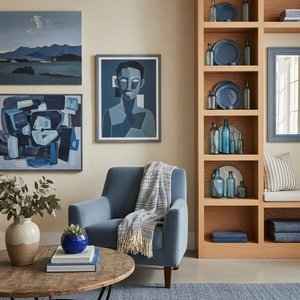
Arctic Landscape by Roy Lichtenstein embodies Pop Art's fascination with everyday subjects and bold color palettes. This abstract depiction of mountains utilizes vibrant blues, yellows, and white clouds to create a dynamic composition reminiscent of Lichtenstein’s signature style.
Kunstnerbiografi
Roy Lichtenstein (1923-1997): En pioner indenfor Pop Art, kendt for Ben-Day prikker, komiske billeder og et kritisk blik på forbrugerkulturen. Udforsk 'Whaam!' & mere.
§ 3Kommentarer
A Bold Vision of the Frozen North
Roy Lichtenstein’s “Arctic Landscape,” painted in 1964, stands as a cornerstone of Pop Art—a movement that deliberately rejected the emotional seriousness of Abstract Expressionism and instead embraced imagery derived from popular culture. More than just a depiction of a desolate Arctic environment, it's a meticulously crafted illusion designed to provoke contemplation about perception and representation.
- Subject Matter: The painting captures a stylized mountain range bathed in an ethereal blue sky punctuated by fluffy white clouds.
- Style: Lichtenstein’s signature style—characterized by bold outlines, halftone printing techniques, and vibrant color palettes—transforms the familiar landscape into something strikingly unfamiliar.
The technique employed is remarkably precise for Pop Art. Lichtenstein utilized halftone dots to simulate shading and texture, a process borrowed from commercial printing where images are reproduced using multiple shades of gray. This method lends an almost photographic quality to the artwork while simultaneously maintaining its artistic integrity.
Historical Context: Challenging Artistic Conventions
Painted during the height of the Cold War era, “Arctic Landscape” reflects anxieties about geopolitical tensions and the perceived threat posed by Soviet expansionism. However, Lichtenstein wasn’t simply responding to political concerns; he was actively dismantling established artistic hierarchies. By appropriating imagery from advertising and comic strips—sources considered lowbrow by critics of the time—he asserted that art could derive inspiration from anywhere.
This deliberate provocation aimed to disrupt the prevailing aesthetic sensibilities of the 1960s, where artists were striving for profound emotional expression. Lichtenstein’s approach was deliberately antithetical to this trend, prioritizing visual impact and intellectual engagement over sentimental sentimentality.
Symbolism Beyond the Surface
While seemingly straightforward, “Arctic Landscape” is laden with symbolic significance. The blue sky represents serenity and vastness—a deliberate contrast to the harsh realities of the Arctic wilderness. Yet, it’s also a color associated with authority and stability, subtly reinforcing Lichtenstein's critique of traditional artistic values.
The stylized mountains themselves serve as visual anchors, grounding the composition while simultaneously emphasizing the artist’s manipulation of perspective. The small figures positioned at the base of the mountains are deliberately ambiguous—they could represent explorers or simply points of reference—further enhancing the artwork's enigmatic quality.
Emotional Resonance: A Quiet Discomfort
Despite its vibrant colors, “Arctic Landscape” evokes a feeling of quiet discomfort. Lichtenstein’s masterful use of halftone printing creates an illusion of depth and texture that draws the viewer into the scene—but simultaneously reinforces the idea that what we see is merely a constructed representation.
Ultimately, Lichtenstein's Arctic Landscape compels us to question our assumptions about art and perception. It remains a testament to his innovative spirit and a powerful emblem of Pop Art’s enduring legacy – a celebration of visual pleasure tempered by intellectual curiosity.
Spørgsmål og svar
Kan man se et diasshow af "Arctic landscape" af Roy Lichtenstein?
Se diasshowet på siden Billedserie for "Arctic landscape" af Roy Lichtenstein.
Hvordan relaterer farverne i "Arctic landscape" af Roy Lichtenstein sig til værkets følelsesmæssige udtryk?
I "Arctic landscape" ledsages en Calm følelse af Dark farver.
Hvor kan jeg finde kunstværker, der ligner "Arctic landscape" af Roy Lichtenstein?
Se lignende værker til "Arctic landscape" på siden Lignende værker.


 Skift til printsalg


 For kunstværker eller reproduktioner, der er større end 105 cm (ca. 41 tommer) på en hvilken som helst side, vil rammen blive leveret som et adskilt sæt. Denne metode sikrer sikker levering og forhindrer skader under transport.