100 dages returret · Pengene tilbage Gratis levering i hele verden
449.582kunstværker 30.618kunstnere 4.705museer 32sprog
Valuta
    Sprog
      Atelier · Est. 2015 · Paris, Frankrig
      AllPaintingsStore
      allpaintingsstore.com
      Se i rummet Se i AR Skift til printversion Skift til digitalt billede Send
      Detaljer Studieguide til kunstværker Tilføj til favoritter Download Lignende værker Røntgenundersøgelse Se diasshow Statistik

      The Gotthard Post

      Experience 'The Gotthard Post' by Rudolf Koller (1873). A dynamic Swiss landscape painting capturing speed & innovation. Admire this iconic artwork – a symbol of Switzerland’s engineering prowess and Alpine beauty.

      Discover Rudolf Koller: Swiss painter famed for animal art & landscapes. Realist & classicist style, ‘Painter of the Swiss National Animal’. Explore his iconic works!

      Håndlavet oliereproduktion

      Håndmalet olie på lærred i din valgte størrelse og ramme, udført efter bestilling af vores kunstnere. ( Skift til printversion Skift til digitalt billede)

      Corner sample of the P118B picture frame: moulded polystyrene, 5 cm wide and 3 cm thick
      P118B Dkr10
      Corner sample of the P118H picture frame: moulded polystyrene, 5 cm wide and 3 cm thick
      P118H Dkr10
      Corner sample of the P118W picture frame: moulded polystyrene, 5 cm wide and 3 cm thick
      P118W Dkr10
      Corner sample of the P438Z picture frame: moulded polystyrene, 5.5 cm wide and 3.5 cm thick
      P438Z Dkr10
      Corner sample of the P508JH picture frame: moulded polystyrene, 7 cm wide and 3.5 cm thick
      P508JH Dkr12
      Corner sample of the P508YH picture frame: moulded polystyrene, 7 cm wide and 3.5 cm thick
      P508YH Dkr12
      Corner sample of the P805H picture frame: moulded polystyrene, 5 cm wide and 3.5 cm thick
      P805H Dkr10
      Corner sample of the P805Z picture frame: moulded polystyrene, 5 cm wide and 3.5 cm thick
      P805Z Dkr10
      Corner sample of the P919BZ picture frame: moulded polystyrene, 7 cm wide and 3.5 cm thick
      P919BZ Dkr10
      Corner sample of the P919G picture frame: moulded polystyrene, 7 cm wide and 3.5 cm thick
      P919G Dkr10
      Corner sample of the P919XJ picture frame: moulded polystyrene, 7 cm wide and 3.5 cm thick
      P919XJ Dkr10
      Corner sample of the P959ZH picture frame: moulded polystyrene, 5 cm wide and 3 cm thick
      P959ZH Dkr10
      Corner sample of the P968JZ picture frame: moulded polystyrene, 6 cm wide and 4 cm thick
      P968JZ Dkr12
      Corner sample of the W106C picture frame: solid wood, 5 cm wide and 3 cm thick
      W106C Dkr8
      Corner sample of the W218G picture frame: solid wood, 5 cm wide and 3 cm thick
      W218G Dkr10
      Corner sample of the W218JH picture frame: solid wood, 5 cm wide and 3 cm thick
      W218JH Dkr8
      Corner sample of the W218Y picture frame: solid wood, 5 cm wide and 3 cm thick
      W218Y Dkr10
      Corner sample of the W307PJ picture frame: solid wood, 6 cm wide and 3 cm thick
      W307PJ Dkr10
      Corner sample of the W316G picture frame: solid wood, 6 cm wide and 3 cm thick
      W316G Dkr10
      Corner sample of the W316PJ picture frame: solid wood, 6 cm wide and 3 cm thick
      W316PJ Dkr8
      Corner sample of the W316Y picture frame: solid wood, 6 cm wide and 3 cm thick
      W316Y Dkr10
      Corner sample of the W398PJ picture frame: solid wood, 5 cm wide and 3 cm thick
      W398PJ Dkr8
      Corner sample of the W4111J picture frame: solid wood, 6.5 cm wide and 3.5 cm thick
      W4111J Dkr10
      Corner sample of the W500HY picture frame: solid wood, 7 cm wide and 5 cm thick
      W500HY Dkr15
      Corner sample of the W500JH picture frame: solid wood, 7 cm wide and 5 cm thick
      W500JH Dkr15
      Corner sample of the W692G picture frame: solid wood, 8 cm wide and 4 cm thick
      W692G Dkr12
      Corner sample of the W849H picture frame: solid wood, 5 cm wide and 3 cm thick
      W849H Dkr8
      Corner sample of the W940BG picture frame: solid wood, 7.5 cm wide and 4.5 cm thick
      W940BG Dkr15
      Corner sample of the W953PJ picture frame: solid wood, 6 cm wide and 3.5 cm thick
      W953PJ Dkr8

      Standardstørrelse
      speciallavet
      CM
      INCH

      Vælg mellem vores forudindstillede størrelser, der matcher kunstværkets originale proportioner.

      bredde
      højde

      Du kan indtaste dine egne mål for at passe til en bestemt ramme eller plads. Hvis den valgte størrelse ikke stemmer overens med det originale billedes proportioner, vil vi enten beskære kunstværket eller udvide maleriet med yderligere håndmalede elementer. En digital skitse sendes til din godkendelse, før produktionen påbegyndes.
      Bemærk venligst, at forhåndsvisningen på skærmen ikke afspejler den faktiske beskæring eller udvidelse. Kun skitsen vil nøjagtigt vise den endelige komposition.
      Selvom specialmål er mulige, anbefaler vi at vælge en dimension fra den foruddefinerede liste for at bevare de originale proportioner.

      Eksempler på tilpasningsmuligheder: Udskift ansigt med kundens eget foto; Tilføj kæledyr (f.eks. udskift kat med hund); Inkluder en skjult besked i baggrunden; Ændr baggrundslandskab eller elementer.
      Efter bestilling vil AllPaintingsStore.com team sende en e-mail til kunden for at indhente instruktioner og fremsende et udkast til gennemgang.

      Levering i hele verden () på 3-4 uger i stedet for de standard 5 uger. (11 oktober). Ingen kompromiser med kvaliteten.

      Gratis ekspresforsendelse til hele verden
      Lærred af linned i høj kvalitet
      Komplet transportforsikring
      Garanti for refusion af told og importafgifter
      Garanti for autentisk farvegengivelse
      100 dages returret ved fabrikationsfejl
      100% fuld returret
      Mængderabat ved flere køb

      Samlet pris

      Dkr 1660

      The Gotthard Post

      Reproduktionsmateriale

      Reproduktionsstørrelse

      -

      Samlet pris

      Dkr 1660

      Kort om værket

      • Artist: Rudolf Koller
      • Artistic style: Realism
      • Subject or theme: Alpine travel and speed
      • Dimensions: 117 x 100 cm
      • Medium: Oil on canvas
      • Title: The Gotthard Post

      A Symphony of Motion and Alpine Majesty

      In the heart of the Swiss Alps, where the rugged terrain meets the sky, Rudolf Koller’s The Gotthard Post captures a moment of breathtaking kinetic energy. This masterful oil on canvas, painted in 1873, is far more than a mere landscape; it is a dramatic narrative of progress and the exhilarating sensation of speed. The viewer is immediately thrust into the scene, facing a heavy, stagecoach plunging down a steep, zigzagging mountain pass. As the coach races toward the foreground, its momentum feels almost palpable, threatening to overshoot the very curve it navigates. Koller masterfully juxtaposes the frantic pace of the carriage with the rhythmic, plodding movement of a herd of cows, creating a visual tension that breathes life into the Alpine valley.

      The painting serves as a profound allegory for an era of transition. While the Gotthard road was a triumph of 19th-century engineering, Koller chose to bypass the literal depiction of modernizing railways in favor of something more romantic and timeless. Instead, he focuses on the acceleration of travel through the lens of the stagecoach, using a panicked calf as an anecdotal focal point to emphasize the suddenness of the coach's passage. The driver, gripped by the intensity of the descent, holds his whip with a sense of urgency that mirrors the broader societal shift toward a faster-paced world. It is a work that celebrates the spirit of movement, capturing the precise moment when tradition meets the unstoppable force of innovation.

      Mastery of Realism and Atmospheric Depth

      Technically, Koller demonstrates his prowess as a premier realist, utilizing a rich palette to evoke the crisp, clear atmosphere of the high altitudes. The brushwork is deliberate yet fluid, allowing the textures of the heavy wooden carriage, the muscular tension of the horses, and the soft coats of the livestock to emerge with startling clarity. The composition is expertly structured to guide the eye along the winding path, creating a sense of immense scale and depth. By positioning the coach on a direct trajectory toward the viewer, Koller breaks the "fourth wall" of the canvas, inviting collectors and art enthusiasts to feel the wind and hear the thundering hooves of the descent.

      For the discerning collector or interior designer, The Gotthard Post offers an unparalleled sense of grandeur and historical weight. The painting does not merely decorate a space; it anchors it with a story of Swiss identity and engineering triumph. Its ability to evoke both the serenity of the Alpine landscape and the adrenaline of a racing coach makes it a versatile centerpiece for any sophisticated collection. Whether placed in a stately library or a contemporary living space, this reproduction brings with it an enduring legacy of romanticism, strength, and the timeless beauty of the natural world.

      Spørgsmål & svar

      Hvornår blev "The Gotthard Post" af Rudolf Koller skabt?

      "The Gotthard Post" stammer fra 1873. Datoen placerer værket i Rudolf Koller's karriere og dets tidsalder.

      Hvor gammel var Rudolf Koller, da "The Gotthard Post" blev skabt?

      Rudolf Koller skabte "The Gotthard Post" i en alder af 45. Kunstneren blev født i 1828, og værket er dateret 1873.

      Hvem har skabt "The Gotthard Post"?

      "The Gotthard Post" blev skabt af Rudolf Koller. Informationen på denne side beskriver Rudolf Kollers originale værk.

      Hvilket stemningsleje udtrykker "The Gotthard Post" af Rudolf Koller inden for Realism?

      "The Gotthard Post" bærer en Dramatic følelsesmæssig tone inden for Realism-bevægelsen.

      Findes der et diasshow til "The Gotthard Post" af Rudolf Koller?

      Et diasshow er tilgængeligt på siden Diaporama for "The Gotthard Post" af Rudolf Koller.

      Er "The Gotthard Post" fri for ophavsret?

      Ophavsretsstatus for "The Gotthard Post" af Rudolf Koller: værket er i det offentlige domæne – ophavsretten er udløbet. Dette afgør, om der frit må foretages reproduktioner af billedet.

      Hvor i hjemmet vil en reproduktion af "The Gotthard Post" passe godt ind?

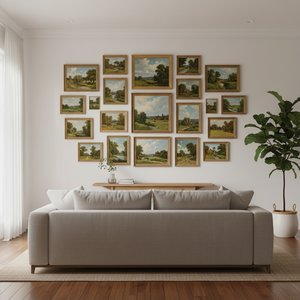
      Det anbefalede rum til "The Gotthard Post" af Rudolf Koller er en Living Room. Forslaget kan naturligvis tilpasses din indretning.


      Om kunstneren

      Early Life and Artistic Beginnings

      Rudolf Koller, born in Zürich on May 21st, 1828, emerged from a world steeped in the everyday rhythms of rural life. His father, Johann Heinrich Koller, initially a butcher and brewer, later became the innkeeper of the “Schwarzen Adler” hotel—a central hub frequented by waggoners and cattle dealers. This formative environment indelibly shaped the young artist’s sensibility, immersing him in the sights and sounds of horses and livestock from an early age. While his peers might have been drawn to more conventional subjects, Koller found himself captivated by the raw beauty and inherent dignity of these animals. His initial education at a private school was followed by attendance at Fraumünster elementary school, but it was within the bustling atmosphere of his father’s inn that his artistic inclinations truly began to blossom. From 1840 to 1843, Koller received formal training at the cantonal industrial school in Zürich, where he first honed his skills under the guidance of his uncle, a landscape painter who recognized and nurtured his nephew's talent for depicting horses. This early mentorship proved pivotal, solidifying Koller’s decision to specialize in animal painting—a path that would ultimately define his career. In October 1843, he embarked on a more structured artistic education, studying under Jacques Schweizer, Johann Rudolf Obrist, and Hans Jacob Ulrich, absorbing their techniques and refining his approach through private lessons.

      Formative Years and Düsseldorf Influence

      Koller’s pursuit of artistic excellence led him to Munich in 1845, where he joined a collective of Swiss artists known as “the Schweizer,” under the leadership of Johann Gottfried Steffan. This period marked a crucial step in his development, exposing him to new ideas and fostering a sense of camaraderie among fellow countrymen. However, it was his subsequent engagement at the stud farm of the King of Württemberg near Stuttgart that truly cemented his reputation as an animal painter. Commissioned to create depictions of horses and dogs, Koller’s talent for capturing their anatomy, movement, and character quickly gained recognition. The years 1846-1847 saw Koller in Düsseldorf, a prominent center for artistic training at the time. Studying figure drawing under Karl Ferdinand Sohn at the Fine Arts Academy proved invaluable, but it was the friendships he forged with Arnold Böcklin—the future Swiss Symbolist painter—and Anselm Feuerbach, a leading German classicist, that profoundly influenced his artistic trajectory. These encounters broadened his intellectual horizons and encouraged him to explore new avenues of expression. A shared journey to Brussels and Antwerp in 1847 further enriched his understanding of European art, exposing him to the works of Old Masters and contemporary painters alike.

      A Master of Realism and *Plein Air* Painting

      Following Düsseldorf, Koller settled in Paris, where he shared a studio with Arnold Böcklin. Immersing himself in the vibrant artistic milieu of the French capital, he spent countless hours at the Louvre, meticulously copying Netherlandish artworks from the 17th century and studying the techniques of contemporary animal painters like Rosa Bonheur and Constant Troyon. He also sought guidance from Jacques Raymond Brascassat, a respected figure in the Parisian art world. Koller’s style gradually evolved, embracing a realist aesthetic characterized by meticulous detail, accurate observation, and a profound respect for nature. However, he was not merely a replicator of reality; his paintings possessed a sensitivity and emotional depth that set him apart from his contemporaries. He became known for his *plein air* technique—painting outdoors directly from life—which allowed him to capture the fleeting effects of light and atmosphere with remarkable fidelity. This commitment to direct observation, combined with his masterful composition skills, resulted in works that were both visually stunning and emotionally resonant.

      The “Painter of the Swiss National Animal” and Lasting Legacy

      Koller’s reputation soared throughout the 19th century, earning him the affectionate title of “the painter of the Swiss national animal”—a testament to his iconic depictions of cows in their native landscapes. His paintings captured not only the physical beauty of these creatures but also their integral role in Swiss culture and identity. He is rightfully considered alongside George Stubbs, Rosa Bonheur, and Théodore Géricault as one of the greatest animal painters of all time. Among his most celebrated works is *The Gotthardpost*, or *The St Gotthard Mailcoach* (1873), a dynamic depiction of a mail coach speeding along a mountain road, drawn by powerful white horses. This painting embodies Switzerland’s spirit of innovation and its breathtaking Alpine beauty. Koller's influence extended beyond his own artistic output; he inspired generations of Swiss painters with his dedication to realism, his sensitivity to nature, and his unwavering commitment to capturing the essence of his homeland. Along with Frank Buchser and Gustave Eugène Castan, Koller remains a cornerstone of 19th-century Swiss art, leaving behind a legacy that continues to captivate and inspire audiences today.
      Rudolf Koller

      Rudolf Koller

      1828 - 1905

      Hurtige fakta

      • Full Name: Rudolf Koller
      • Nationality: Swiss
      • Date Of Birth: 1828
      • Date Of Death: 1905
      • Place Of Birth: Zürich, Switzerland
      • Notable Artworks: ['The Gotthard Post']
      • Artistic Movement Or Style: Realism, Classicism
      • Artists Who Influenced This Artist:
        • Gustave Courbet
        • Jean-Baptiste Corot
      • Artists Or Movements Influenced By This Artist:
        • Frank Buchser
        • Gustave Castan