The Architecture of Layered Space
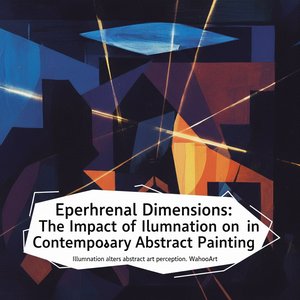
To look at a Peter Casagrande painting is to witness a physical struggle with the medium itself. He does not merely apply paint; he builds it. His work operates through a gestic-informal approach, where the process of creation remains visible in every heavy, superimposed layer of color. There is no attempt to hide the construction. Instead, the traces of background paint push against the surface, forcing the viewer to confront the painting as a developing entity that grows from the bottom up. He strips the space of any figurative presence, leaving only the tension between color and structure.
This method demands a rejection of traditional spatial depth. In Casagrande’s large formats, the usual conception of room and distance is put into perspective. By emptying the canvas of recognizable objects, he forces the eye to find meaning in the way layers overlap and interact. The space expands and contracts through pure chromatic weight. It is a calculated deconstruction of what we expect from a flat surface.
Formative Disciplines and Academic Roots
The precision found in his later, more uninhibited works finds its origin in much stricter beginnings. Before he was dismantling space, Casagrande was trained as a script painter and calligrapher between 1960 and 1963. This early technical discipline provided the foundation for his later mastery of line and gesture. His academic path through the Academy of Fine Arts Munich and the Academy of Fine Arts Berlin under professors such as Tröger, Kiefer, and Cruxin allowed him to transition from the rigid control of calligraphy to a more expansive, experimental language.
His development was marked by several key institutional recognitions that validated his move toward abstraction:
- The foundation of the Artist Collective “Künstlerkollektiv Maitenbeth” in 1979.
- An annual scholarship from the city of Munich in 1983.
- The State promotion prize of the State of Bavaria in 1983.
A Record of Presence
Casagrande’s career is defined by a consistent presence in major European collections and exhibitions. His work has been held by institutions including the Städtische Galerie im Lenbachhaus in Munich, the Staatliche Gemäldesammlungen in Munich, and the Musée de la Ville in Anglet. These are not merely places where his art resides; they are sites that confirm his impact on contemporary German painting.
His exhibition history reflects a long-term engagement with the international art scene, moving through various experimental phases:
- Exhibitions in major hubs such as London, Milan, Paris, and Berlin.
- Participation in significant shows like Bayerische Kunst unserer Tage in Vienna, Budapest, and Cairo.
- Presence in specialized collections including the Fondazione Reverberi in Genova and the Collection Jardiniers in Paris.
The sheer scale of his output, often focusing on large formats, ensures that his exploration of space remains an unavoidable physical experience. He continues to work near Munich and in Genoa, maintaining a practice that refuses to settle into easy or decorative patterns.
Spørgsmål og svar
Kan jeg udforske Peter Casagrandes værker via nøgleord?
Siden Efter nøgleord for Peter Casagrande grupperer kunstnerens værker efter nøgleord.
Hvor og hvornår er Peter Casagrande født?
Peter Casagrande blev født i Weilheim in Oberbayern i 1946.
Hvor kan man finde Peter Casagrandes kunstværker grupperet efter farvepalette?
For at finde værker af Peter Casagrande i en specifik farvepalette kan du bruge kunstnerens Efter farvepalet side.
Hvor kommer Peter Casagrande fra?
Peter Casagrande blev født i Germany.