


 Vorschau anzeigen
 Versenden
 Teilen
 Details anzeigen
 Leitfaden

 Herunterladen
 Ähnliche Objekte
 Röntgenaufnahme
 Diashow
 Q&A
Q&A Statistiken
Eastern Point, Gloucester


 Weiterlesen
Giclée / Kunstdruck
Giclée- oder Leinwanddruck in Museumsqualität mit schneller Produktion und flexiblen Veredelungsoptionen. ( Handgemalte Reproduktion bestellen Zum digitalen Bild wechseln)




P118B €10

P118H €10

P118W €10

P438Z €10

P508JH €12

P508YH €12

P805H €10

P805Z €10

P919BZ €10

P919G €10

P919XJ €10

P959ZH €10

P968JZ €12

W106C €8

W218G €10

W218JH €8

W218Y €10

W307PJ €10

W316G €10

W316PJ €8

W316Y €10

W398PJ €8

W4111J €10

W500HY €15

W500JH €15

W692G €12

W849H €8

W940BG €15

W953PJ €8




Wählen Sie aus unseren vordefinierten Formaten, die den ursprünglichen Proportionen des Kunstwerks entsprechen.

Geben Sie die benötigte Breite und Höhe an, damit der Druck perfekt in Ihren Rahmen oder an Ihre Wand passt. Ein Druck kann nur beschnitten, aber niemals größer als das Originalbild angefertigt werden; daher verliert ein Format mit anderen Proportionen einen Teil des Bildes. Wir senden Ihnen ein digitales Mockup zur Freigabe, bevor wir den Druck ausführen. Das auf dieser Seite gezeigte Bild zeigt nicht den tatsächlichen Beschnitt – dies ist nur im Mockup ersichtlich.
Weltweiter Versand () innerhalb von 2 Wochen statt der üblichen 4/5 Wochen. (31 Oktober)

Kostenloser weltweiter Expressversand

Hochwertige Leinenleinwand

Umfassender Versicherungsschutz beim Versand

Zollgebühren-Rückerstattungsgarantie

Garantie für exakte Farbtreue

100 Tage Rückgaberecht (nur bei Mängeln)

100% Geld-zurück-Garantie

Mengenrabatt verfügbar
 Die Glasoption ist nur für Größen unter 110 cm verfügbar.

Eastern Point, Gloucester
Giclée / Kunstdruck
Format der Reproduktion
-


Endpreis
€ 57
Abbott Fuller Graves’s “Coastal Serenity”: A Window into Early American Impressionism
The painting before us, "Coastal Serenity," attributed to Abbott Fuller Graves, offers a captivating glimpse into the burgeoning world of American Impressionism in the early 20th century. Executed around 1913, this work transcends a simple depiction of a coastal landscape; it’s a carefully constructed meditation on light, color, and the profound connection between humanity and nature – a hallmark of Graves's distinctive style. Born in Weymouth, Massachusetts, Graves honed his artistic skills through rigorous training in Europe, absorbing the revolutionary techniques championed by artists like Claude Monet and Pierre-Auguste Renoir, yet ultimately forging a uniquely American interpretation.
- Subject Matter: The scene portrays a quintessential New England coastline – a rugged shoreline punctuated by a majestic lighthouse, its beam cutting through the hazy atmosphere. A modest dwelling nestled amongst the rocks suggests a life intimately tied to the sea and its rhythms.
- Style & Technique: Graves’s approach aligns squarely with Impressionism's core tenets. He employs loose, visible brushstrokes – a deliberate rejection of academic precision – to capture the fleeting effects of light upon the water and land. Thick impasto layers build texture, particularly in the rocky foreground, while softer glazing techniques create atmospheric depth in the distance.
The Science of Light: Graves’s Color Theory
Graves's masterful use of color is central to the painting’s impact. He wasn’t simply observing; he was actively engaged in understanding and manipulating light, a key principle championed by scientists like Michel Eugène Chevreul. The dominant blues and greens of the sea shift and shimmer depending on the angle of observation – a direct reflection of Graves's meticulous study of color theory. Note the subtle variations in hue within the lighthouse’s structure, achieved through careful layering and blending, creating an illusion of volume and reflecting light realistically.
This deliberate approach to color reflects the broader scientific interest in optics and perception that fueled the Impressionist movement.Symbolism and Narrative
Beyond its purely aesthetic qualities, “Coastal Serenity” carries a subtle narrative weight. The lighthouse, a traditional symbol of guidance and hope, anchors the composition and suggests themes of resilience and navigation – both literal and metaphorical. The solitary dwelling hints at themes of isolation and self-sufficiency, yet also evokes a sense of belonging within this wild landscape. The artist’s choice to depict a working fisherman's home adds a layer of social commentary, celebrating the lives of those who depended on the sea for their livelihood.
A Legacy of American Impressionism
Abbott Fuller Graves remains a significant figure in American art history, recognized for his evocative depictions of New England’s coastal landscapes. “Coastal Serenity” exemplifies his ability to translate scientific understanding into emotionally resonant imagery. Reproductions of this piece offer an accessible entry point into the world of Impressionism, allowing viewers to appreciate the beauty and intellectual rigor that defined this pivotal movement – a movement that profoundly shaped the course of modern art.
Fragen & Antworten
Welche Atmosphäre vermittelt "Eastern Point, Gloucester"?
"Eastern Point, Gloucester" von Abbott Fuller Graves wird in seiner Stimmung als Serene beschrieben. Diese Klassifizierung kann dabei helfen, das Werk passend zu einem Ambiente auszuwählen.
Welcher Raum passt farblich zu "Eastern Point, Gloucester" von Abbott Fuller Graves?
Aufgrund seiner Neutrals Farben wird „Eastern Point, Gloucester“ für ein Living Room empfohlen.
Wo kann ich eine digitale Abbildung von "Eastern Point, Gloucester" von Abbott Fuller Graves kaufen?
Ein digitales Bild von "Eastern Point, Gloucester" von Abbott Fuller Graves kann auf der entsprechenden Digitales Kunstwerk-Seite erworben werden: hochauflösender digitaler Bild-Download.
Ähnliche Kunstwerke


Künstlerbiografie
Ein Leben, eingefangen in Licht und Blüte
Abbott Fuller Graves war ein amerikanischer Maler und Illustrator, dessen Pinsel die zarte Schnittstelle zwischen Natur und Licht einfing. Geboren in Weymouth, Massachusetts, neigten seine frühen Bestrebungen der strukturierten Welt der Architektur zu, was ihn dazu führte, das Massachusetts Institute of Technology zu besuchen. Doch eine tiefe Berufung zur vergänglichen Schönheit der natürlichen Welt lenkte seinen Weg schließlich um. Diese Reise führte ihn weit über die Grenzen Neuenglands hinaus, als er nach Paris und Italien reiste, um seine Fähigkeiten zu verfeinern. In den pulsierenden Kunstzentren Europas vertiefte sich Graves in das Studium der Blumenmalerei und der Figurenarbeit und sog die revolutionären Techniken auf, die später seinen unverwechselbaren Stil definieren sollten.
Während seiner prägenden Jahre in Paris studierte Graves an der Académie Julian und lernte unter Meistern wie Fernand Cormon, Jean-Paul Laurens und Paul Gervais. Diese strenge akademische Ausbildung verlieh ihm ein Fundament im Realismus, doch es war der aufstrebende Einfluss des europäischen Impressionismus, der seinen schöpferischen Geist wahrhaft entfachte. Seine Zeit in Europa ermöglichte es ihm zudem, mit Edmund C. Tarbell zusammenzuwohnen, was Verbindungen innerhalb eines Kreises von Künstlern förderte, die die amerikanische Kunst neu gestalteten. Nach seiner Rückkehr nach Boston wurde Graves Lehrer an der Cowles Art School und arbeitete Seite an Seite mit bedeutenden Persönlichkeiten wie Childe Hassam – eine Beziehung, die zweifellos ihre gegenseitige künstlerische Entwicklung bereicherte.
Der impressionistische Geist Neuenglands
Als seine Karriere reifte, fand Graves ein dauerhaftes Refugium in der Küstenstadt Kennebunkport, Maine. Hier entfaltete sich sein Werk wahrlichtlich, als er begann, sich auf dekorative Freilichtgartenmalereien und florale Stillleben zu spezialisieren. Seine Meisterschaft lag in der Fähigkeit, impressionistisches Licht mit realistischer Beobachtung zu verschmelzen. Er suchte nicht bloß danach, das Aussehen eines Gartens zu replizieren; er strebte danach, einzufangen, wie das Sonnenlicht durch das Laub filterte, gesprenkelte Schatten warf und Blüten mit einem ätherischen Glanz erleuchtete. Sein Einsatz von kräftigen Pinselstrichen und lebendigen Farben erlaubte es ihm, die Texturen von Rosen, Lilien und üppigen Landschaften auf die Leinwand zu übertragen und Szenen zu erschaffen, die sich zugleich lebendig und tief friedvoll anfühlten.
Seine Sujets feierten oft die Rhythmen des lokalen Lebens und die Pracht der natürlichen Welt. Während sich viele seiner Werke auf die komplexe Schönheit exotischer Gärten konzentrierten – die manchmal bis nach Spanien und Südamerika reichten –, blieb er tief in der amerikanischen Landschaft verwurzelt. Seine Gemälde zeigten häufig Genreszenen aus Kennebunkport, die Fischer, Bauern und Kapitäne darstellten, oft mit einer charmanten, nostalgischen Qualität gemalt, die dazu führte, dass seine Werke weit verbreitet auf Postkarten und Kalendern reproduziert wurden. Diese Fähigkeit, das alltägliche Küstenleben in eine Symphonie aus Farbe und Licht zu erheben, bleibt sein beständigstes Vermächtnis.
Künstlerisches Erbe und architektonische Vision
Jenseits der Leinwand besaß Graves eine einzigartige Vision für die Integration von Kunst und Lebensraum. Im Jahr 1905 wandte er sein architektonisches Gespür an, um das Abbott Graves House in Kennebunkport zu entwerfen. Dieses Bauwerk, das als eines der seltenen Beispiele der Prairie-School-Architektur in Maine hervorsticht, steht als Zeugnis seines facettenreichen Talents. Das Haus spiegelt dieselbe Harmonie zwischen Form und Natur wider, die seine Gemälde charakterisierte, und zeigt ein anspruchsvolles Verständnis von Design und Raum.
In seinen späteren Jahren pendelte Graves zwischen der kreativen Energie von New York City und der Ruhe der Küste. Seine Mitgliedschaft in angesehenen Organisationen wie der National Academy of Design, dem Salmagundi Club und den Allied Artists of America festigte seine Stellung innerhalb der amerikanischen Kunstgemeinschaft. Durch seine Hingabe, die flüchtige Schönheit eines Blütenblattes oder das wechselnde Licht an einer Küstenlinie einzufangen, hinterließ Abbott Fuller Graves ein Werk, das bei all jenen, die Poesie in der natürlichen Welt finden, weiterhin Resonanz findet.

Abbott Fuller Graves
1859 - 1936 , Vereinigte Staaten von Amerika
Kurzinfos
- Bemerkenswerte Kunstwerke:
- Nearing Home
- Eastern Point, Gloucester
- Near Kennebunkport
- Geburtsdatum: 1859
- Geburtsort: Weymouth, Vereinigte Staaten von Amerika
- Künstler, Die Diesen Künstler Beeinflusst Haben:
- Claude Monet
- Pierre-Auguste Renoir
- Childe Hassam
- Künstlerische Bewegung Oder Stil: Realismus und Impressionismus
- Nationalität: Amerikanisch
- Sterbedatum: 1936
- Vollständiger Name: Abbott Fuller Graves
Ähnliche Artikel

Evocations of Place: A Historical Journey Through Landscape Art
Explore the rich history of landscape art with AllPaintingsStore. Discover renowned artists, movements like Impressionism & tonalism, and expert guidance for collecting timeless pieces. Find your perfect serene escape today!
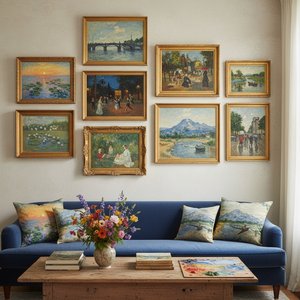
Impressionistische Landschaften: Die 10 Meisterwerke, die eine Epoche prägten | AllPaintingsStore
Entdecken Sie die 10 Meisterwerke des Impressionismus! Von Monet bis Renoir – erleben Sie die Geschichte, Technik und zeitlose Schönheit ikonischer Landschaftsbilder. Hochwertige Kunstdrucke auf AllPaintingsStore.com. Jetzt entdecken!

Evocations of Place: A Historical Journey Through Landscape Art
Explore the rich history of landscape art with AllPaintingsStore. Discover renowned artists, movements like Impressionism & Romanticism, and expert guidance for collecting timeless pieces. Find your perfect serene escape today!

Die 25 besten Gemälde von Paul Cézanne: Meisterwerke der Form
Entdecken Sie die 25 Meisterwerke von Paul Cézanne und den Postimpressionismus. Alle Klassiker auf AllPaintingsStore.com online erleben.
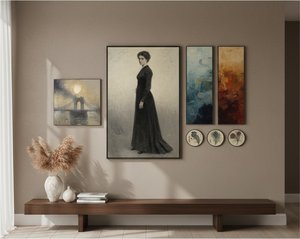
James Abbott McNeill Whistler: Die 25 Meisterwerke für Ihr Zuhause | AllPaintingsStore
Entdecken Sie die 25 Meisterwerke von James Abbott McNeill Whistler! Von den berühmten Nocturnes bis zu ikonischen Porträts – erleben Sie Ästhetizismus, Impressionismus & Tonalismus. Hochwertige Reproduktionen auf AllPaintingsStore.com.